
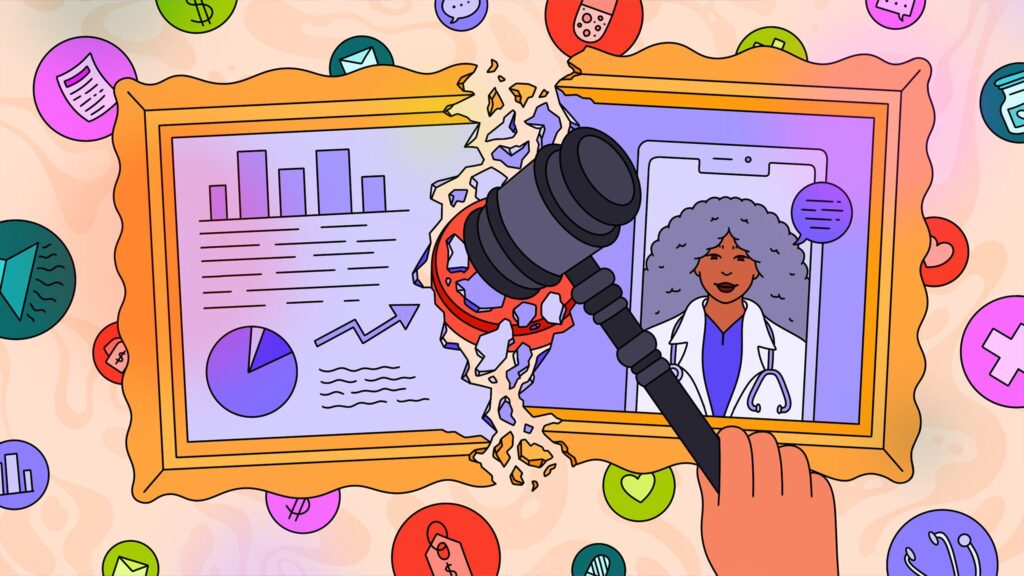
In less than a decade, telehealth has expanded from a sideshow of health care to an industry worth tens of billions of dollars. Companies like Hims & Hers and Teladoc have become household names, their ads interrupting streaming TV and flooding social media feeds with the promise of quick, convenient care.
Despite their popularity, few patients understand who’s actually taking care of them when they click through a telehealth site.
National telehealth brands present a unified front to patients across the country. But in more than 30 states, it’s illegal for corporations to practice medicine. So behind the scenes, telehealth companies work with distinct, independent medical groups. Owned by physicians — who often hold 50 state licenses at once — those practices are meant to act as a firewall, making sure that clinical decisions are driven by patients’ needs, not the profits of the corporations they deal with.
STAT+ Exclusive Story
Already have an account? Log in


This article is exclusive to STAT+ subscribers
Unlock this article — and get additional analysis of the technologies disrupting health care — by subscribing to STAT+.
Already have an account? Log in
Individual plans
Group plans
To read the rest of this story subscribe to STAT+.