
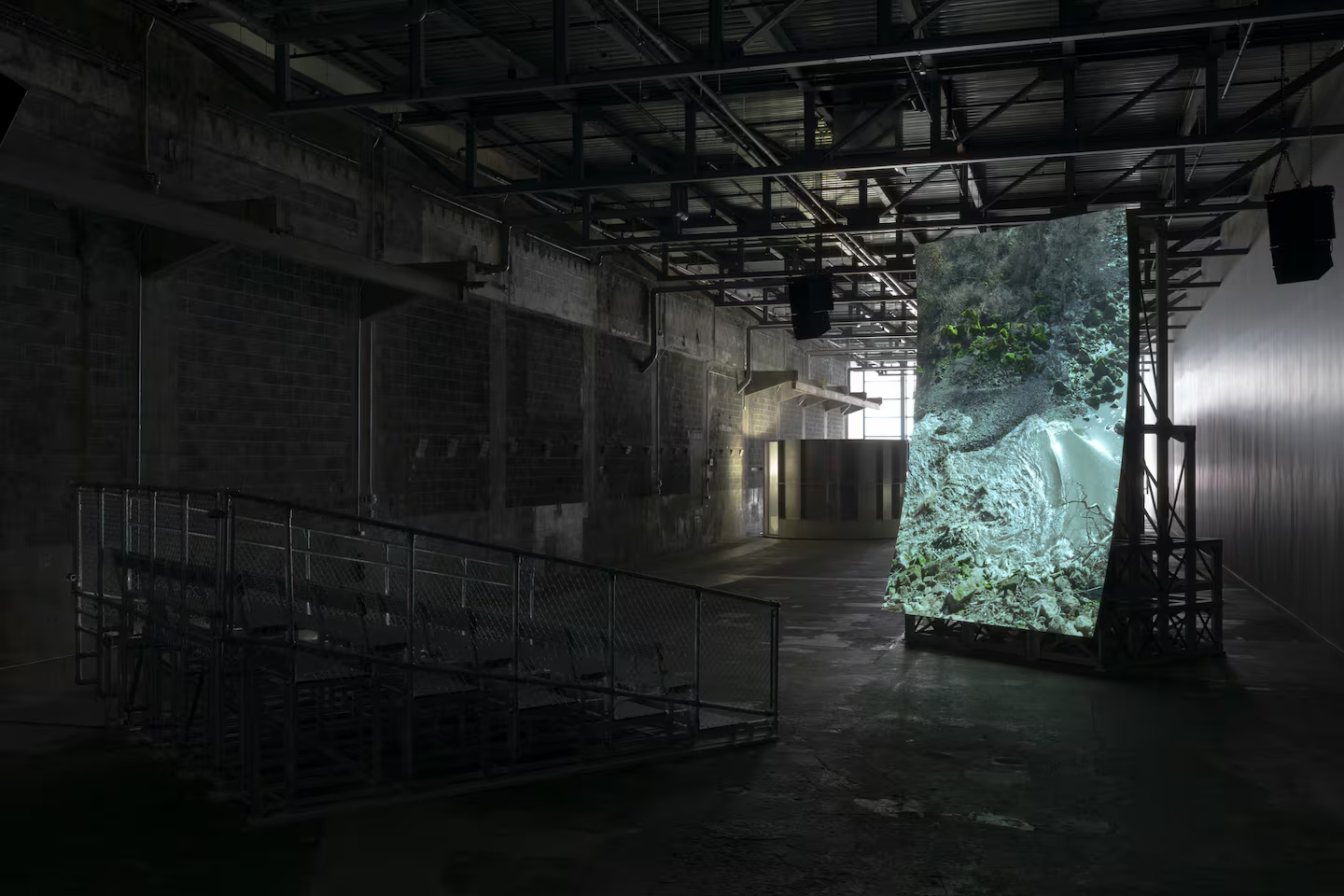
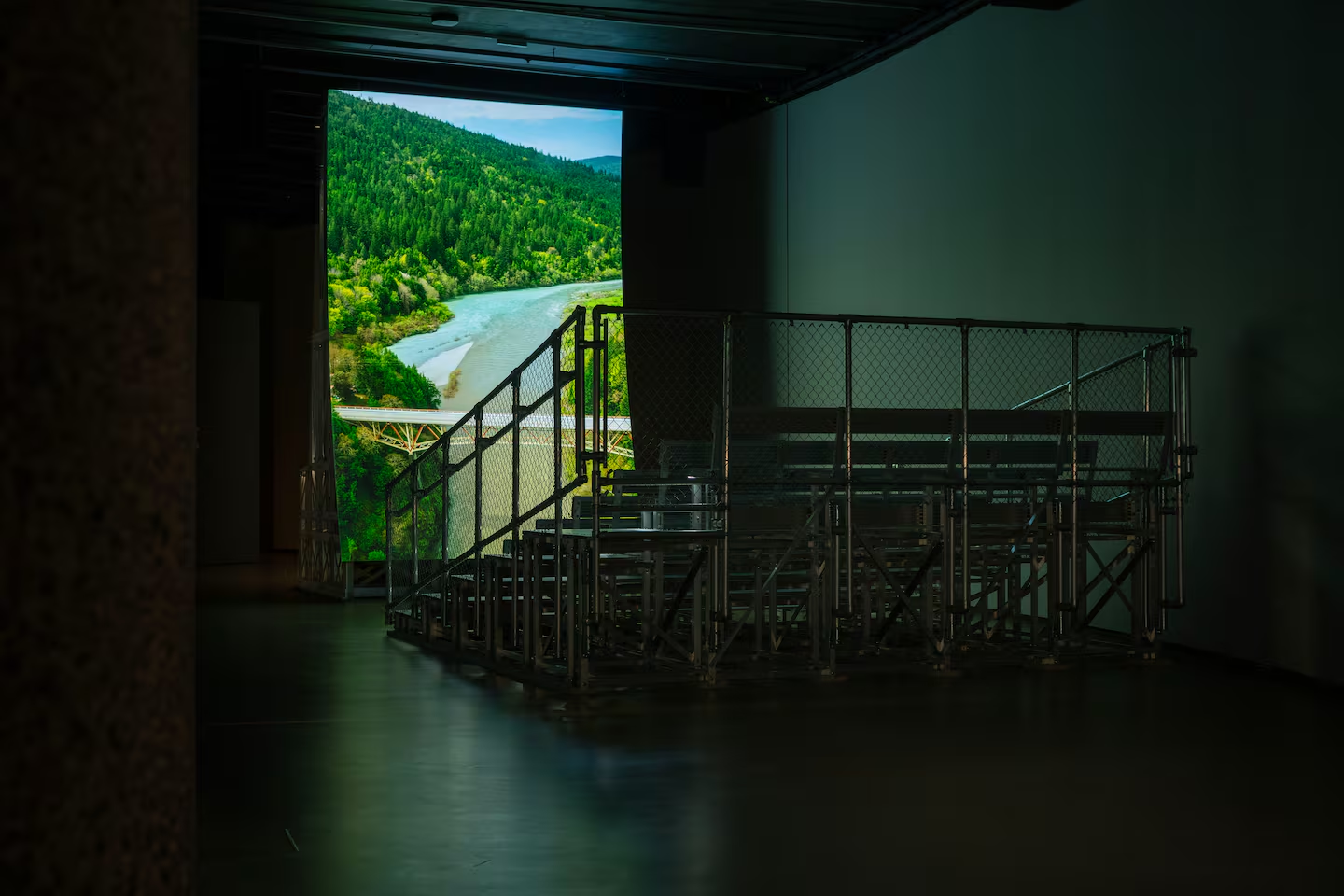
But “Rounds” is no cheap thrill. Within the darkness is “Murderer’s Bar,” her 2025 film that documents the explosive release of a decommissioned century-old dam holding back the Klamath River in Nothern California. But the film is not about one river, one site, one cathartic moment of release, so much as the accretion of myth, trauma, and roughshod development over almost two centuries in the American west.
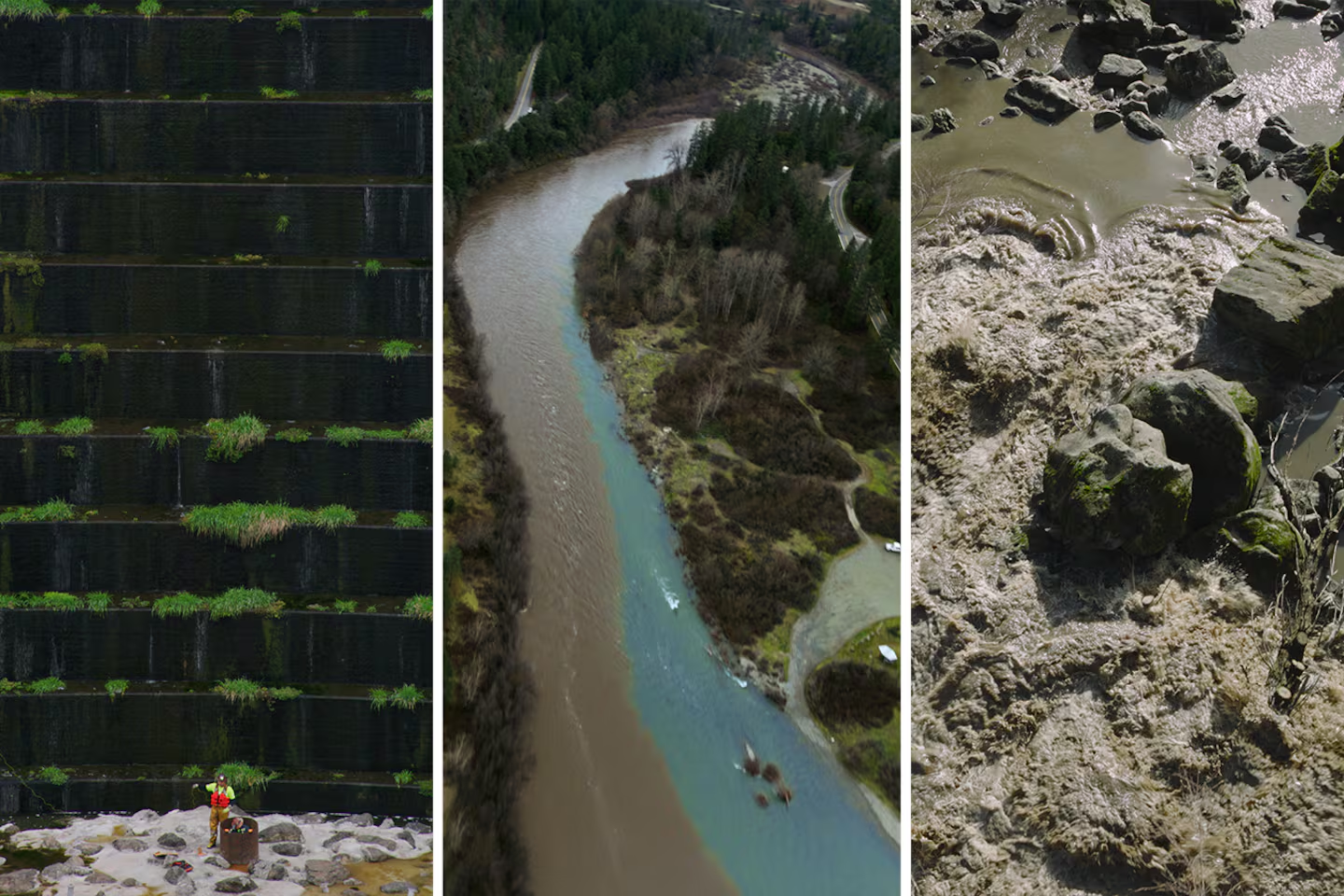 Lucy Raven, “Murderers Bar,” video stills, 2025.Lucy Raven
In “Murderer’s Bar” — the former name of a town near the dam, infamous for its rough-and-tumble violence during the California gold rush — the artist keeps her distance, a deliberate remove. From the heart-stopping boom that sets things in motion — dynamite charges deep in the dam’s belly — Raven’s camera skims along the prow of the onrushing water as it surges into the shallow muck of the valley it carved eons before.
It should feel heroic, triumphant — a century-old wrong made right. Raven allows you that moment: The giddy release, the chaotic ecstasy of return. But as the camera climbs higher and the water becomes more distant, the sense of foreboding — that what’s wrong here can’t be made right — swells. I became anxiously aware of the ecosystem the water’s absence had created being swallowed in an instant, an act of destruction as profound as choking the riverbed dry a century before. As the camera climbed, the water — carrying with it decades of dry earth swept up in its flow — met clear-blue tributaries that had always run free.
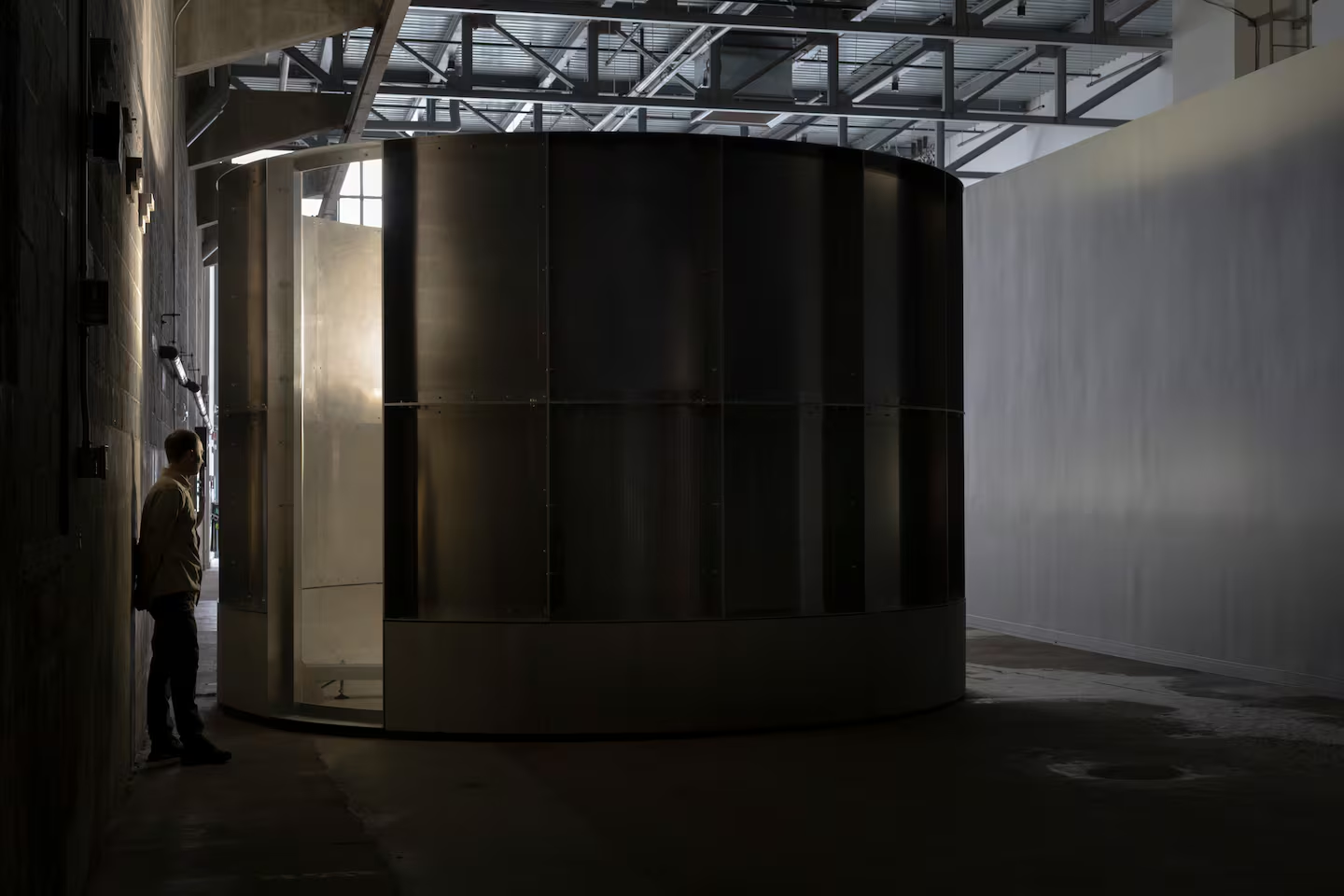 Installation view, “Lucy Raven: Rounds,” at the Institute of Contemporary Art/Boston.Mel Taing
The collision of silt-heavy water with crystalline rivers that had carried on in its absence was a spectacular visual, unnerving and profound. At a key moment of their comingling, the shadow of a helicopter fell on the water’s surface — the artist, very deliberately showing her hand. I took it as a cue. This is no Wordsworthian ode to the beauty and power of nature, a tribute to its inevitable restoration of a preternatural order. The film teases, then, like with any thriller, pulls the chair.
As the Klamath meets the Pacific Ocean — a brief moment of triumph — the camera careens over the choppy waves of the open sea; it feels confused, like a lost animal searching for its pack. A wild swoop, and we retreat up river. Here, the camera dips low to the murky, onrushing water, and then plunges, alarmingly, into the mire. The sound — angry, plaintive, an unrelenting thunder — is one of the most harrowing things to ever reach my ears. Below the surface is chaos — a flight through sodden plant life only a few minutes earlier basking in the open air, a torrent of bubbles fighting the camera’s upstream surge. It’s nightmarish, without relief.
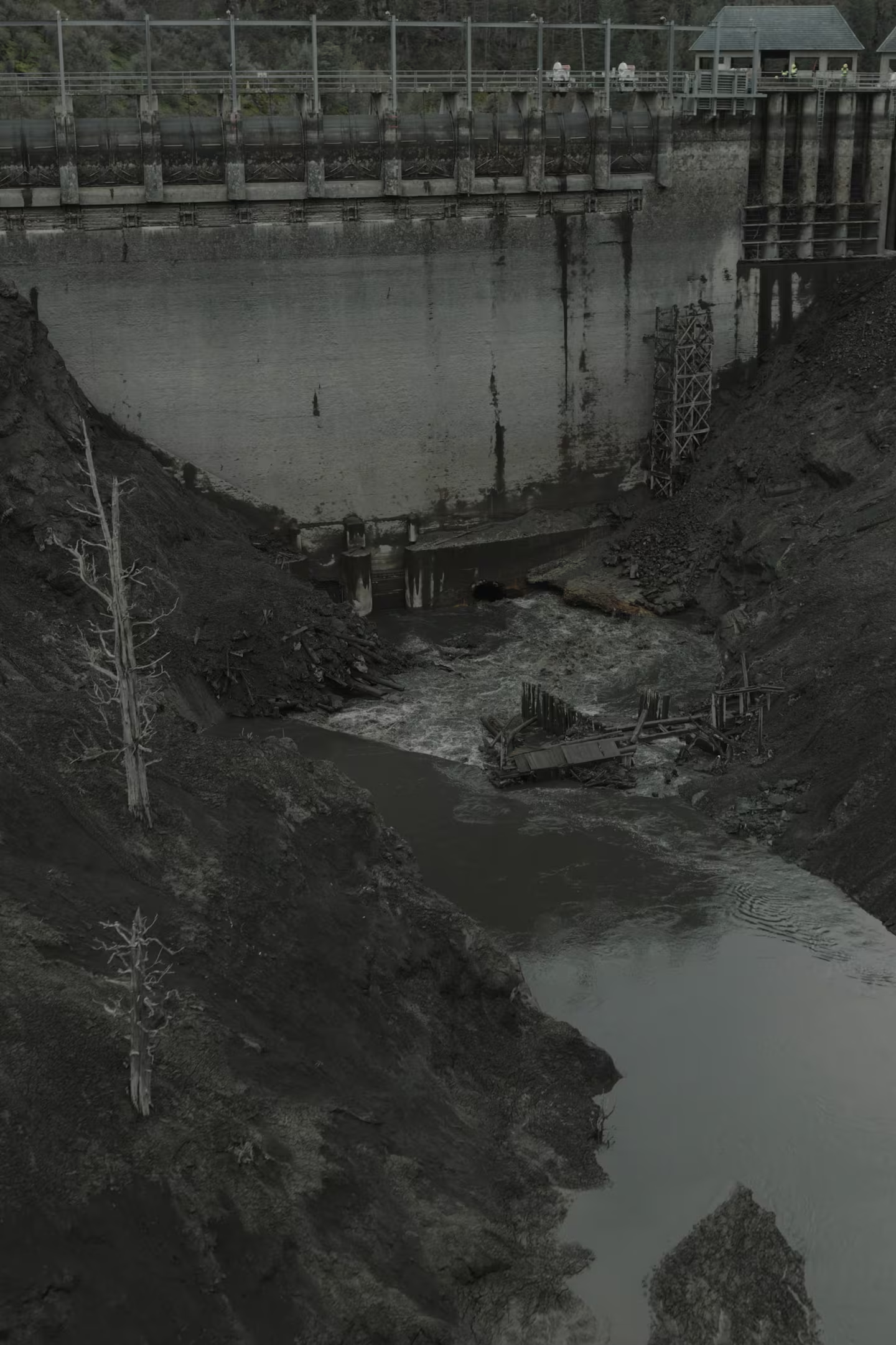 Lucy Raven, “Murderers Bar” (still), 2025. Lucy Raven/Lisson Gallery
What’s happening here, I think, is the violent unraveling of a dominant myth of America. The west is overstuffed with such myth, the sunny promise of westward expansion that drove legions of pioneers from the ravaged east post-Civil War, stoic cowboys riding range on the frontier of newfound freedom.
Myths can only become myths if they’re divorced from reality, laundered of trauma to leave only the sheen of the heroic. American artists have forever played their part: Albert Bierstadt, with his beatific sun-drenched views of the Rocky Mountains doctored up as explicit propaganda to whitewash the violence of Indigenous displacement and settler hardship in a harsh landscape; Frederic Remington’s unabashedly macho cowboy romanticism.
 Lucy Raven, “Murderers Bar,” 2025. Installation view, Lucy Raven: Rounds, Barbican Centre, London.Hugo Glendinning
You can go deep: Movies, novels, TV shows — the Lone Ranger, Paladin, Shane, you name it. The west holds the imagination with a spiffed-up rendering of plucky American determination at its most heroic. I also can’t help but think of the silvery photographic majesty of Ansel Adams – forests and mountains, rendered timeless and eternal by the camera’s gaze in an early-20th century era when forests were being erased, cities rapidly expanded, and dams — like this one — were being built to choke rivers all over the west. They are the lie that reveals the truth.
Raven remixes those myths with the stark discomforts of contemporary reality: Rivers dammed, forests clear-cut, native peoples murdered and displaced (“Murderer’s Bar,” the town, was quite a find, the evocation of a saloon-door swinging, cartoon-cowboy shootout sharing psychic space with the grisly reality of violent death).
Powerfully, Raven lets the land speak for itself. Fighting upstream, the camera reaches the wrecked dam and soars high above it to the now-empty reservoir beyond. It is aftermath, writ large: A sodden valley, black with death, the sickly gray trunks of leafless trees drowned a century earlier with sickly dead roots somehow still clinging to the earth. It is a land savaged and lost, thrust back into a world it no longer belongs to.
The message seems clear:There is no way back. Choose the path forward with clear eyes, and a mind to where it could lead.
LUCY RAVEN: ROUNDS
Through Sept. 7. At the ICA Watershed, 256 Marginal St., East Boston. 617-478-3100, icaboston.org/ica-watershed
Murray Whyte can be reached at murray.whyte@globe.com. Follow him @TheMurrayWhyte.