
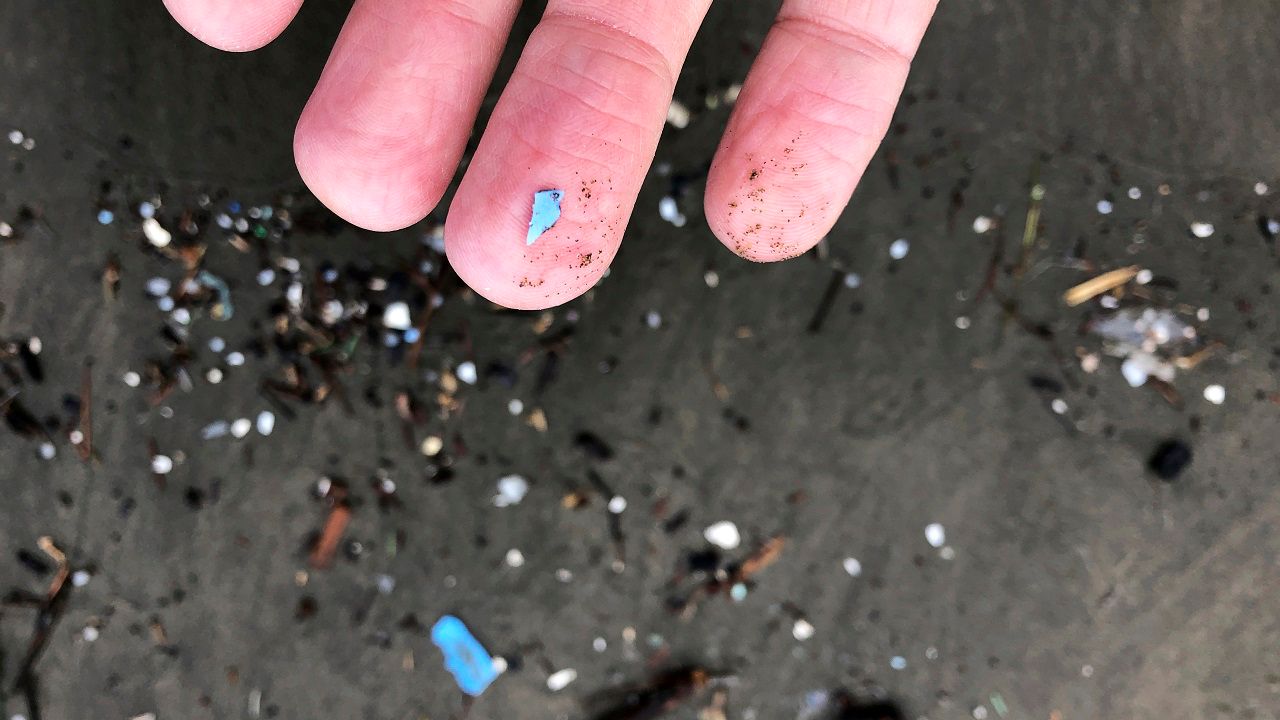
CINCINNATI — A University of Cincinnati College of Medicine researcher has received a five-year, $3.3 million grant to study the impact microplastics and nanoplastics (MNPS) have on the heart, according to a release to the university.
What You Need To Know
Microplastics and nanoplastics are the result of the breakdown of discarded plastic waste or are intentionally made
The digestive system can absorb the MNPS, leading to a build up in the body, including in the heart
A hurdle in microplastics research is the lack of suitable particles for testing

“This preclinical study will significantly advance our understanding of the toxicity of microplastics, particularly their potential contribution to heart diseases,” said Hong-Sheng Wang, the grant’s principal investigator and a professor in the Department of Pharmacology, Physiology and Neurobiology. “It will position the University of Cincinnati at the forefront of research on how microplastics and nanoplastics may affect cardiovascular health.”
Microplastics and nanoplastics are the result of the breakdown of discarded plastic waste, and they are tiny plastic particles that vary in size, according to Wang. They can also be intentionally producers for consumer and/or industrial uses.
Microplastics and nanoplastics are tiny plastic particles that differ in size. They are typically generated from the breakdown of discarded plastic waste, Wang explained, or intentionally produced for consumer and industrial uses.
“MNPs are ubiquitous and persistent environmental pollutants. Human exposure is widespread, primarily through food, beverages, drinking water and even inhalation,” said Wang. “Exposure can trigger a range of harmful biological responses and is increasingly recognized as a threat to human health.”
The digestive system can absorb the MNPS, leading to a build up in the body, including in the heart. While it’s a concern, MNPS effects on the heart haven’t been studied indepth.
“More laboratory research is needed to understand what is really happening,” said Necati Kaval, a study collaborator and an adjunct instructor and research professional in the Department of Chemistry.
Wang explained that the main part of the study involves quantifying exposure levels, which will include investigating how NMPS accumulate in animal model tissue after exposure and ingestion.
“It is important to learn where MNPs accumulate in cells and tissues,” said Kaval, an analytical and materials chemist. “Some microplastics, such as polyethylene, are chemically very similar to certain tissue materials, like fats and lipids, creating a kind of camouflage that makes detection challenging.”
A hurdle in microplastics research is the lack of suitable particles for testing, researchers explained, as they need materials to test that are similar to those found in the environment.
To mimic real-world MNPS, Kaval has produced a method.
“These particles are essentially polymers, and I have expertise in producing micro- and nano-scale polymer particles,” he said.
Before using the particles, they will measure the size, contribution and size distribution, and then the team will conduct toxicology analyses to better understand how they affect heart cells and tissue.
Additionally, the team plans to analze whether exposure can worsen outcomes after a heart attack, as well as investigate how they can make cells become toxic.
“Microplastics can clog a cell’s waste disposal system, leading to harmful downstream effects,” said Wang.