
Reading Time: 2 minutes
Reaching farmers before they reach crisis point in their mental health is the aim of a new suicide prevention programme rolling out across the country.
Supported by the Ministry for Primary Industries (MPI), which has committed $740,000 to the Whatever with Wiggy Charitable Trust’s Lean on a Gate campaign, “Stronger Together” is built around connection and engagement.
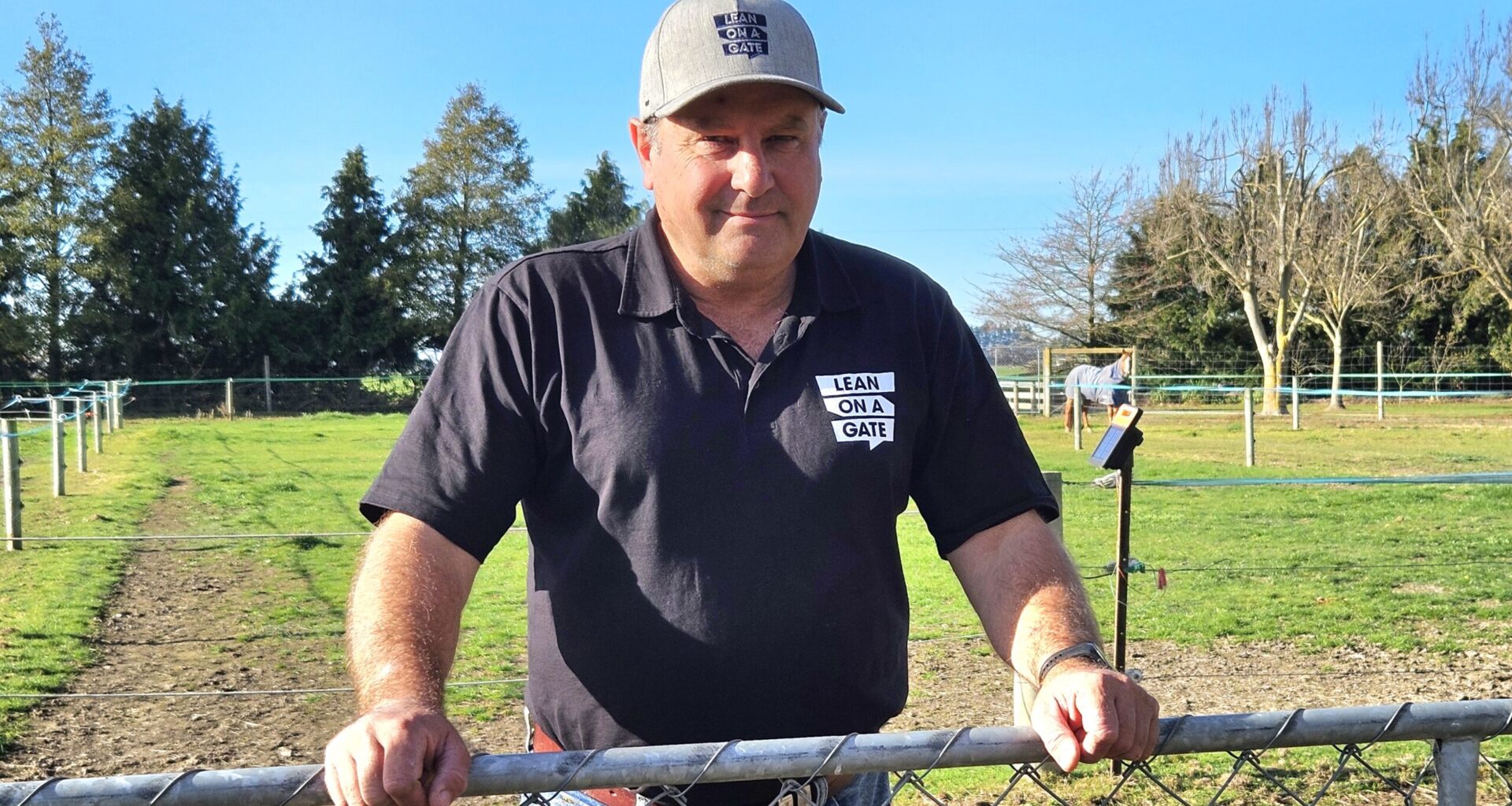
Lean on Gate, a grassroots campaign delivering awareness and practical support across rural New Zealand, is headed by Ashburton-based Craig (Wiggy) Wiggins, who has joined forces with Mates in Construction NZ (Mates) to deliver the new rural wellbeing and suicide prevention programme including training.
“It is exciting to reach this point where we now have MPI matched funding, $1 for $1, $740k over a four-year timeframe, where MPI will match every dollar industry puts in to support this advanced programme,” Wiggins said.
“You never know what’s around the corner in someone’s life and research has revealed that 8% of folks at any one time think about taking [their life].”
Mates, a national suicide prevention and mental health programme developed for the construction industry, has been delivering training in New Zealand since 2015.
“It’s well proven this model really works,” Wiggins said.
He said the concept addresses a critical and well-documented need for rural NZ to access tailored, proactive mental health support that reaches people before crisis point.
“We are working closely with rural support trusts to develop the pathway which will reach farmers inside the farm gate rather than at the edge of the cliff.
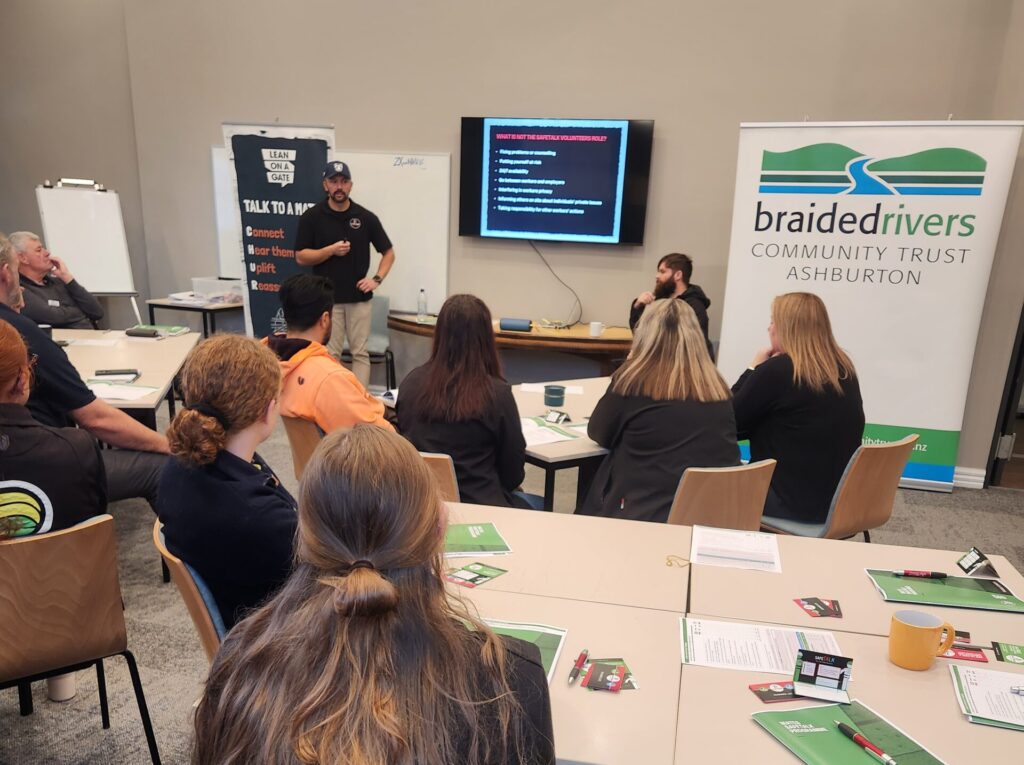 Rural professionals take part in a SafeTalk training in Ashburton.
“This is shaping to be a $1.5 million support programme for rural NZ, but we need rural people to come forward.
“We are looking hard at rural services and rural professionals, vets, agronomists, stock agents, they are the ones who travel up farms regularly, have their feet under the kitchen table, the trusted model that picks up the problems.
“This programme will train these people how to deal with what they may find.”
In a three-step model the programme starts with community awareness training (CAT) tailored to raise awareness on how to identify a mate who is struggling and building confidence to check in with them.
Step 2 is SafeTalk – suicide intervention skills training equipping volunteers to support and connect someone at risk to help and care for their own wellbeing, while Step 3 is a 24/7 helpline and case management specific for rural workers, families and communities.
“The point of difference in this programme is to train and support rural people of NZ to work together to strengthen and make a real difference in rural communities.
“There are no commercial boundaries in mental health. The one-man band, the business with a staff of 400: the programme is tailored to fit.
“We have worked with several big companies and the feedback is, wow this is what we really need.
“We are working with the Firearms Licensing Authority and other related industry bodies that are looking to get on board.
“We have got the money, the structure, and the milestones. My plea now is to businesses of NZ to get involved.”