
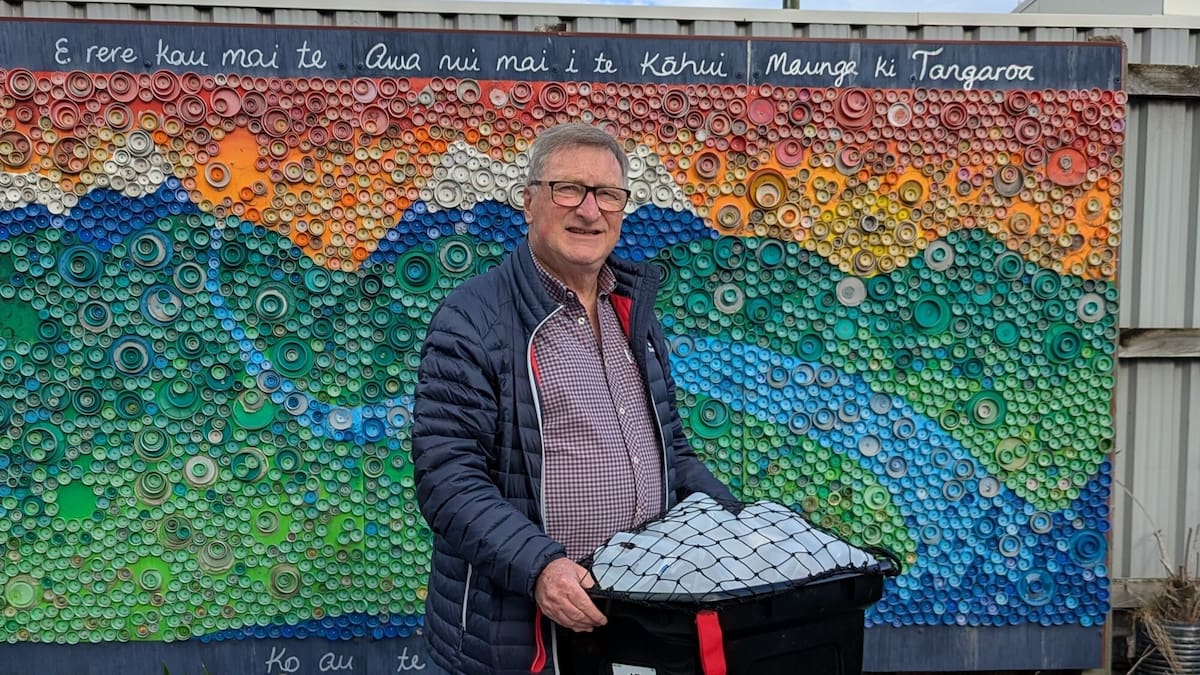
Harrison told the council’s operations and performance committee nets would be delivered to properties in September, in time for “that windy spring season”.
Her report to the committee said a pre-trial resident survey showed recycling blowing from crates was “a near-universal experience”, with 14% saying it never happened.
“Wind disruption is the dominant concern — 53% say it has affected how often they put recycling out.”
The kerbside service, which began in July 2024, will cost households $162 in the 2025-26 financial year.
Harrison told the committee funding for the nets would come from the Ministry for the Environment’s Waste Disposal Levy, with no extra cost to ratepayers.
She said the kerbside contractor, Low-Cost Bins, had no negative feedback about the nets.
“They were saying it’s a lot easier than versus a windy day when they’re running around picking up little bits and pieces.”
Waste services manager Morgan Harrison says using crates means a low contamination rate.
Councillor Rob Vinsen, who holds the council’s waste portfolio, said the crate presentation rate for the kerbside service was about 68%, “right up there with most cities in New Zealand”.
He said the council got a lot of criticism for using crates instead of wheelie bins but contamination rates were higher in other centres where bins were used.
“Once we get these nets and get rid of our most serious problem, which is windblown litter, I think it’ll really confirm we made the right decision of getting crates for this service.”
Harrison told the Chronicle last November there were no plans to “change the methodology” of the kerbside service.
Formerly the waste operations lead at New Plymouth District Council, she said there had been a 25% contamination rate in its recycling wheelie bins.
“At our end, we are seeing 1% or 2% contamination when we do audits at Liffiton St [transfer station]. It’s working really well.”
Harrison told councillors there had been a significant drop in the amount of glass collected through the kerbside service.
Her report said from January to March this year, 117.1 tonnes of glass were sent for processing, compared with 184.5 tonnes over the same period in 2025.
“It may be that producers are switching from glass to aluminium in the beverage department,” she told councillors.
“We also noted a similar trend at the resource recovery centre.”
She said cardboard would be collected from the crates if it was “no higher than your knee” when stacked vertically.
The council had not looked closely at a strike system for crate contamination, Harrison said.
“Auckland, Christchurch and Lower Hutt, they have a three-strike system and they’ll take your bin away.
“We want to educate and promote, rather than disincentivise the participation.”
The council said households would receive information and instructions with the nets, with details about timing and delivery areas to be given closer to the start of the programme.
Mike Tweed is a multimedia journalist at the Whanganui Chronicle. Since starting in March 2020, he has dabbled in everything from sport to music. At present his focus is local government, primarily Whanganui District Council.