
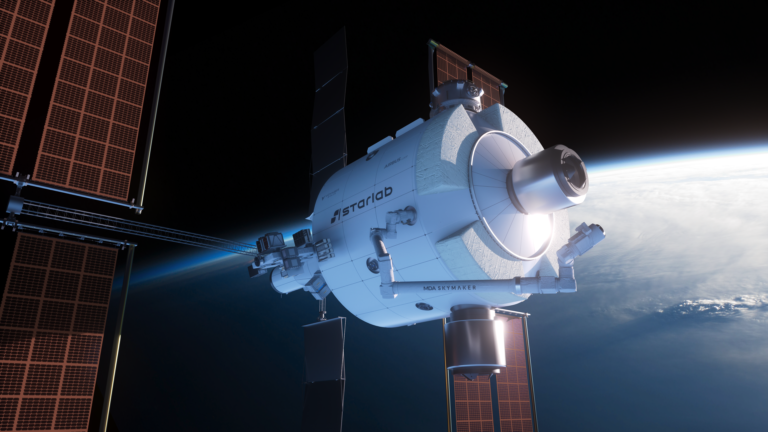
NASA will support free-flying commercial successors to the ISS, abandoning agency proposed changes to the acquisition plan, a spokesperson announced on Monday.
“Industry has provided extensive feedback, making the case for a sustainable commercial market in which NASA is one customer among many, along with assurances regarding available transportation capabilities,” Bethany Stevens wrote on X. “The industry position will now shape the path forward as NASA proceeds with the original commercial strategy.”
How we got here: At NASA’s Ignition event in March, agency officials said they didn’t believe there was a robust enough market in LEO to support free flying commercial space stations. As a result, the agency said it was considering scrapping its Commercial LEO Destination (CLD) plan to support at least one commercial station, pivoting to instead procure a “core module” to be joined to the ISS, where commercial modules could also attach.
The idea was to offer a more incremental approach that would both reduce the chance of a US gap in LEO post-ISS, and give more time for the commercial market to develop.
However, there was immediate blowback from industry. Major CLD providers disputed NASA’s claims about the lack of a market, and publicly made the case that the agency should support free flying commercial stations.
“We’ve flown 166 payloads to date. I think that’s evidence of a market,” Axiom Space CEO Jonathan Cirtain said in a press briefing in April. “We do that, and generate revenue and income as a consequence of those payloads.”
What’s next: We’ll have more details on the path forward very soon. Stevens wrote on X that NASA will work with industry on specific requirements, with a draft RFP expected to be released this month.
Related Stories
“For those waiting patiently, the grand return is close at hand,” NASA Administrator Jared Isaacman said during a press conference at NASA HQ.
Two years ago, NASA asked the space community what technical challenges are giving people the biggest headaches to help NASA prioritize its space tech investments.
Europe is on a mission to prove that groundbreaking science can be done on the cheap.
NASA has potentially funded or supported hundreds of scientific collaborations since 2015 that might involve Chinese researchers, a new Congressional report says.
More Stories
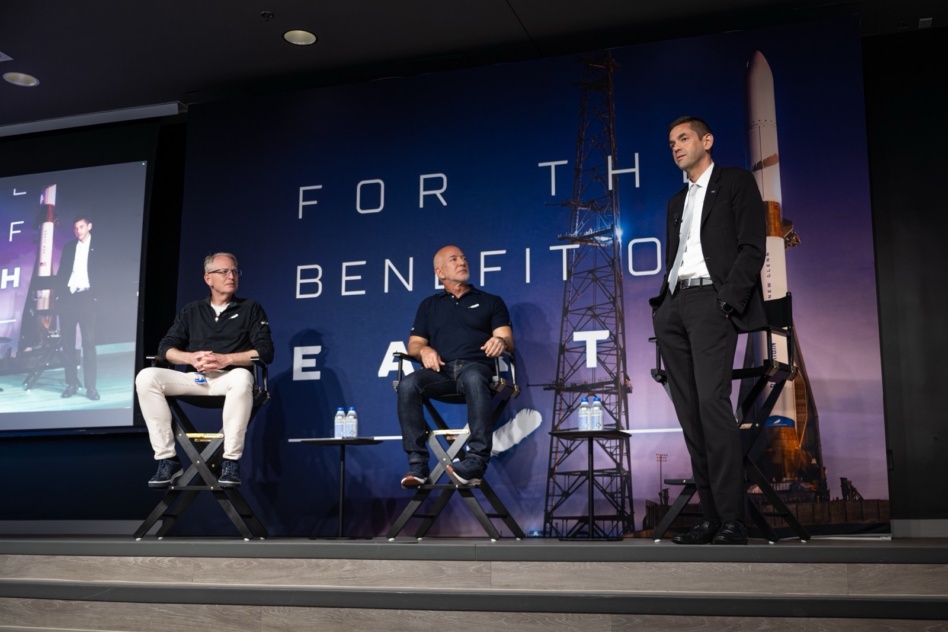 Blue Origin CEO Dave Limp, Jeff Bezos, and NASA Administrator Jared Isaacman met with Blue Origin employees following the explosion. Image: Jared Isaacman via X
The explosion of Blue Origin’s New Glenn rocket last week produced shockwaves similar to a small earthquake, sending seismic waves up to about 220 km away. But, according to Blue Origin CEO Dave Limp, the explosion looked worse than it is.
After assessing the damage to the launch pad and the surrounding infrastructure, Limp posted on X on Monday that Blue Origin “will fly again before the end of this year.”
The good news: It’s an incredibly aggressive timeline, but one that’s informed by the fact that much of the infrastructure at LC-36A remains usable.
Load More