
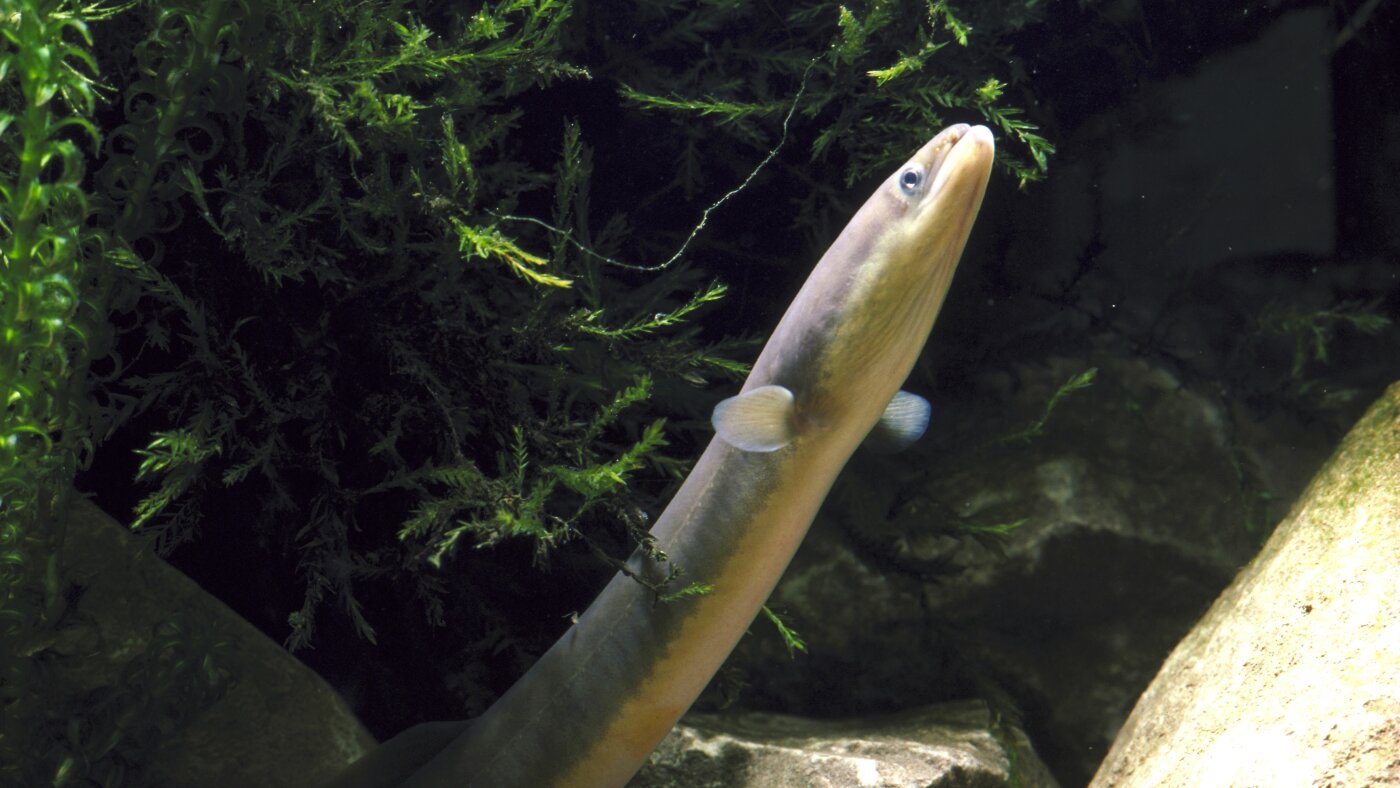
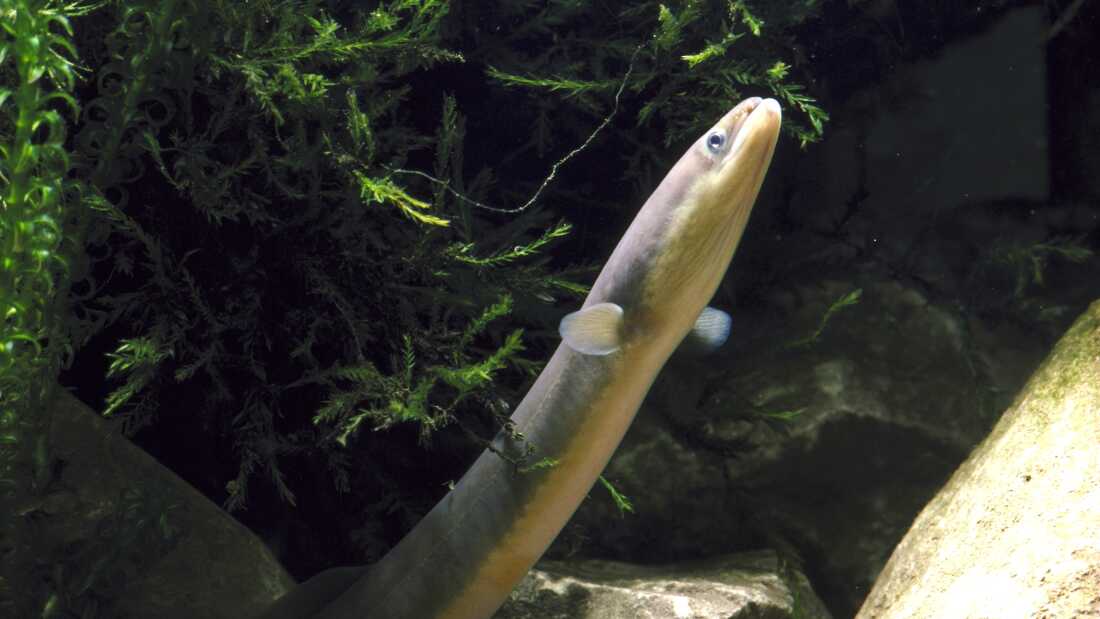
Scientists still have not pinpointed the spawning grounds of the European eel. Finding it could mean safeguarding the species.
Colin Milkins/Getty Images
hide caption
toggle caption
Colin Milkins/Getty Images
More than a century ago, all that people knew about European eels was that they lived in the rivers and streams for decades — until they swam out to the ocean and never returned. Eventually, tiny eels would show up and the cycle would start again. Where did the adult eels go? Where did the baby eels come from? Did they even reproduce at all or just spontaneously emerge into being? Science now has some — but not all — of the answers to these questions. Today on the show, Regina G. Barber talks to fish physiologist Arjan Palstra about this mystery and how close scientists are to solving it.
If you liked this episode, check out our episode on the Pacific lamprey.
Interested in more science mysteries? Email us your question at shortwave@npr.org.
Listen to every episode of Short Wave sponsor-free and support our work at NPR by signing up for Short Wave+ at plus.npr.org/shortwave.
Listen to Short Wave on Spotify and Apple Podcasts.
This episode was produced by Berly McCoy. It was edited by Rebecca Ramirez. Tyler Jones checked the facts. The audio engineer was Jimmy Keeley.