
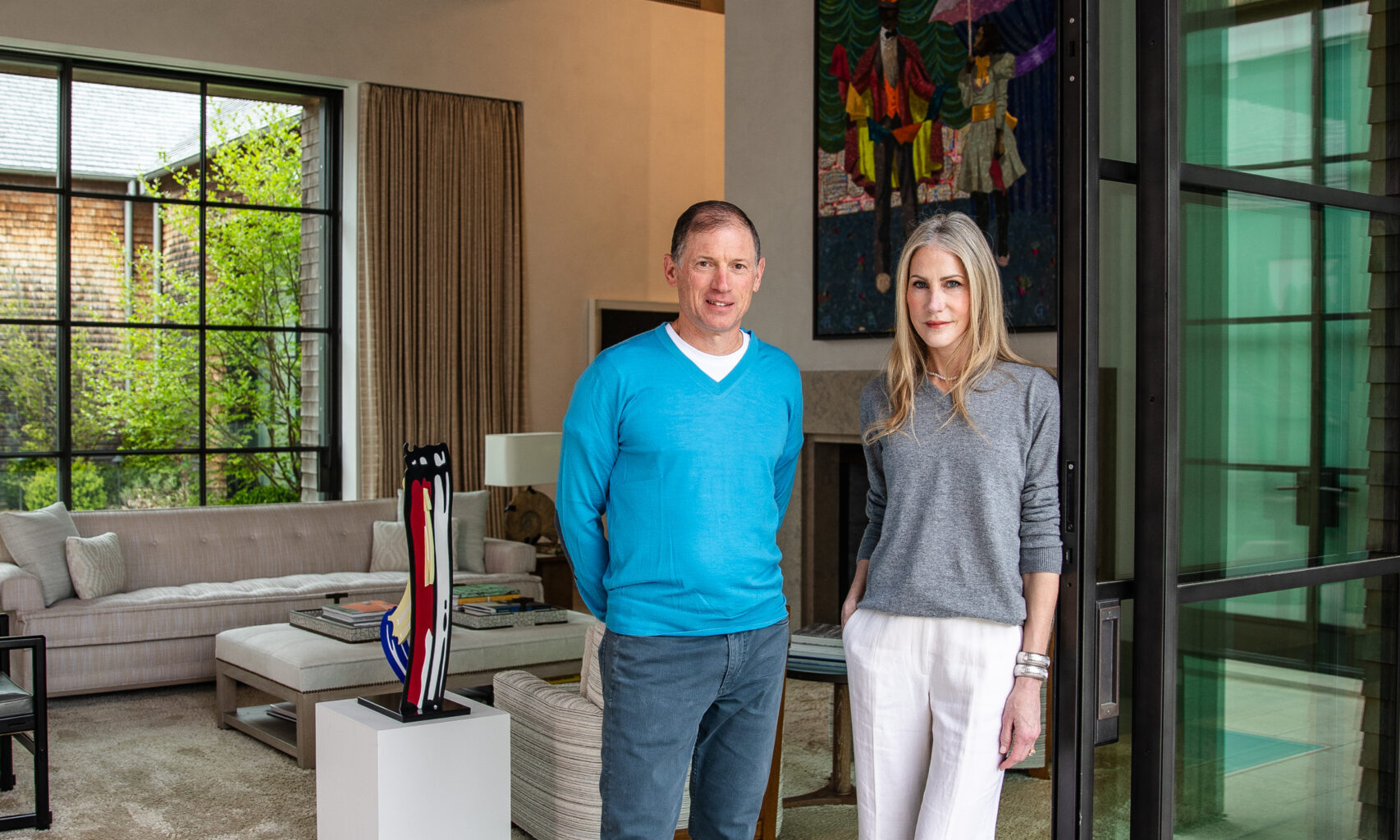
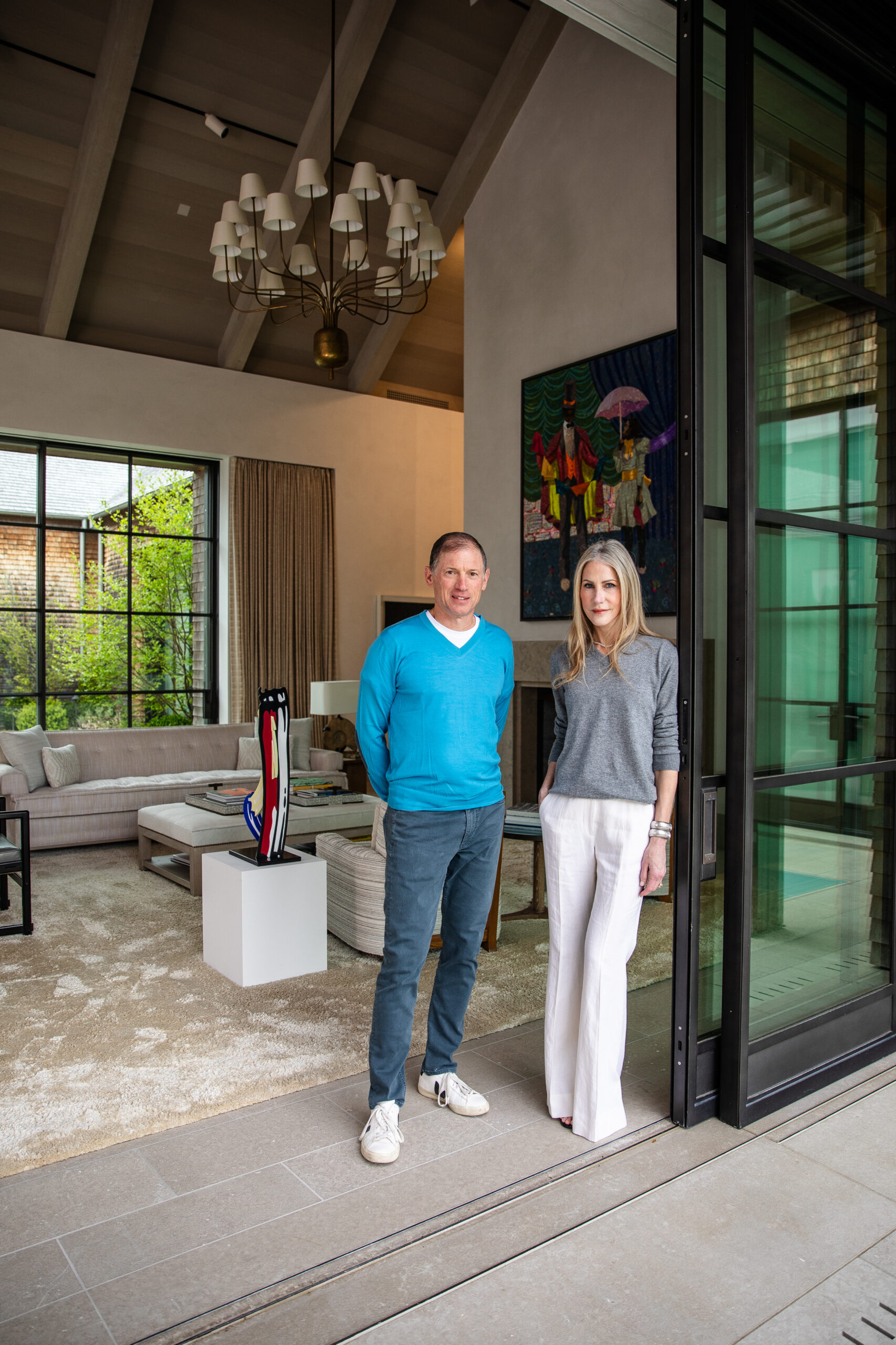
 Glenn and Amanda Fuhrman in their Hamptons home with (on the wall) Derek Fordjour’s Progenitor, 2022, and (on white table) Roy Lichtenstein’s Maquette for Three Brushstrokes, 1984 (fabricated 2005). All photography by Jessica Dalene.
On an overcast afternoon in Sagaponack, the famously down-to-earth investor and philanthropist Glenn Fuhrman is contemplating the impending loss of his privacy. As the founder of the FLAG Art Foundation, a board member at MoMA, and president of trustees at the American branch of the Tate, he and his wife, Amanda, a former lawyer, are a study in 21st-century patronage. They’ve donated monumental sculptures to their alma mater, the University of Pennsylvania, including an edition of Simone Leigh‘s Brick House (commissioned for New York’s inaugural High Line plinth, the first edition of which resides on the couple’s Hamptons property).
After a decade and a half of marriage, their passions extend far beyond the art world: They sponsor a free Wi-Fi network covering 95 blocks in Harlem, as well as the annual FLAG Award for New York’s public school teachers. Yet, through it all, they’ve kept the personal private.
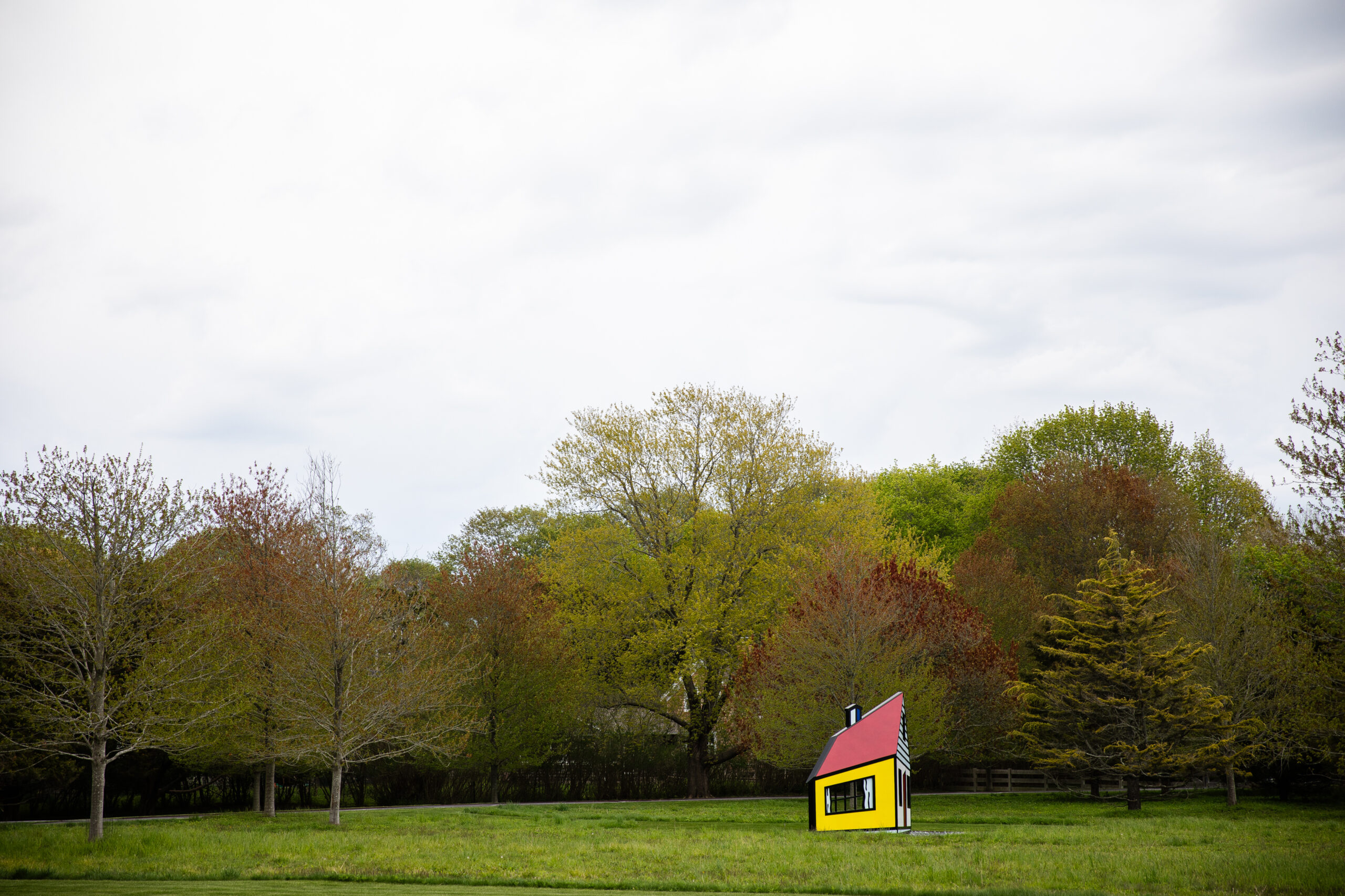 Roy Lichtenstein, House III, 1997.
There is no denying, however, that the recent publication of a more-than-300-page volume by Phaidon, Collecting Contemporaries: The Fuhrman Collection, opens the book on their lives. For the first time, the couple’s homes are on view—including an intimate encounter with the tenderly curated Hamptons artworks they share with their three young children.
Their artist roster is a who’s who of the last 25 years, rating a private museum or a sculpture park: Jeff Koons, Derrick Adams, Cecily Brown, Jim Hodges, and on and on it goes. A massive white enamel Ugo Rondinone tree grounds the inner courtyard of their Sagaponack abode. Sam Gilliam works on paper flank an expansive, skylit basement corridor. A site-specific Andy Goldsworthy snakes across the entryway, so every car must drive over it.
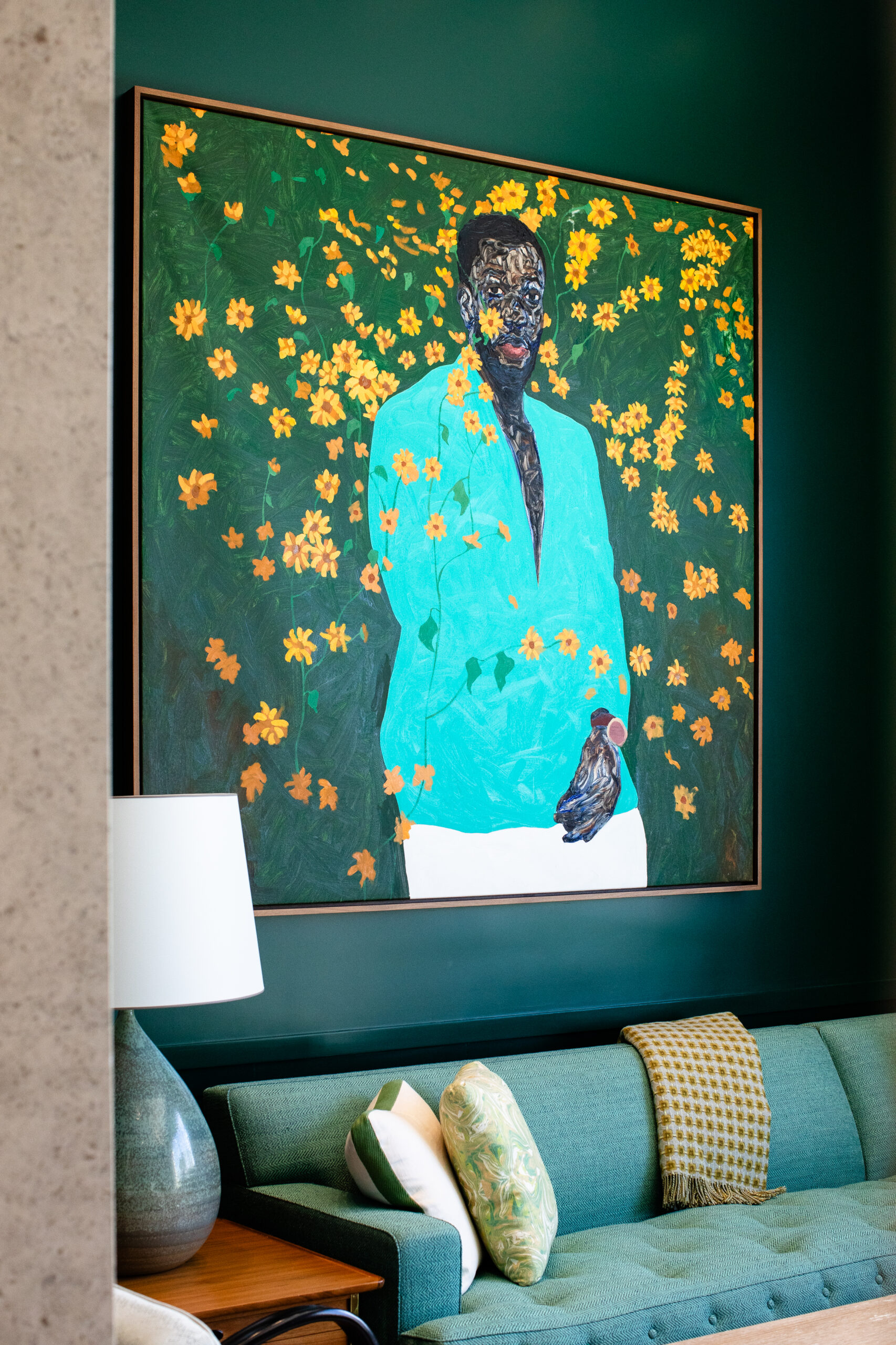 Amoako Boafo, Sunflower Field, 2022.
“One of the things that appealed to us about this property from the very beginning was that there is a big opportunity for outdoor sculpture,” says Fuhrman, even if they didn’t have any such work at the time. The couple subsequently discovered that their area has a 20-foot height limit for outdoor artwork. Luckily, their silvery, leafless Roxy Paine met the zoning requirements, as did an Elmgreen & Dragset lifeguard. Unfortunately, a giant Roy Lichtenstein piece did not and now resides as a long-term loan in front of the Parrish Art Museum.
“I’m still uncomfortable about it. It’s definitely easier to be private.” —Glenn Fuhrman
Fuhrman’s collecting journey began at 25, during his early days at Goldman Sachs, when he cold-called the photographer Arnold Newman and asked for a studio visit. “I’m over 60 now, and I’ve been collecting for almost 40 years,” explains Fuhrman, who fell for art history in his first semester as a Penn undergrad. Why share it now? “I recently had the realization that I’ve not yet sold anything. But as I get older, it’s more likely that some things will now start to get sold or given away to museums,” he answers. “This is probably the peak collection right now and the moment to document it.”
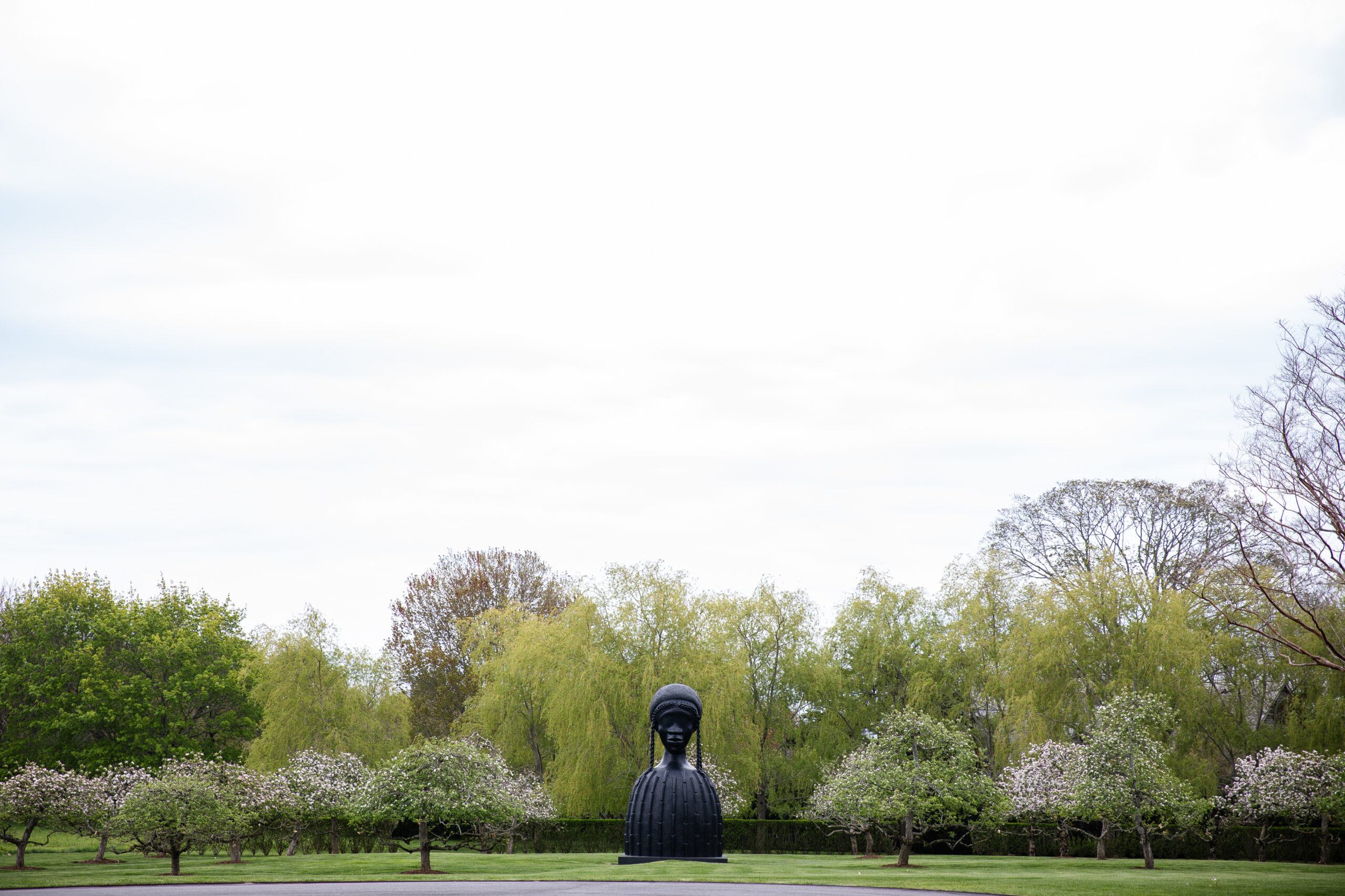 Simone Leigh, Brick House, 2019.
Ensconced in his lush orange-walled study, under a pantsless Anna Weyant sexpot, he’s feeling introspective. “I’m aware that there are a lot of collectors for whom their book is their Sotheby’s or Christie’s catalogue when their children sell their art after they’ve passed away,” Fuhrman tells me. “We had this unsolicited inquiry from Phaidon, saying, ‘We would love to do a book about your collection.’ I’m still uncomfortable about it. It’s definitely easier to be private.”
Over the years, first marriage, then parenthood, shifted his aesthetic proclivities. “My own taste has matured as I have matured,” he says. “As a couple, some of that maturing happens together.” For example, “When I was younger and single, I had an inclination to buy more nude women than I did later… of course, once you have children and young girls, it just also changes your perspective on how all of that works.” While Amanda has never vetoed a purchase, he explains with a laugh, she might demur with, “This is a good one for your office.”
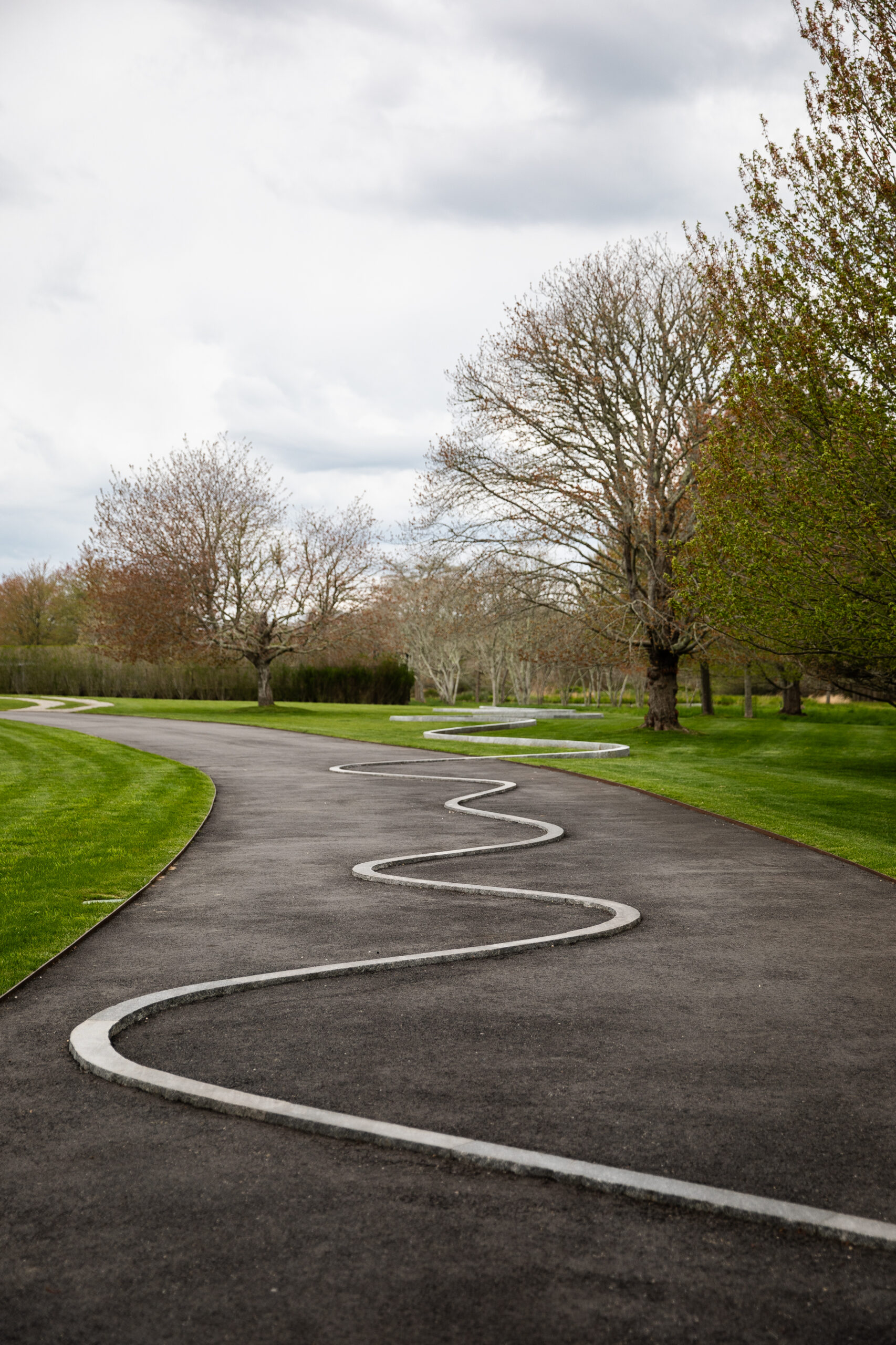 Andy Goldsworthy, Long Island Road Line, 2024.
More than any other guiding principle, close-knit artist relationships anchor the Fuhrmans’ philosophy. “The book is called Collecting Contemporaries because I really was collecting my contemporaries, going to galleries every Saturday or whenever I had free time, collecting artists that were making work at that time,” he says.
“This is probably the peak collection right now and the moment to document it.” —Glenn Fuhrman
One of those enduring friendships is currently on display at the Parrish through July 19 in “Ellsworth Kelly: Eight Decades,” the first in a curatorial collaboration between the museum and the FLAG Art Foundation; the two will mount a trio of shows annually across adjoining gallery spaces, through 2030.
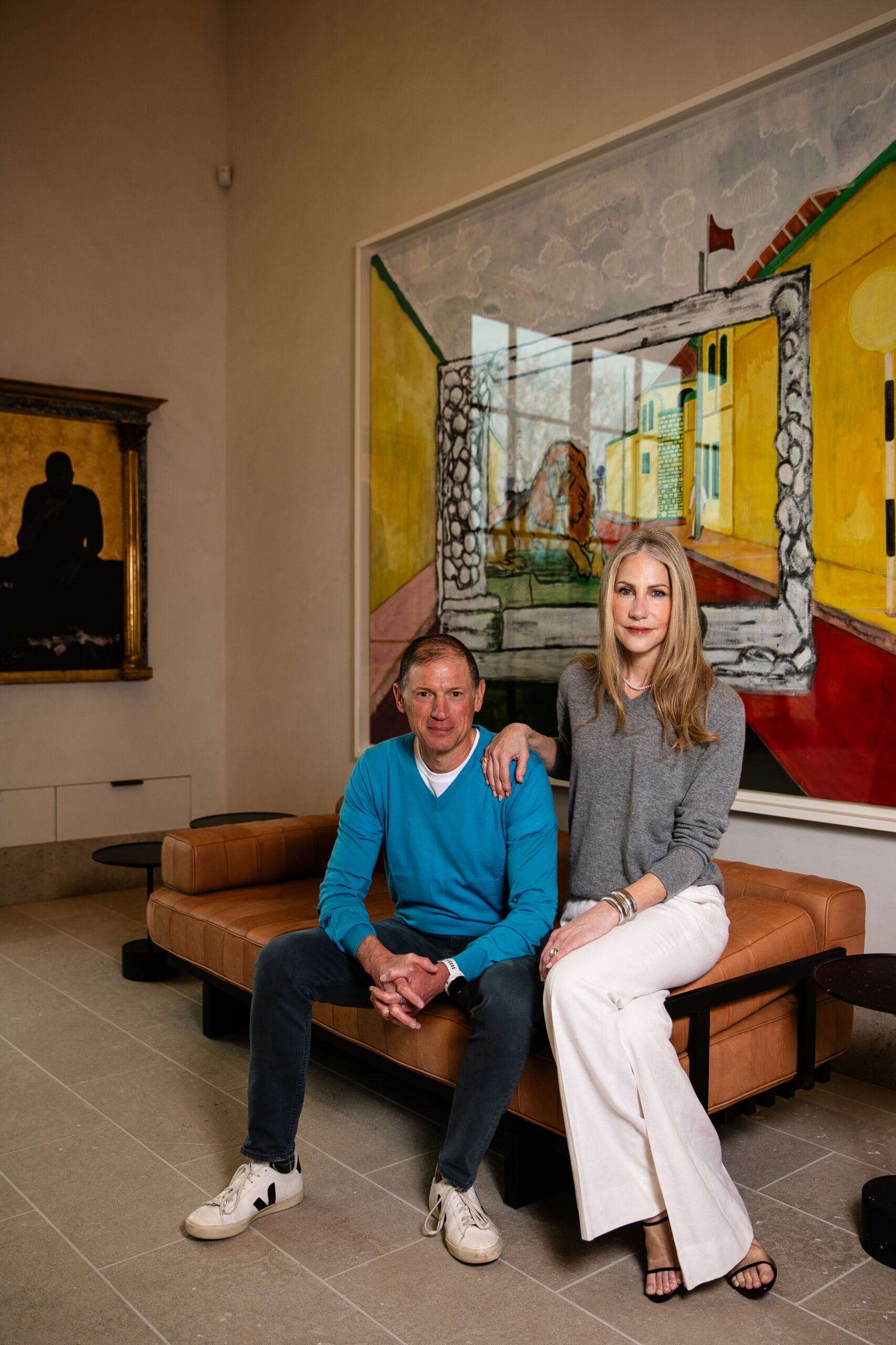 Left: Jammie Holmes, Golden Hours of a Man, 2022; right: Peter Doig, Lion in the Road (Sailors), 2019.
“Amanda and I started this really nice cadence of going up to Ellsworth and his husband Jack Shear’s home every summer,” recalls Fuhrman. The pair would drive from the Hamptons to the Hudson Valley, where Shear cooked them lunch. “We would sit in a beautiful, little dining room and have a bottle of wine,” Fuhrman continues. “Then, we would go from the house to the studio, and look at what was on the wall. It was really something we looked forward to every year.”
He describes how, in the early days of their marriage, “Amanda and I were just having a good time with different artists.” The new book is as much an exquisite love letter to contemporary art as to their partnership and the legacy they’ll inevitably leave behind one day.
More of our favorite stories from CULTURED
At 101, the Chinese American Artist Ce Roser Is Finally Getting Her Big Break
Yes, Kane Parsons Directed ‘Backrooms.’ Here’s How It All Went Down.
The Gayest Places in New York, According to Queer Culturati
Director Boots Riley and George Clinton Disagree About the Future of A.I.
The 8 Must-See Movies at Tribeca This June, According to the Ultimate Insider
Sign up for our newsletter here to get these stories direct to your inbox.