
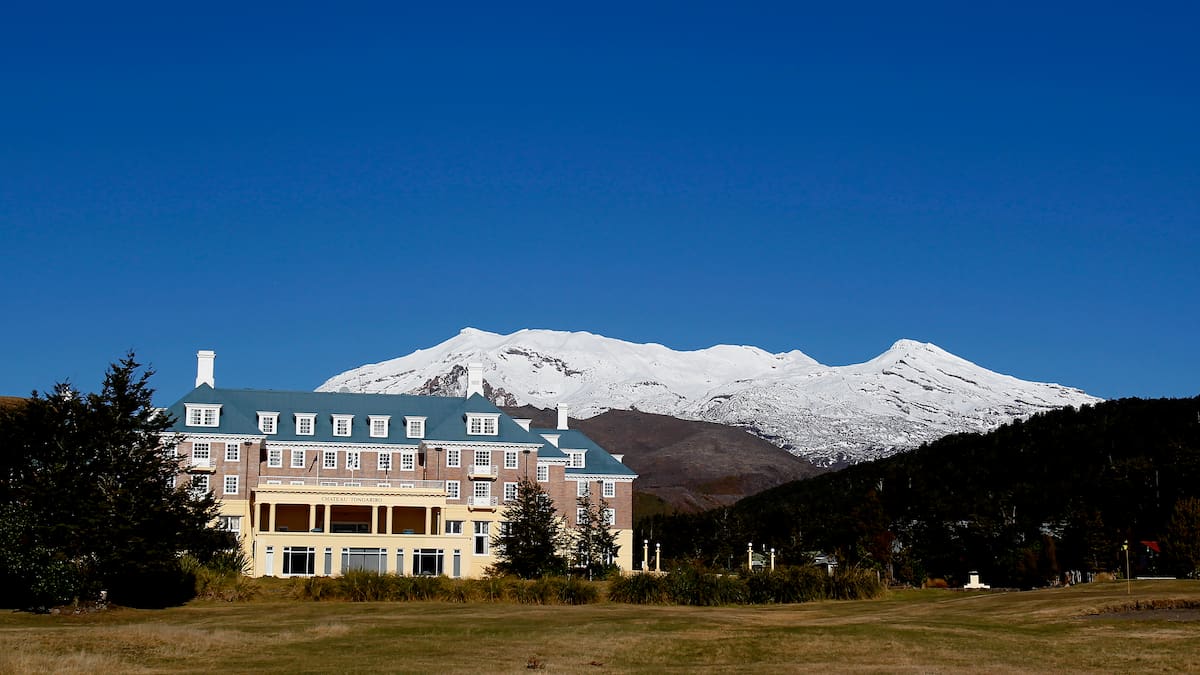
The Government’s official response to the petition noted all options remained on the table, although this was prior to the RFP, announced the following month.
The full petition included a 22-page written submission from Ruapehu District Council, which stated the Chateau had supplied about 30% of the district’s commercial visitor beds at its peak.
The council also cited an economic study which found the Chateau Tongariro accounted for around 10% of Ruapehu’s tourism-based GDP and about 9% of its jobs.
Petitioners labelled the project “low-hanging fruit” due to the stated benefits.
In documents obtained by Newstalk ZB under the Official Information Act, the Department of Conservation noted the minister had requested the RFP test whether “strengthening and restoration is viable with a maximum lease term of 60 years and without Government funding assistance”.
The Department of Conservation had also been considering the possibility that no party found restoration commercially viable, although further details on that were redacted.
Further in the briefing, officials said there was a possibility the terms of the RFP were “not viable for investors” because of the lease term available or the cost of strengthening and restoration.
The department also noted the importance of working with iwi on a viable solution and advised the minister it was “engaging in good faith” with Treaty partners and affected Māori organisations.
The Department of Conservation met with Te Korowai o Wainuiārua, Ngāti Rangi, Te Patutokotoko and Ngāti Hāua in mid-February to “understand their views” on the site.
Another memo sent to Potaka in late February on iwi engagement was significantly redacted but stated iwi and hapū views around the Chateau were “relatively aligned”.
“There is a risk that any process to select a long term leasee for the Chateau may be viewed as pre-emptive to settlement negotiations,” Potaka was told.
A separate memo stated iwi believed the Te Awa Tupua settlement obligations were relevant to the site. The historic agreement granted legal personhood to the nearby Whanganui River in 2017.
“The future development of the Chateau will have direct and indirect impacts on the catchment of Te Awa Tupua, given the significance of the operations in the scheme of the Whakapapa Wastewater Plant,” officials said.
“We will offer to bring iwi leadership together to chart a path for further consideration of interests and activities in Whakapapa Village, as well as discussing wider Tongariro Park matters,” they added, noting a “durable path forward” would require iwi partnership.
Responding to the information in the documents, Kirton said he was hoping the Government can “help join all the dots”.
“It’s important we take iwi and hapū along on that journey. It’s obviously significant, in terms of culture from their perspective – that has to be respected,” he said.
The mayor said the Chateau was “only a hub of what can be put in place there” and some were in favour of a “village-type concept” with further investment and new retail offerings in the area.
Azaria Howell is a multimedia reporter working from Parliament’s press gallery. She joined NZME in 2022 and became a Newstalk ZB political reporter in late 2024, with a keen interest in public service agency reform and government spending.