
“Total eclipses of the sun are absolutely incredible. I’ve been trying to see two, and I’ve actually seen one. They are just the best natural phenomenon.
“The moon completely covers the sun, so daytime turns into night. And for a couple of minutes, you see the stars around the sun and all the birds go home to roost. It’s just one of the best natural phenomena.”
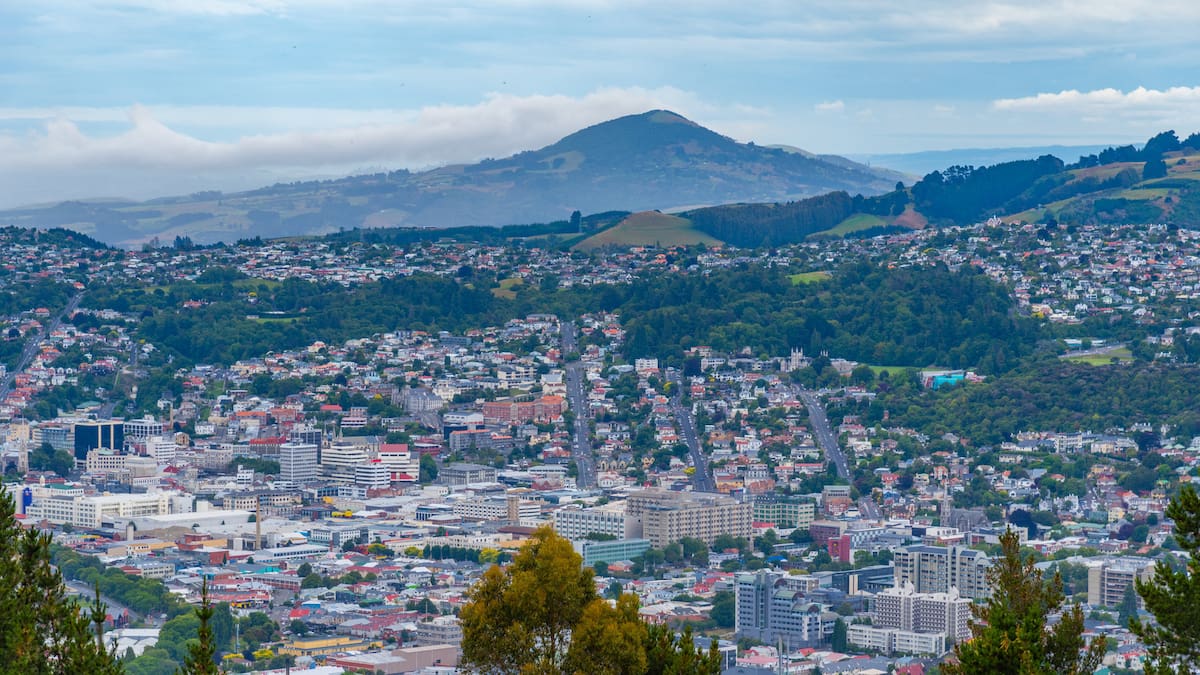
Astronomer Dr Ian Griffin has spent years anticipating the 2028 eclipse, even choosing a Dunedin home with a harbour view to watch the event. Photo / Bastiaan Beentjes, File
The last total eclipse visible from Dunedin was in 1163.
They can be forecast well in advance. Griffin said when he found out that there was going to be an eclipse in Dunedin, there was no way he was going to miss out.
“Thanks to Isaac Newton and the folks who followed him, we can calculate the position of the Earth, the moon, the sun and the planets centuries and even millennia in advance.
“It’s possible to know that, for example, after this eclipse, there’s not going to be another total eclipse visible from Dunedin for about 400 years. The next eclipse visible from New Zealand after 2028 will be about 2037.
“And the last one, you had to be older than me to see the last total eclipse from New Zealand. It was back in 1965. So, eclipses in New Zealand are relatively rare, so this is a big chance for us.
During totality, the moon completely blocks the sun, revealing the glowing solar corona and briefly turning day into night.
“I know here in Dunedin we’re all getting very excited about it and making big plans for it,” he said.
Hospitality and accommodation providers have reported already receiving bookings from overseas.
“Eclipse chasers, it is a thing and people will literally fly all the way around the world to see these things.”
Griffin said while the eclipse will be visible in Sydney and other places in Australia, Dunedin’s view of the event will be more photogenic than across the Tasman.
“The good thing about the 2028 eclipse is Dunedin’s right at the end of the path. That means we get to see the sun low in the sky. So if you’re a photographer like me, you’re going to go for those pictures with the sun just above the hills totally eclipsed.
“People will say, oh, well, the same eclipse passes over Sydney and Australia and the weather conditions might be slightly better, but they won’t have the view of the sun low in the sky.”
The eclipse will be visible from Dunedin and Otago, across to Milford Sound.
“Maybe the money shot for this eclipse is the eclipsed sun with Mitre Peak in the foreground. Wouldn’t that be an awesome thing?” Griffin said.
With the eclipse happening in the middle of a school holiday Saturday afternoon, Griffin says planning will be needed for the thousands of Kiwis who may head south to view it.
“I hope not on my deck, it probably won’t take the weight. But seriously, there will be some serious traffic issues unless we start planning.
The last total eclipse visible from Dunedin was in 1163. Photo / Getty Images
“Down here in Dunedin, I know there’s a lot of work going on now to make sure that we’re ready for the eclipse and the influx of folks. And we’re going to have a whole festival because between Matariki, which is about 10 days beforehand, we have a giant party here in Dunedin.”
“I remember back in 1991 I saw the one in Baja, California and the sun was pretty much overhead there. And it’s just, it’s absolutely visceral. Day turning into night isn’t something you experience as a human being. and looking at the sun surrounded by this beautiful pearly white corona.
“All the birds were coming home to roost and the street lights were coming on. It’s something that you just don’t experience very often in your life. So if you do have a chance to get to Dunedin in 2028, I would very much encourage the listeners to start planning now and maybe book those hotel rooms before they run out,” Griffin said.
– RNZ