


For Klick Health, the groundbreaking work using vocal markers to screen for type 2 diabetes was never the finish line.
It was merely the proof of concept for a new era of medical intervention. While the industry has long viewed agencies as the engines of creative medical communications, Klick has fundamentally redefined the model by becoming a creator of the life-saving screenings themselves.
Klick built its in-house innovation group, Klick Labs, which discovered that by analyzing over 12,000 identifiable elements of the human voice, certain traits are markers for changes in the human body. After making waves with its breakthroughs in diabetes detection, the voice mission continued with successful studies in hypertension and ovulation, with further breakthroughs currently under peer review.
This shift from promoting therapies to building diagnostics reflects the deeper institutional truth chairman Leerom Segal founded the agency on: “Klick isn’t adapting to the future; we were designed for it.” Whether through its new emphasis on oncology or its glass box AI tools that provide full traceability for pharma compliance, Klick operates less like a traditional agency and more like a commercialization powerhouse built on a foundation of deep experimentation and hacker roots. In an era of rapid technological disruption, Klick remains a step ahead because it’s doing more than just communicating science; it’s actively advancing it with most notably its voice work.
The results in 2025 are staggering. MM+M estimates Klick has grown to $785 million in revenue, making it a very close contender for the largest healthcare agency in the industry. That’s an increase of nearly 19%, with 91% of 2025’s growth coming from existing clients. Klick doesn’t share its full client roster, but the agency does work with many of the largest pharma brands, including Pfizer, Eli Lilly, AstraZeneca and Novartis.
Despite Klick’s investment in AI, which in many places means job cuts, Klick is still growing headcount. The Toronto-based shop employed 1,551 people last year, up from 1,466 at the end of 2024.
This ability to scale effectively is a point of distinction for Klick’s long-term partners. David Beckmann, senior director, U.S. marketing, pain at Vertex Pharmaceuticals, has seen the agency skillfully adapt its team to shifting demands by prioritizing expertise over mere headcount. As Beckmann notes, “That intentional approach to resourcing has made it more effective as a long-term partner and has helped ensure consistent quality even as the scope and complexity of work has expanded.”
During the Journavx launch, Beckmann says the team’s preproduction diligence and on-set flexibility demonstrated a level of dedication that transcended mere execution.
Beckmann says, “What impressed me most was the level of ownership they took over the outcome; it genuinely felt like they were fully invested in making the shoot a success, not just executing a scope of work.” This professional commitment and “fully buttoned-up” approach to logistics and compliance elevated the entire production, reinforcing Klick’s reputation for creative excellence, which was on full display in 2025.
Klick president Ari Schaefer highlighted several pieces of work that best illustrate its award-winning year. The agency collaborated with Ferring on the Fertility Out Loud campaign, which originally launched in 2021 to break the silence surrounding infertility. By 2025, the fertility landscape had become increasingly crowded and overwhelming, with research indicating that 65% of people disengage from IVF because the journey becomes too taxing. Klick updated the campaign to move beyond outcome-focused messaging, instead highlighting the emotional “act of trying” and supporting prospective parents facing emotional dropout.
“The creative campaign that was built, instead of trying to compete with social media noise, Fertility Out Loud became a stabilizing, empathetic presence within that social media space,” Schaefer says.
The program’s impact has been substantial, facilitating over 45,000 visits to reproductive endocrinologists and resulting in over 7,000 new patient treatment starts specifically for the Ferring brand.
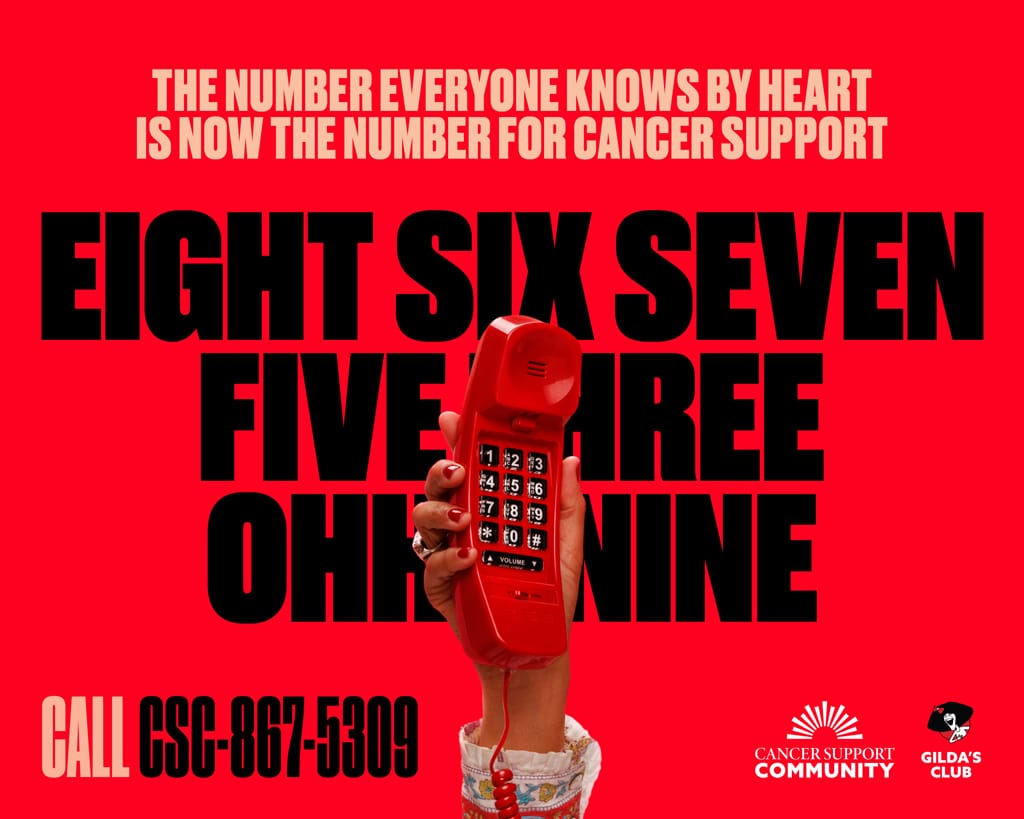
In another campaign, Klick revitalized Cancer Support Community and Gilda’s Club’s underutilized hotline by pairing the iconic Tommy Tutone number, 867-5309, with a (CSC) area code. The initiative drove a 216% call increase in its first week, connecting over 500 people to care. The effort is a “nice connection point to where Klick is heading as an oncology powerhouse really understanding the needs of those living through treatment for cancer,” Schaefer says.
Aside from the breakthrough creative, Klick’s strength is rooted in its technological expertise. While many of the holding company data centers are often described as “black boxes,” Klick prides itself on maintaining “glass box” technology that’s grounded in transparency.
“The way we use Al is always ‘glass box,’ meaning there’s always traceability through everything, so we can show them exactly what was done by humans, and then how that was validated by the tools,” says Segal.
Lori Grant, CEO of Klick Health, uses the “jagged frontier,” a term coined by Wharton professor Ethan Mollick, to describe the uneven and unpredictable nature of current AI capabilities.
The frontier is “jagged” because AI can excel at complex tasks while failing unexpectedly at simpler ones. Grant notes that success depends entirely on the specific task or domain, which is why clients rely on Klick to distinguish scalable solutions from experimental “bleeding-edge” tech.
Clients have access to myriad tools, including Klick Guardrail, a proprietary AI tool that won the company’s internal $1 million contest’s grand prize that’s built for healthcare marketing and applies complex reasoning to ensure pharma compliance. Guardrail is “designed to help pharma marketers navigate compliance even more intelligently,” Grant says because it shows its logic and provides traceability back to original data.
Klick’s tech stack also includes MedOcean, a data lake integrating 30-plus sources for precise audience segmentation, and the Scientific Content Unit, which creates modular content for consistent, channel-agnostic deployment.
Additionally, Dynamic Stakeholder Profiling uses AI to replace static KOL lists with “expert dossiers” refreshed by real-world activity signals.
Ultimately, the success of all these tools comes back to its people. “The prerequisite for it is a team of people who want that incredibly high weekly compounded learning rate and are leaning in,” Segal says. “We were able to take advantage of everything we were built for to shape the future we envisioned a long time ago.”
What is an interesting way you’ve seen a brand use AI?
We like how OpenAI built its first ad campaign around people. It rightly avoided UI demos or tech explanations. When you watch each spot (such as “Dish with ChatGPT”), you notice that it focuses on a prompt and the human outcome with people eclipsing the product. There’s a lesson for any brand trying to market AI without triggering skepticism: You don’t need to show the technology. Bragging about algorithms and processing power feels cold. People don’t care how the engine works, they care about how it improves their lives. — Schaefer