
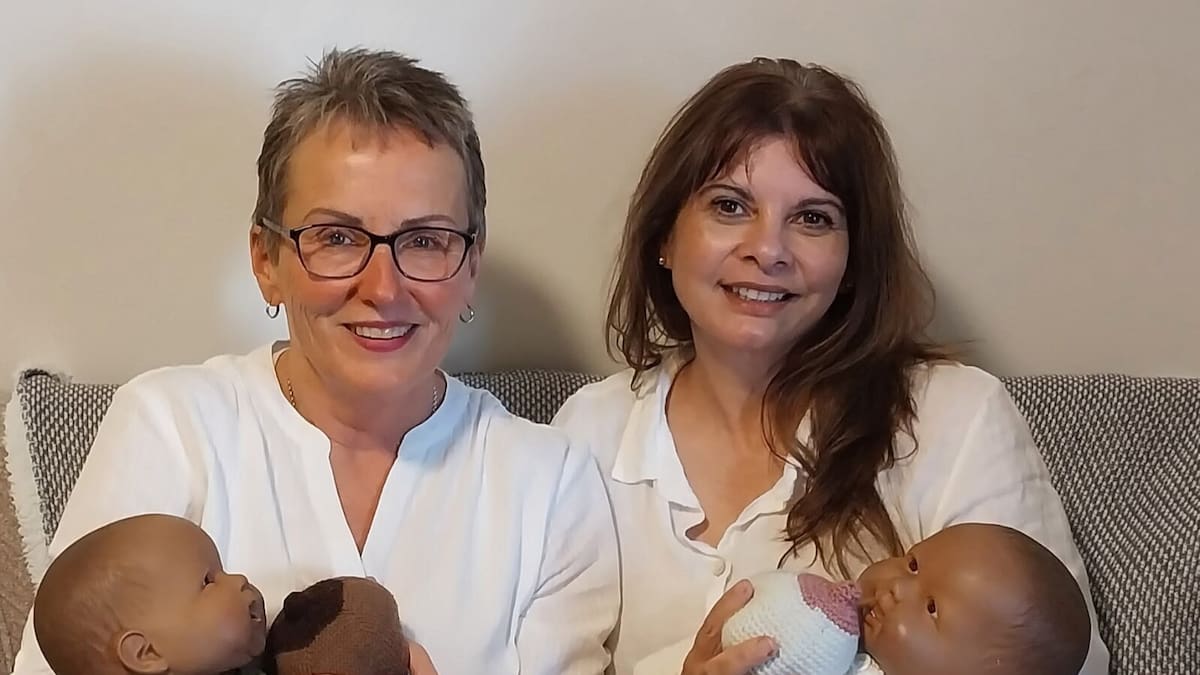
The Hawke’s Bay Breastfeeding Service, delivered through Whānau Āwhina Plunket, has received an International Board Certified Lactation Consultant (IBCLC) Care Award.
The award recognises excellence in breastfeeding support and places the Hawke’s Bay service on an international directory of recognised IBCLC care providers for the next two years.
“We are incredibly proud to be recognised in this way for our efforts,” Owen said.
Recognition awards this year went only to about 40 services worldwide, including one in New Zealand, three in Australia and 28 in the United States.
Lactation consultants Jo Owen, left, and De Nicholls show the Hawke’s Bay Breastfeeding Service Care Award certificate.
The Hawke’s Bay service supports 217 new whānau and delivers 572 support sessions each year, particularly for Māori, Pacific and families with complex needs.
Alongside one-on-one support, the service also runs Miraka Māmā, a free breastfeeding coffee group in Flaxmere where mothers can meet, feed their babies and seek advice in an informal setting.
“Our service does more than respond to breastfeeding challenges,” Owen said.
“We celebrate whānau strengths, support them every step of the way, and help them give their babies the best possible start.”
Alongside one-on-one support, the service also runs Miraka Māmā, a free breastfeeding coffee group in Flaxmere where mothers can meet, feed their babies and seek advice in an informal setting.
The consultants support mothers with issues ranging from painful feeding and low milk transfer to premature babies, twins and babies with medical conditions.
“Everybody’s an individual and they all have individual circumstances,” Owen said.
She said breastfeeding support had become increasingly important as families faced growing pressures, including returning to work earlier and navigating financial and social stress.
“It’s an emotional cost for the mum,” she said, challenging the idea that breastfeeding is simply “free”.
The service is led by Owen and fellow lactation consultant Nicholls.
Nicholls said her own difficult breastfeeding journey with her first daughter inspired her 20-year career.
“She was premature … and feeding was painful,” Nicholls said.
A few weeks later, Nicholls felt a tug on her breast and after some adjustments, breastfeeding had finally become easy for her.
That experience led her to specialise and become a certified lactation consultant.
“Every mother deserves the chance to get good breastfeeding support,” Nicholls said.
She said many feeding decisions are made during pregnancy, so that’s the ideal time to learn about it, ask questions, and understand what to expect.
“The earlier, the better … We have never visited someone who says it’s good timing. They always wish they had seen us earlier.”
The service is not only for first-time mothers.
Aliesha Wells sought help after her third baby, Meila, was born three weeks early, weighing just under 3kg.
“I felt really confident in breastfeeding, and yet I had the struggle on my third time,” Wells said.
With support from the service, she learnt new feeding techniques, including “boober milkshake” to stimulate milk flow and different breastfeeding positions.
Aliesha Wells breastfeeding her 3-month-old daughter, Meila.
Now 3 months old, Meila weighs 5kg and is exclusively breastfed.
Wells encouraged mothers not to stay silent if they were struggling.
“Even if you think you’re a pro, it’s okay to ask for help and get some advice because there are some pretty cool techniques that make breastfeeding easier,” she said.
“A lot of women sit there and struggle in pain and silence, and you don’t have to.”