
Capitalism has several of its challenges waiting for redemption. Subsequent to the global financial crisis of 2008-09, even the ardent capitalists are wary about the negative social impact the system has brought during the last few decades, such as concentration of income and wealth into a few hands, reckless abuse of environment, and excessive consumerism, to name a few of those negative marks. Though efforts have been taken by various governments to mitigate some of those problems during the last decade and half, a lot more need to be done to find complete salvation, if at all that is possible.
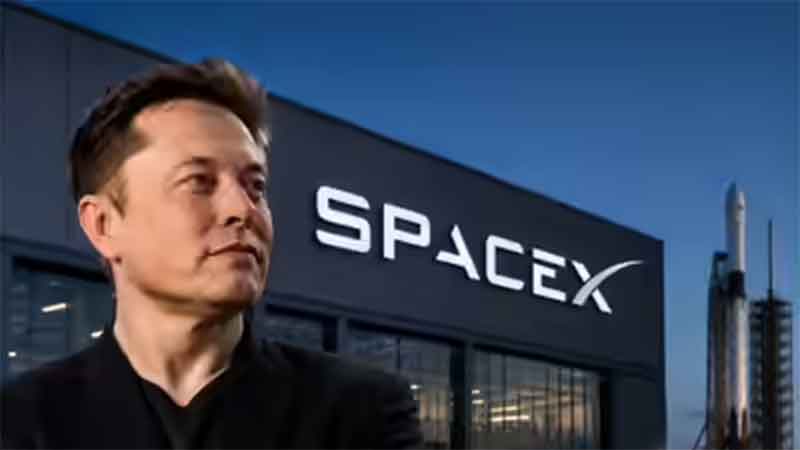
Now comes a new twist to this. The proposed mega Initial Public Offer (IPO) by Elon Musk of his Space X tech startup company, slated for the month of June , is going to be another litmus test for the capital systems’ credibility. The IPO is pegged at US$ 75 billion- the largest potential listing so far in the history of the stock exchanges any where in the world. A distant number two in the private sector who raised just one third of this amount is Alibaba. The other two closer examples, again at far less amounts, are NTT in Japan and Saudi Aramco in Saudi Arabia, both partial privatization of government companies of mammoth sizes with long history of robust financial performances.
Just to get a real feel for the numbers again, with the listing of this IPO (assuming it is successfully closed) Space X may rank among the tenth most valuable companies in the world with a market value of approximately US$ 2 trillion. With that Mr Musk himself may have become the world’s first trillionaire!! According to an estimate published by The Economist (May 23rd-29th 2026) he will be worth as much as all the households put together in his country of origin- South Africa.
Space engineers and AI experts are still debating the engineering and technological perfection or otherwise of the products, services and the ultimate space mission of the Company. As the other two close competitors, both Blue Origin and Amazon, also have announced similar plans to operate shuttle services to the space with re-usable rocket, several levels of technical evaluations are taking place in AI and space labs all over the world. Even Chinese companies like LandSpace and Space Pioneer are in the race. However as the purpose of our discussion here is not to dwell on these technological aspects, let us give Musk the benefit of doubt and assume technically everything they are offering are feasible.
But what is notable, and at the same time disturbing, is its financial and economic implications. This IPO has no comparison with any other mega IPOs in the past, either in its size or in the underlying premises. Typically before any company in general, and start-ups in particular, are allowed to offer an IPO, there are several financial performance criteria to be fulfilled for raising money from the public.
First, the entity’s profitability – or ability to become profitable in the near future- is the criteria considered. In Space X’s case, the company is losing more than US$ 10 billion a month, and its recent merger with affiliate XAI and the social network carrier X is taking it to further financial vulnerability. It is worrying that Musk is asking the investors to trust their savings to a loss-making company with hardly credible financial plans. Space X’s business plan as filed with the regulators has the red letter warning “risky” written all over it. The plan says that significant part of its revenue will come from AI. It is not clear whether it will be by creating data centers in the space or by selling data-center services to others. Both are untested and ambitious in that scale – the revenue estimate is US$ 28 trillion!!; the revenue stream targeted even includes income from mining of asteroid.
One important pre-cursor to making a decision by an entity for inviting investment from the public through IPO is its valuation itself. Conventionally valuations are based on potential profitability and is measured in multiples of earning – EBITDA (Earning Before Interest, Tax Depreciation and Amortization. But nascent start-up companies, which are not making profit, but have high future potential to do so soon, are valued at multiple of revenue instead of earnings, even though they are not making any positive cash generation at present. These revenue multiple can range from 10 to 20 based on the product, industry, location etc. Mesk’s own Tesla is valued at 16 times the revenue based on its current market cap. But in the case of Space X, the valuation is 100 times the revenue- highly ambitious by any standard.
Yet another aspect that is questioning the norm is the governance – or lack of it. There is a huge concentration of corporate control in the company in the hands of Musk, as disclosed in the filing with the authorities. Conventional corporate control requires effective and independent board oversight, risk-based incentives structure for senior and critical executives, and robust succession planning. Musk’s Satar X does not believe in any of these norms. On the other hand, it offers a complete “founder centric” model which allows the company to be governed by the founder’s discretion, though significant investment is raised from the public. The problem with the proposed governance structure is the entrenchment of super-voting equity, by which dual class share structure bypass the conventional (and more fair) “one-share-one-vote” structure of any publicly held entity. Disclosures in the IPO filing states that Musk and his close associates will have ten times the voting right compared to an ordinary share holder. Even otherwise, a “controlled company” like this has, under the SEC regulations, exemptions on forming an independent board or constituting a compensation committee.
Even for the post IPO listing of shares, it is understood that Musk is “shopping” for the least regulated stock exchange, as different states and stock exchanges are vying with one another to be the preferred exchange for this and accordingly offering increased statutory protection for the directors appointed by Musk, which will be detrimental to the interests of the ordinary shareholders. Space X is also targeting to list on NASDAQ, the index carrying exchange, where he will get the benefit of its fast entry rule that allows newly listed large entities to enter the NASDAQ 100 index just after 15 trading days as against normal three months waiting period.
There are several obvious risks associated with these kinds of opaque governance system. These privileges under the rules give Musk and his associates the right to appoint any one of their choice as a director, the public share holder having no say at all. With the kind of political clout Musk is wielding it is any body’s guess what the criteria for those appointments will be. Investors are therefore saddled with his future business decisions as well as his not-too- admirable politics with frictions in his own Republican party. He may face a further backlash under the next Democratic administration for his racists leaning, immigration policy, trade tariffs and other similar positions he has taken.
The corporate world in the USA is comparing him and the kind of risk he is daring to take, to Henry Ford and J P Morgan. But the comparison is unrealistic and unfair. Though both the celebrated entrepreneurs took immense risk in their respective field of business , those risks were calculated risks, and even speaking of their time, relatively much smaller in size. Moreover they were acting with lot more certainty of the so called “brick-and-mortar” business on the earth compared to the mostly un-chartered and un-seen world of the space where Musk is betting his US$75 billion IPO.
There are other moral and ethical aspects too. As the global economy is moving through a depressed phase due to the war and the resulting energy crisis, the amount Musk is targeting is hard to come by from his friends and associates alone. He and his agents will have to tap most every pension fund, sovereign fund, HNIs, private equity funds and even retail investors from financial markets all over the world – with possible arm-twisting of the decision makers at these providers of funds. He may even use the good office of his “friend” at the White House for this purpose. This will be creating a big constrain to the liquidity in this war-effected economy, when every corporate and government all over the world is finding it difficult to make both ends meet.
A successful Space X IPO will take this huge capital from the public and other capital providers to one single person; and what he will do with this money is unfortunately will depend mostly on his personal decision and ambition, making the normal investing public to feel jittery. Not only is this a huge concentration of wealth, it also drives the other critical sectors with potential dearth of money. Obviously alternative investments in education, health care and social sector will suffer, at least temporarily. Even bigger casualties will be the “impact” and “ethical” funds for whom attracting funds is a difficult proposition, even otherwise. As the liquidity will be drained with Musk’s IPO sucking $75 billion from the market, these humanitarian funds will be left with very little money for them to attract from the market. The significant development achieved during the last two-three decades in the area of women-empowerment, environmental protection, energy conservation, soil protection, water conservation, preventive health, reduced child-mortality, vaccination, rural sanitation etc, especially in the southern hemisphere and African nations, are due to the large amount of funds invested by these ethical and impact funds in these territories. . If they run out of resources, all these progresses will be retarded to the disadvantage of marginalized section of the humanity.
Doing business and taking risk is all about capitalism and its free market economics. But the time is changing for the capitalists to watch. It’s the populist age where the gen Z and gen Alfa mobilizes their opinion through social media in no time and they change things over night. We have seen its different avatars in recent times- in Sri Lanka, Nepal, Bangladesh etc. In the US, overwhelming sentiments against Gulf war is predominantly created by the youth in the university campuses . The recent phenomenon of Cockroach Janata Party is yet another youth manifestation against perceived injustice. In such a scenario, many people will see this kind of concentration of wealth coupled with unchecked corporate powers in trillion dollars companies- and individuals- as a failure of capitalism. The ever increasing divide between the rich and the poor globally is already a matter of great challenge for the governments and policy makers to assuage. But for some die-hard rightists, Musk and his IPO, the ability of the free market to mobilize money of that magnitude and probably turn the improbable in to reality can be seen as the capitalism at its zenith of success.
As learned economists like Dr Joseph E Stiglitz has pointed out at the time of 2008-09 financial crisis, once you cross the limit you are not only driving your business in to jeopardy, but also taking the capitalism itself in to great risk. Musk and his IPO have crossed all limits normally considered as prudent. Greed has been identified as one of the drivers to the crisis in 2008-09. Phony financial products, lack of transparency, lose governance and lack of any regulatory handle were the other major factors attributed to the crisis. Musk’s IPO has all these ingredients packaged in it in required proportion. In a sense, this is Musk’s tryst with capitalism!!!
Subscribe to Our Newsletter
Get the latest CounterCurrents updates delivered straight to your inbox.
C. H. Abdul Raheem is a Chartered Accountant based in Kochi, works as a financial advisor to several public limited companies and is in the Board of many companies as independent director