
With the bakery shut and facing public scrutiny, Vo said he felt he had let customers and the wider community down.
“There was a lot of stress. We’d never been closed before,” he said.
He has owned and operated Levain with sister-in-law Huinly Nguyen for four years, but has more than three decades of experience in the industry.
Vo acknowledged the bakery’s initial claim that it had closed for family reasons was wrong. He said he was unaware of the social media post at the time and, once he learned of it, tried to correct the record through local community groups.
He said he wanted to be transparent about the reason for the closure and apologise to customers, believing the community deserved honesty from a business that planned to remain in the area for years to come.
“We’re here for the long term. The idea was always to come back home, put down roots and build a business we could be proud of.”
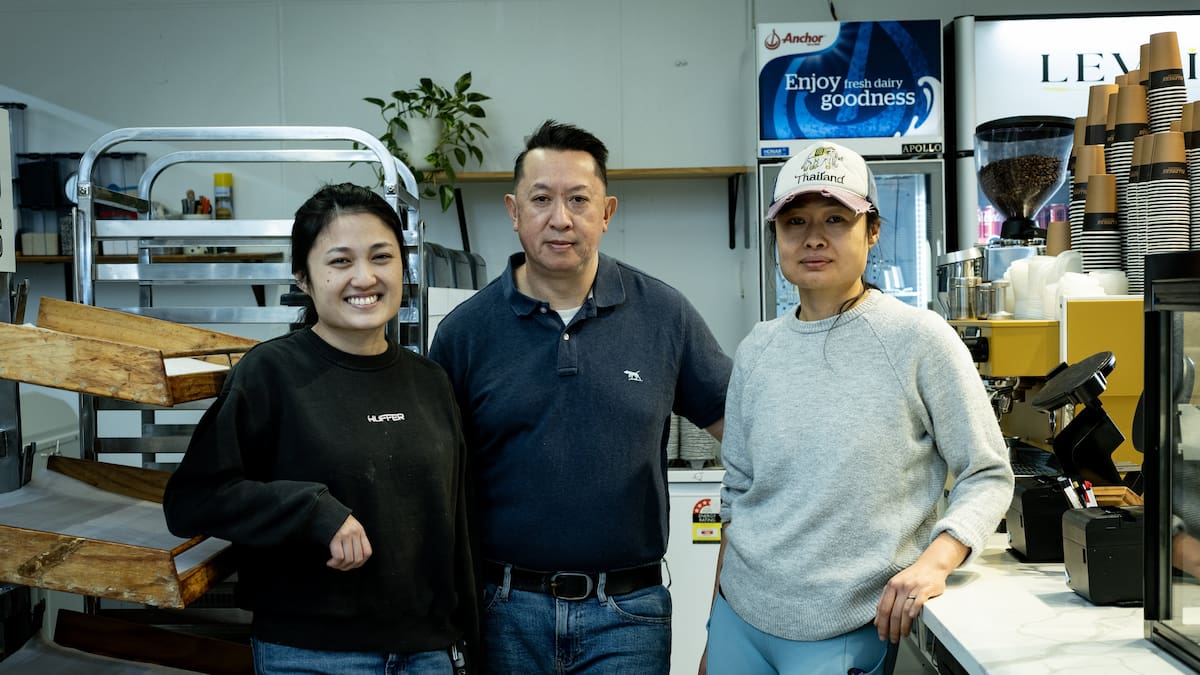
Levain staff (from left) Huongly Nguyen, Sean Vo and Trinh Nguyen are preparing to reopen after the forced shutdown. Photo / Dean Purcell
Vo said the family had been overwhelmed by messages of support from customers throughout the closure.
The encouragement helped them through a period that had become emotionally draining, forcing them off the internet after they became “too upset” to see the comments and rumours spread about them and their business.
“There were never any rats … the cockroaches were not in the food; that was all a lie.”
Despite the circumstances, Vo said, no customers became ill, and he maintained the issue was not related to the quality of the food being produced.
Documents provided to the Herald show the council forced the closure because of “widespread cockroach activity” and “the operator is not adequately managing pest control”.
Levain bakery co-owner Sean Vo is preparing to reopen his Blockhouse Bay business after getting the all clear from inspectors. Photo / Dean Purcell
Vo said he was determined to avoid another closure. The family poured both time and personal savings into keeping the business afloat.
Vo said he paid his 15 staff out of his life savings during the closure.
“I don’t want another public shutdown. My family works so hard, and I’m digging into my life savings to make sure this place keeps operating.
“We want the opportunity to prove we have learned from our mistakes. This will be our only public closure.”
Vo said they used the closure as an opportunity not only to make major improvements to the building, unrelated to the bugs, but also to train staff on higher-quality pest control so this “never happens again”.
“We understand that trust is earned.”
Levain bakery in Blockhouse Bay will reopen on Friday after being issued with an A grade hygiene rating by Auckland Council inspectors. Photo / Dean Purcell
They had now fumigated the building five times, despite the council suggesting they do it only twice, to make extra sure the premises were bug-free and ready to open.
The backlash on the internet had been “really hard to deal with”, Vo said.
He felt fearful of going out in public at times over the past three weeks, out of fear of being recognised and confronted in person.
“I was so disappointed and ashamed … now we want the opportunity to prove we have learned from our mistakes.”
Vo said the ordeal had also highlighted the support within New Zealand’s baking community.
Bakery owners nationwide had reached out to check on his well-being and share their own experiences dealing with pest issues and public scrutiny.
Vo said the message from industry peers was that while pest incidents were something no business wanted to face, they were challenges many operators encountered at some point.
“I just feel grateful for the support we’ve had. It’s meant a lot.”
The Auckland Council ordered Levain to close after identifying a risk “associated with pest control processes” during a site visit, specialist operations manager Veronica Lee-Thompson told the Herald last month.
“We have issued a notice for the business to remain closed until mitigating measures have been completed.
“These will ensure that appropriate food safety standards are met before the business reopens.”
Lee-Thompson later said the bakery was shut because it had failed to control a cockroach infestation and needed time to “get it under control”.
The council issues food safety grades to help customers determine whether food is safe to eat. According to its website, inspectors assess businesses’ process controls, environmental controls, food safety practices, management confidence and compliance history when assigning a grade.
Businesses are graded from A to E, with A the highest rating. The two lowest grades, D and E, indicate an outlet is likely to have issues that make food “unsafe or unsuitable”.
An E grade is the lowest rating available and results in enforcement action by the council. Its website states that businesses that receive the grade “have had a critical issue relating to food safety and have been closed as a result”.
The bakery was cleared to reopen on May 31 after a follow-up inspection found the identified risks had been addressed to the council’s satisfaction, a council spokesperson told the Herald.
Sign up to The Daily H, a free newsletter curated by our editors and delivered straight to your inbox every weekday.