
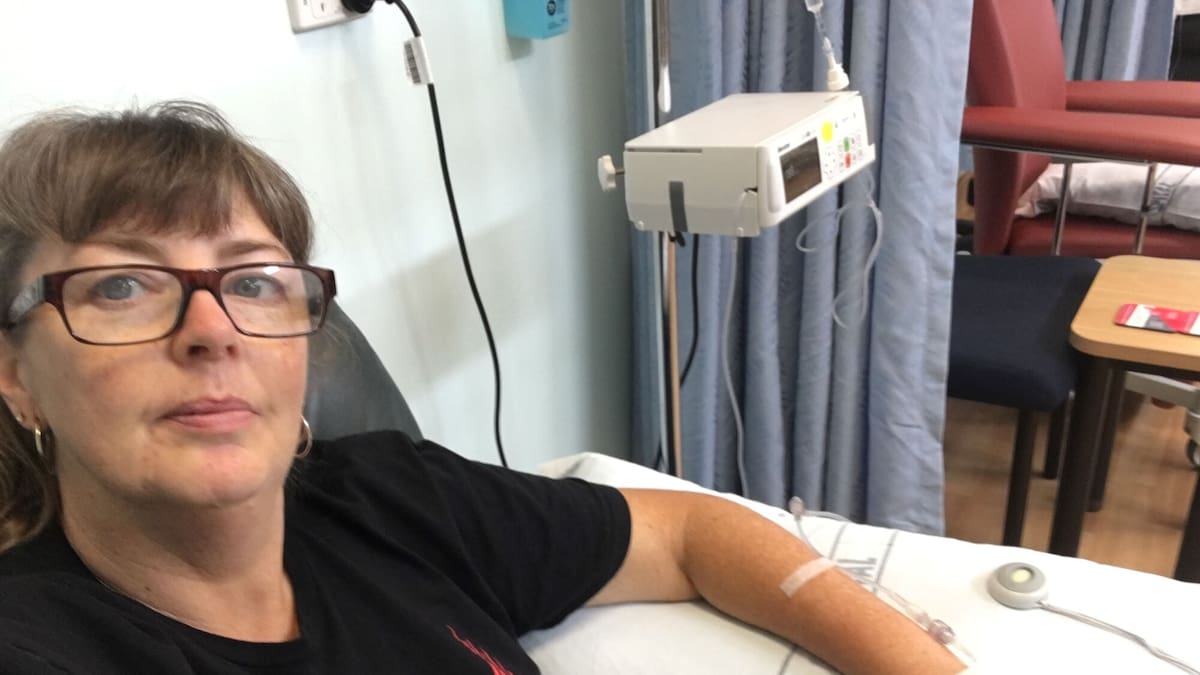
Goldthorpe is sharing her story ahead of the Dry July campaign – an annual challenge where participants give up alcohol for a month while raising funds for non-medical services for cancer patients in New Zealand, including the Cancer Rehabilitation Foundation (Pinc and Steel), which has supported Goldthorpe with physiotherapy rehabilitation.
Last year, 452 people from Tauranga took part in Dry July, raising more than $42,000 to support people affected by cancer.
According to the Ovarian Cancer Foundation New Zealand, 306 women are diagnosed and 207 women die from ovarian cancer each year.
Thirty per cent of women died within one year of diagnosis. The five-year survival rate was 42.8%, a February foundation statement said.
Goldthorpe said she had “short, sharp, stabbing pains” in her lower pelvic area in August 2024.
Goldthorpe said she saw her doctor, who did a stomach exam and did not think there were any problems.
“We decided to do an ultrasound but … he didn’t put any priority on it, which is why I didn’t get it until December.”
Goldthorpe said she had “a bit of a sinking gut feeling” upon finding out she had cancer just before Christmas in 2024.
“But then I have had a blessed and wonderful life.
“I have had love and I’m comfortable, and we’re in a perfect stage of our lives, so I figured that somewhere the other shoe was going to drop sometime.”
Goldthorpe said she needed further tests and biopsies before a treatment plan was confirmed in March 2025 due to the type of cancer she had – a low-grade serous carcinoma.
Her cancer was “inoperable” due to lesions on her organs. She started chemotherapy in April 2025.
Tauranga woman Tracey Goldthorpe had chemotherapy and a major surgery in 2025.
Chemotherapy shrank the lesions enough to qualify her for an operation, which she had at Auckland City Hospital in June 2025.
Goldthorpe said she had a radical hysterectomy to remove her cervix, fallopian tubes and ovaries. Doctors also removed her appendix, rectum and omentum.
She required 72 staples, from just below her bra line to just above her pubic bone.
Goldthorpe also had a colostomy bag until November.
“Now my body’s still learning how to process my food and waste and things in a slightly different way, but I’m up and about and … everything works.”
Goldthorpe said she was doing really well overall. Sometimes she experienced fatigue and got “a little bit fuzzy”.
“Words just completely disappear sometimes, and I have to describe a thing before I can get to what it is.”
Goldthorpe said her cancer “fed on oestrogen” and she was taking oestrogen blocker medication. Side effects included joint and muscle pain.
“My body’s in pain a lot of the time but I’m alive.”
Now, she had “no evidence of disease”.
Tauranga woman Tracey Goldthorpe’s hair began growing back after chemotherapy and a major surgery in 2025.
Goldthorpe said she and Shane bought a small yellow caravan and had been going away on weekends.
“He’s mostly done that up, but I sewed the curtains while I was home from chemo, which was quite fun.”
Goldthorpe said she enjoyed tending to her vegetable garden, walking, cycling, yoga and reading.
She was also organising a fundraising event in October for the Cancer Rehabilitation Foundation and the Ovarian Cancer Foundation.
Goldthorpe said rehabilitation with the Cancer Rehabilitation Foundation (Pinc and Steel) had been a “game-changer”.
She did sessions pre- and post-surgery, which included yoga, Pilates, paddleboarding and aerobic step classes.
“Going dry for a month is a small thing when you consider how much benefit it can give somebody in their challenging times and helping them rediscover themselves.”
A Dry July statement said funds raised through the initiative supported three charities – Look Good Feel Better, Prostate Cancer Foundation of New Zealand and Cancer Rehabilitation Foundation (Pinc and Steel).
The charities delivered programmes and services nationally for people affected by cancer. This included rehabilitation to rebuild strength after treatment, exercise and recovery classes, counselling services and wellbeing support that helped people regain confidence and independence.
People can register for this year’s challenge on the Dry July website.
Common ovarian cancer symptoms
BloatingEating less and feeling more fullAbdominal, pelvic or back painNeeding to pee more or urgentlyChanges in bowel habitsFatigue
Indigestion, abnormal vaginal bleeding or discharge, unexplained weight changes and painful sex are also possible symptoms.
Source: Ovarian Cancer Foundation New Zealand
Megan Wilson is a health and general news reporter for the Bay of Plenty Times and the Rotorua Daily Post. She has been a journalist since 2021.