

When the Japanese Smart Lander for Investigating Moon (SLIM) spacecraft, nicknamed the “Moon Sniper,” face-planted onto the lunar surface in 2024, an experimental rover told Earth scientists what happened. Rolling autonomously through the lunar dust, the transforming sphere-shaped robot — not unlike Star Wars’ BB-8 droid — photographed and transmitted images of the upside-down lander to Earth, completing its mission while SLIM slowly froze.
Now, a new paper, published Wednesday (June 10) in the journal Science Robotics, describes how that feat was possible and explains the role such rovers could play on future moon missions.
You may like
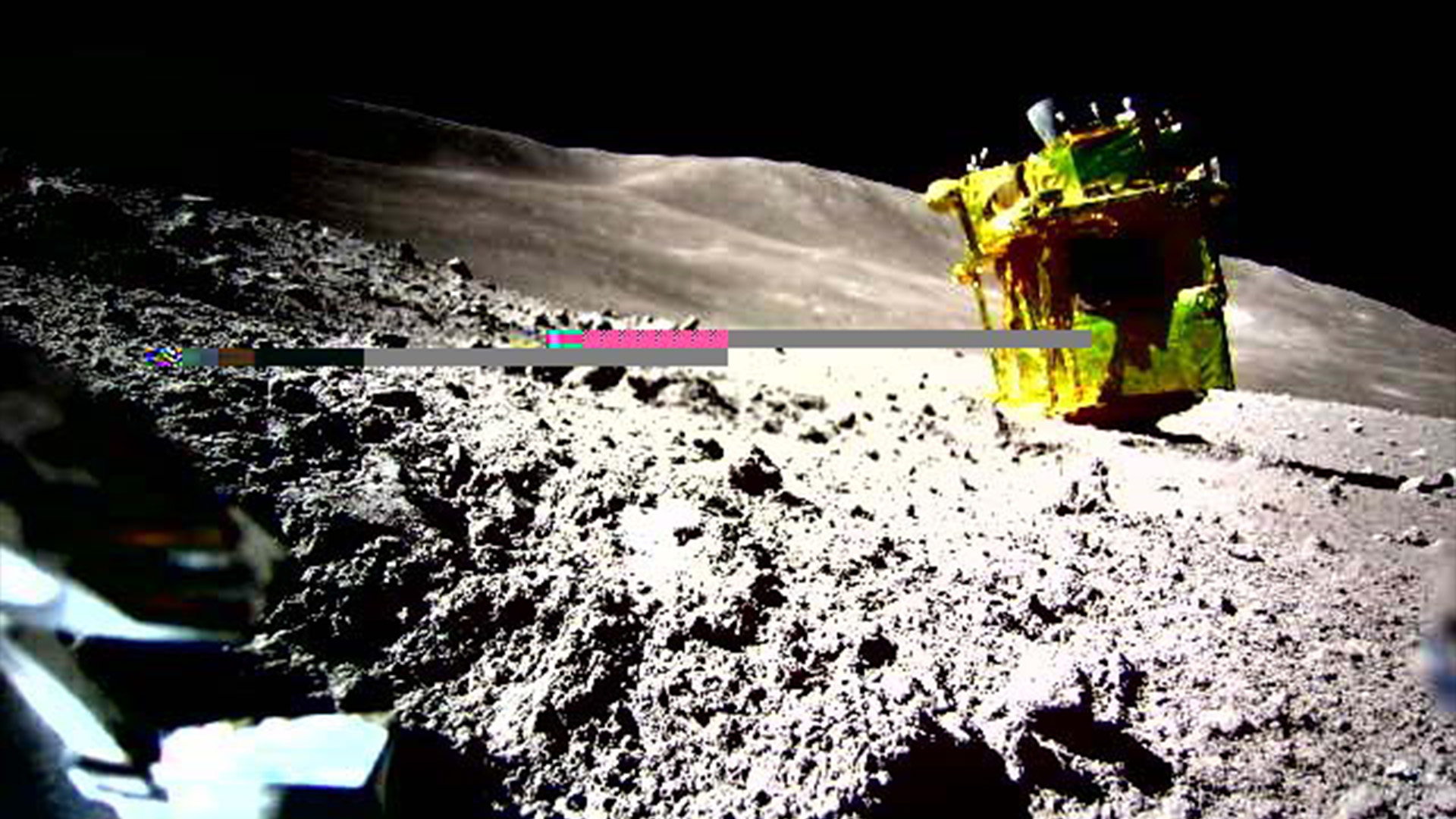
LEV-2 photographed this infamous image of Japan’s Smart Lander for Investigating Moon (SLIM) flat on its face
(Image credit: Japan Aerospace Exploration Agency (JAXA), TAKARA TOMY, Sony Group, Doshisha University /via REUTERS/File Photo)

A photo showing LEV-2 in ball form (left) and expanding to traverse the moon with its metal wheels (right). A model of the SLIM lander sits rightside-up in the background.
(Image credit: D. Hirano)
Lessons learned
What to read next