
And will the oil shock slow growth so much that inflation remains muted? Or do we face the unpalatable prospect of stagflation – high inflation and low growth – as we did after the 1970s oil shocks?
Financial markets ebb and flow every day on often contradictory statements from Donald Trump, his officials and Iranian leaders.
Traders can shift their positions within minutes.
Central bankers don’t have that luxury.
Against that backdrop, it comes as some relief that last year’s internal turmoil at the RBNZ appears to be behind it.
A year ago, the Reserve Bank’s primary mission – targeting inflation – was overshadowed by internal turmoil and the fallout from the departure of Governor Adrian Orr.
As if Orr’s dramatic resignation in March wasn’t destabilising enough, the fallout from the handling of his departure lingered for months.
Long-time chair Neil Quigley resigned in August and, by the end of September, a new governor was appointed.
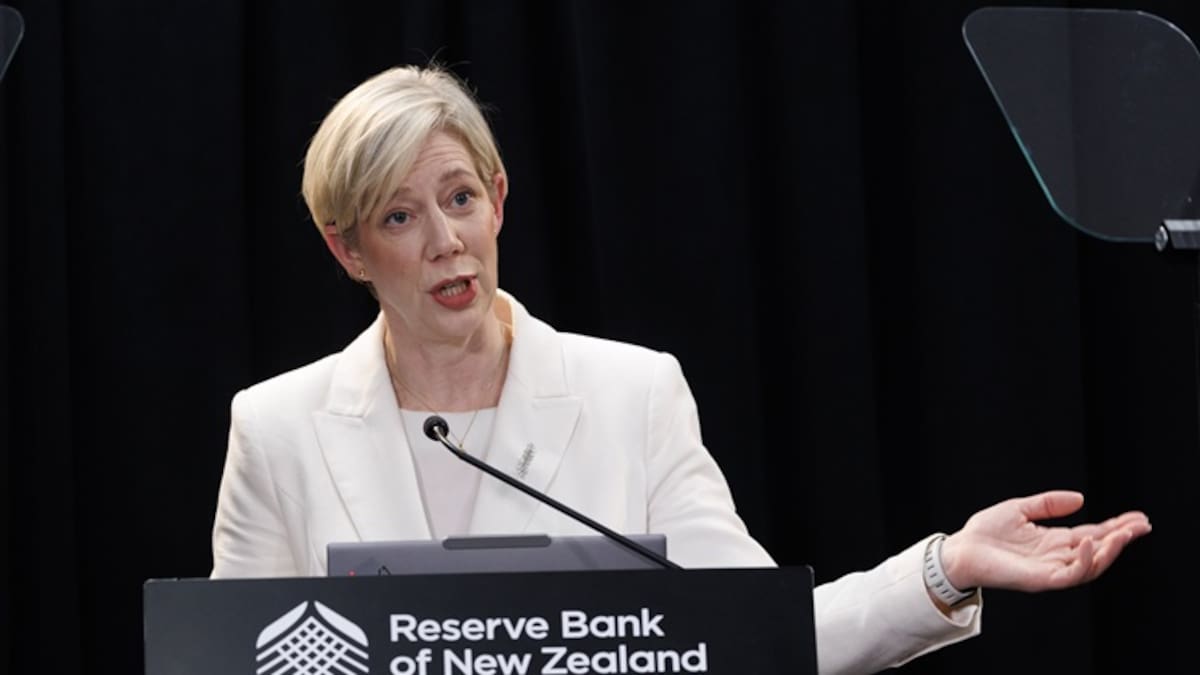
Swedish central banker Dr Anna Breman has ushered in an era of increased transparency for the Reserve Bank.
Since her arrival in December, we have seen the voting split of the monetary policy committee members published.
Then, in the latest monetary policy statement (MPS), we have had full disclosure of how members voted – including names.
We’ve even seen a relaxation of the expectations for public speaking by external committee members.
It’s telling that this increased openness comes at a time when the committee is evenly split on the path for interest rates.
A three-three divide on whether to lift or hold the OCR required Breman to apply her deciding vote.
If there was any conflict around this decision, it is heartening to see that it was entirely focused on the RBNZ’s core job.
Breman has thus far been cool, calm, and concise in her public appearances.
There is no suggestion that the divided committee reflects anything more than the finely balanced nature of the situation.
The Governor seems unrattled by media questions designed to imply a deeper division.
With regard to her deciding a vote to keep the OCR on hold, she was asked: “What made you so certain that it was the right move?”
It must have been tempting to respond with a glib remark or dismiss the question.
But Breman took it at face value.
“We all recognise that we have an uncertain global environment currently,” she said. “But I looked at the upside risk to inflation and our main forecast. I also looked at growth and I made an assessment on how I see these two forces.”
If there was any sarcasm in the response, it was buried deeply.
It indicated a degree of patience with the media that we haven’t seen at Reserve Bank press conferences for some time.
It would be stereotyping to talk of a “cool Swede”. I think we can thank tennis player Bjorn Borg,nicknamed the Iceman, for the cliche.
But the stability that Breman projects – even in the face of a potentially contentious split decision by the Committee – is highly valuable at a time when the Reserve Bank faces such a challenging set of circumstances.
For all that, the division in the Monetary Policy Committee appears to mirror a classic economic tension between hawks (those more concerned about inflation) and doves (those more concerned about maintaining growth).
The divide is also evident in the outlook of some of New Zealand’s major bank economists.
Westpac’s Kelly Eckhold has stated his personal view that the OCR should have been lifted in May, despite the Westpac team forecasting the first rise would come in July.
Meanwhile, at KiwiBank, chief economist Jarrod Kerr has been forthright in his view that the rate should remain unmoved for the foreseeable future – arguing that the hit to economic demand will be sufficient to dampen medium-term inflation.
But ultimately, it will be the unenviable task of the Monetary Policy Committee to judge how likely the oil price, inflationary spike is to pass through and become embedded in the core of the economy.
They have a recent precedent for a supply-side shock – the post-Covid commodity spike sparked by the Ukraine war and Suez canal blockage in 2022.
That was expected by many to be transitory, but ultimately required much higher interest rates to bring inflation down.
Every crisis is slightly different, though.
The 2022 crisis was badly timed in that it coincided with the low interest rate settings many central banks still had in place to address Covid disruption.
In New Zealand, fiscal policy was also still expansionary.
This time around, New Zealand faces the inflation shock with an economy that is barely growing (in fact, it may be contracting this quarter).
Unlike 2022, unemployment is relatively high, and there will be less inflationary pressure coming from wages.
The Government is also attempting to reduce spending.
The RBNZ has produced four scenarios to help manage and assess its options.
Its base case, or central projection, is built on assumptions from the current futures market pricing for oil and implies three OCR hikes by February 2027 and a peak in this cycle at 3.25%.
That’s still not far off a neutral rate – a reminder that the RBNZ has room to move in the coming months.
Of three alternative scenarios, two would see rates climb higher, and one would see them stay lower.
In the first, oil prices stayed higher for longer, and firms and workers passed on higher costs into prices and wages.
In that scenario, the OCR would potentially need to rise above 4%.
The second scenario also assumes that oil prices stayed higher for longer, but that firms and workers absorbed more of the cost and passed on fewer increases.
That might require a marginally higher rate – an implied peak of 3.5%.
The third scenario assumed the same oil prices as the central projection, but that global demand weakened more than expected.
That would limit firms’ and workers’ ability to pass on cost increases, and inflation could fall below the target midpoint, Breman said.
In that scenario, monetary policy might need to be accommodative for longer.
In other words, rates could stay on hold.
We should be careful what we wish for, of course. That scenario implies that the local economic downturn will also be protracted, limiting inflation.
The situation is fluid and will require the RBNZ to stay agile and alert to the changing strategy.
With the insight that new transparency rules give us, the inner workings of the committee will ensure plenty of drama remains for Reserve Bank watchers.
This year, though, we can take heart that it will be focused in the right place – policy making, not politics.
Liam Dann is business editor-at-large for the New Zealand Herald. He is a senior writer and columnist, and also presents and produces videos and podcasts. He joined the Herald in 2003.
Catch up on the debates that dominated the week by signing up to our Opinion newsletter – a weekly round-up of our best commentary.