
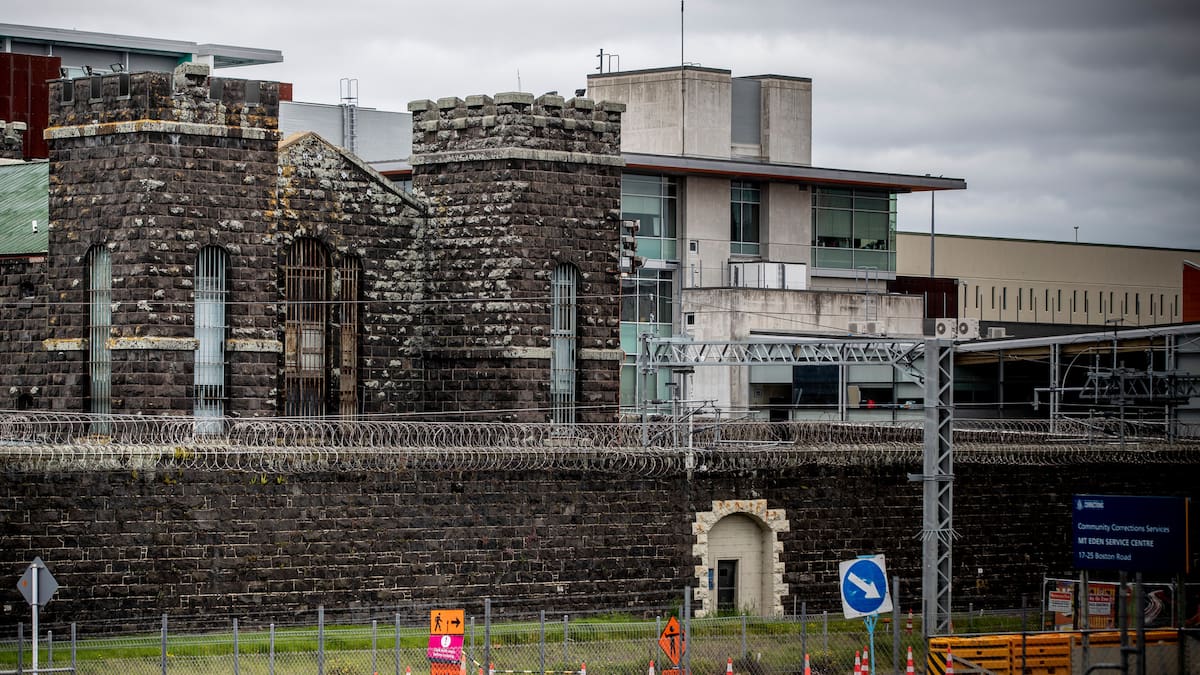
After what the Herald’s Audrey Young described as a shambolic press conference, and subsequent clarifications from the Corrections Minister’s office, it emerged that the Government plans to spend almost $1.9 billion more on Corrections over the next four years to accommodate a growing prison population.
Around 40% of those prisoners will be on remand. A remand prisoner is someone who has not been convicted of any crime. They may wait months, sometimes years, for their day in court.
Some will be acquitted. Others, after spending months in jail, will receive a sentence that does not involve imprisonment.
For 800 years, our ancestors thought that was wrong. In 1215, King John reluctantly signed Magna Carta. Clause 39 declared:
“No free man shall be seized or imprisoned … except by the lawful judgment of his equals or by the law of the land.”
Over the centuries, that principle evolved into one of the foundations of a free society. The state must prove its case before it takes away a citizen’s liberty.
Innocent until proven guilty.
Somehow, we have forgotten.
AUT Associate Professor of Criminology Antje Deckert says that about half of the roughly 4000 New Zealanders currently in prison awaiting trial will never receive a custodial sentence. They never needed to be jailed.
Imagine spending six months in prison awaiting trial.
You could lose your job.
You could lose your home.
Your marriage or relationship might not survive.
Your children would lose a parent.
Your reputation would be permanently damaged.
Your lawyer has told you that if you plead guilty, you will be released. But you are innocent, so you languish in jail for months to hear the jury foreman say, “not guilty”.
There is no compensation.
Some people will respond that there is no alternative. Dangerous offenders must be held before trial.
Of course they must.
People who threaten victims or witnesses, those likely to abscond, and those who present a genuine danger to the public should be denied bail.
That has always been the law.
But that is not why many remand prisoners are in jail.
A common reason is that they cannot provide a suitable address to be bailed to.
They are effectively imprisoned because they are homeless.
Prison is an extraordinarily expensive housing policy. A new prison bed costs about $1.4 million to build. Housing someone in prison costs hundreds of dollars every day.
Prison itself often makes people more dangerous. Prisoners join gangs for protection. They emerge with criminal contacts they never had before.
We taxpayers are funding very effective gang recruitment. It is no wonder gang membership continues to grow.
We lock up more people per head of population than Australia. Do we really believe New Zealanders are more criminal than Australians?
There are evil people who have committed terrible crimes. Society needs prisons. Even bad people deserve a fair trial before they lose their freedom.
As a lawyer, I experienced how difficult it is to organise a defence for a client who is in prison.
There are many proposals to reduce the remand population. Faster trials. More emergency accommodation. Special bail hostels. Most would cost money and take years to establish.
There is one reform that could be made tomorrow.
Restore the general presumption that an accused person should receive bail unless the Crown can show good reason for detention. Dangerous offenders would remain in custody. Imprisonment before conviction would once again become the exception.
Corrections would not need to build new prisons.
There is a price. Freedom is not without a cost. Some people granted bail will commit further crimes, perhaps even a horrific crime. That has always been true.
The alternative is to imprison people because we think they might offend in the future. That is not justice. That is the world imagined in the movie Minority Report, where the authorities predict crime and lock people up before it happens.
In the past 20 years, Parliament has turned the Magna Carta on its head. New Zealand used to believe the state had to prove guilt before taking away liberty. Today, the state routinely imprisons citizens without knowing whether they are guilty or innocent.
As we wonder how an adult could hit a 5-year-old for being left-handed, in the future they will wonder how we could think that it is normal to imprison people for being homeless.
Stay ahead with the latest market moves, corporate updates, and economic insights by subscribing to our Business newsletter – your essential weekly round-up of all the business news you need.