
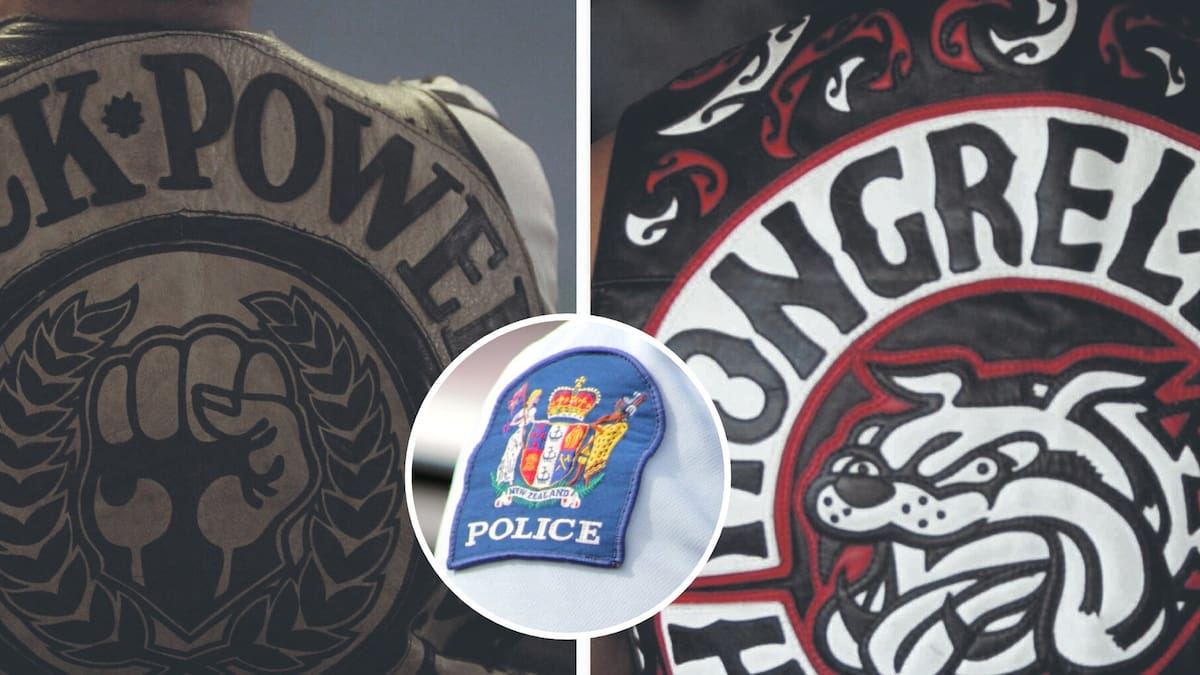
Both men were arrested and charged under the Gangs Act but told by judges in their individual cases they could have their gear back.
Now, in separate appeal cases, the pair have lost their insignia to the Crown after two High Court rulings released today.
The judgments quashed earlier court directions to return their insignia, upholding appeals by the Solicitor-General.
Justice Andrew Becroft, who heard both appeals, referred the cases back to the District Court to make destruction orders.
According to the judgment for Gray-Gill’s case, he had earlier pleaded guilty to displaying gang insignia and was convicted and discharged.
Justice Andrew Becroft has issued rulings on the appeals. Photo / Richard Robinson
But the sentencing judge, Judge Joanne Wickliffe, did not order his insignia to be destroyed, telling him he would get it back.
Gray-Gill followed that up, asking police for it.
The judge, upon request by the police, clarified her earlier direction and noted the insignia be forfeited to the Crown but not destroyed.
The Solicitor-General appealed, saying a non-destruction order was not available to the judge.
The appeal was heard alongside the Crown’s appeal against Leef, who also pleaded guilty to the same charge and was convicted.
His judgment noted his patch was forfeited to the Crown and that he also later asked for it back.
The issue then arose as to whether, despite the forfeiture, he could nevertheless have his patch.
Judge Lance Rowe presided over Andrew Leef’s case. Photo / Nikki Williams
Judge Lance Rowe ruled at the time it could be returned to Leef.
He noted in his judgment that forfeiture was not defined in the Gangs Act and did not confer full rights of ownership or disposal on the Crown.
Judge Rowe summarised that forfeiture was not for the court to order but followed from the entry of a guilty plea or a conviction.
He had found that the Crown only had a right to possess the forfeited item pending a decision by the court on what was to happen to it.
Judge Rowe noted the Gangs Act was new, and Leef seemed unaware of the risk of permanently losing his patch.
Leef placed significant value on the patch as it signified a sense of belonging to him, the judge said.
Judge Rowe considered that destroying it would be disproportionate in the circumstances.
The Solicitor-General appealed to the High Court, asking for that direction to be overturned.
Justice Becroft said the point of both appeals was whether forfeiture was automatic and whether gang insignia could be returned.
He found both judges erred in finding that an offender still kept some property rights after the property was forfeited.
Judge Joanne Wickliffe heard Xavier Gray-Gill’s case. Photo / Pōhutukawa Chambers
Neither District Court judge had the power to return the gang insignia to the men, he found.
However, Justice Becroft was concerned that forfeiture was “absolute and irreversible, irrespective of the circumstances”.
“There is a world of difference between large public gatherings of insignia-clad gang members in broad daylight, where the patch is worn to intimidate or provoke, and a quick trip down to the local dairy late at night by a gang member wearing a patch, where the streets are empty, to buy a bottle of milk or a loaf of bread.
“Both attract forfeiture. The plain meaning of the legislation provides no wriggle room for the court.”
Justice Beecroft accepted there may be some situations where forfeiture was, at the least, severe or disproportionate, but that was not the test.
The direction to return the gang insignia to both men was quashed and he remitted the matters back to the District Court to deal with police applications for destruction orders.
Al Williams is an Open Justice reporter for the New Zealand Herald, based in Christchurch. He has worked in daily and community titles in New Zealand and overseas for the last 16 years. Most recently he was editor of the Hauraki-Coromandel Post, based in Whangamatā. He was previously deputy editor of the Cook Islands News.