
One of the world’s most influential and enduring popular science books has reached its 50th anniversary with barely any need to change it.
This is unusual in a world where daily discoveries outdate previous knowledge. Richard Dawkins was an unknown 35-year-old University of Oxford zoology lecturer when The Selfish Gene was published to general acclaim.
Now 80, Dawkins told The Times in an interview to mark the book’s latest reissue: “I’m surprised how little it needs to be changed. It’s rather a bad thing for a scientist to say; you’re supposed to worship falsifiability … Maybe there are sentences … But the main thesis I still stand by.”
That thesis, The Times stated, was that the gene, not the individual or the species, was the protagonist of the history of evolution. Dawkins introduces the “replicators”, the primitive molecules that began to make copies of themselves in the primeval soup of Earth’s early history. Over geological time, these replicators proliferated, developing ever-more sophisticated techniques for reproducing themselves.
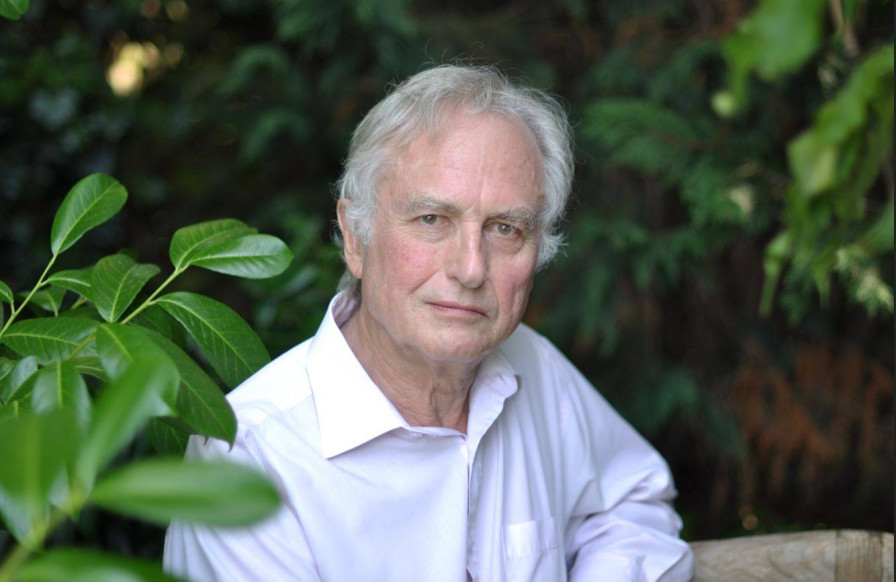
Richard Dawkins.
“Four thousand million years on, what was to be the fate of the ancient replicators? They did not die out, for they are past masters of the survival arts. But do not look for them floating loose in the sea; they gave up that cavalier freedom long ago.
“Now they swarm in huge colonies, safe inside gigantic lumbering robots, sealed off from the outside world, communicating with it by tortuous indirect routes, manipulating it by remote control.
“They are in you and in me; they created us, body and mind; and their preservation is the ultimate rationale for our existence. They have come a long way, those replicators. Now they go by the name of genes, and we are their survival machines.”
This explanation of life is known as evolution and goes back to 1837 when Charles Darwin first conceived of variation and natural selection of species after his return from the famous voyage of HMS Beagle, which spent nine days anchored in the Bay of Islands.
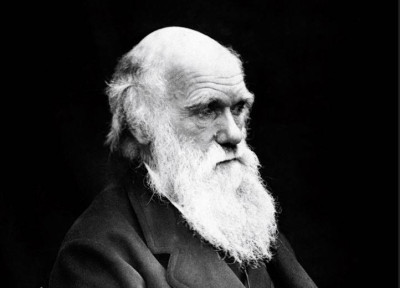
Charles Darwin in 1869. (Source: Wikimedia Commons)
The ship had completed five years of exploration around South America and the Galápagos Islands. Darwin had collected all kinds of species and made geological observations about vegetation and landscapes. These were published as The Voyage of the Beagle (1839).
But Darwin kept his ideas to himself for another 20 years because they overturned the world’s then understanding of life. He was not alone in challenging the dominant explanation in the monotheist cultures that all plants and species were fixed by God, or had a ‘life force’ (Mauri in Māori) that was common to many other cultures.
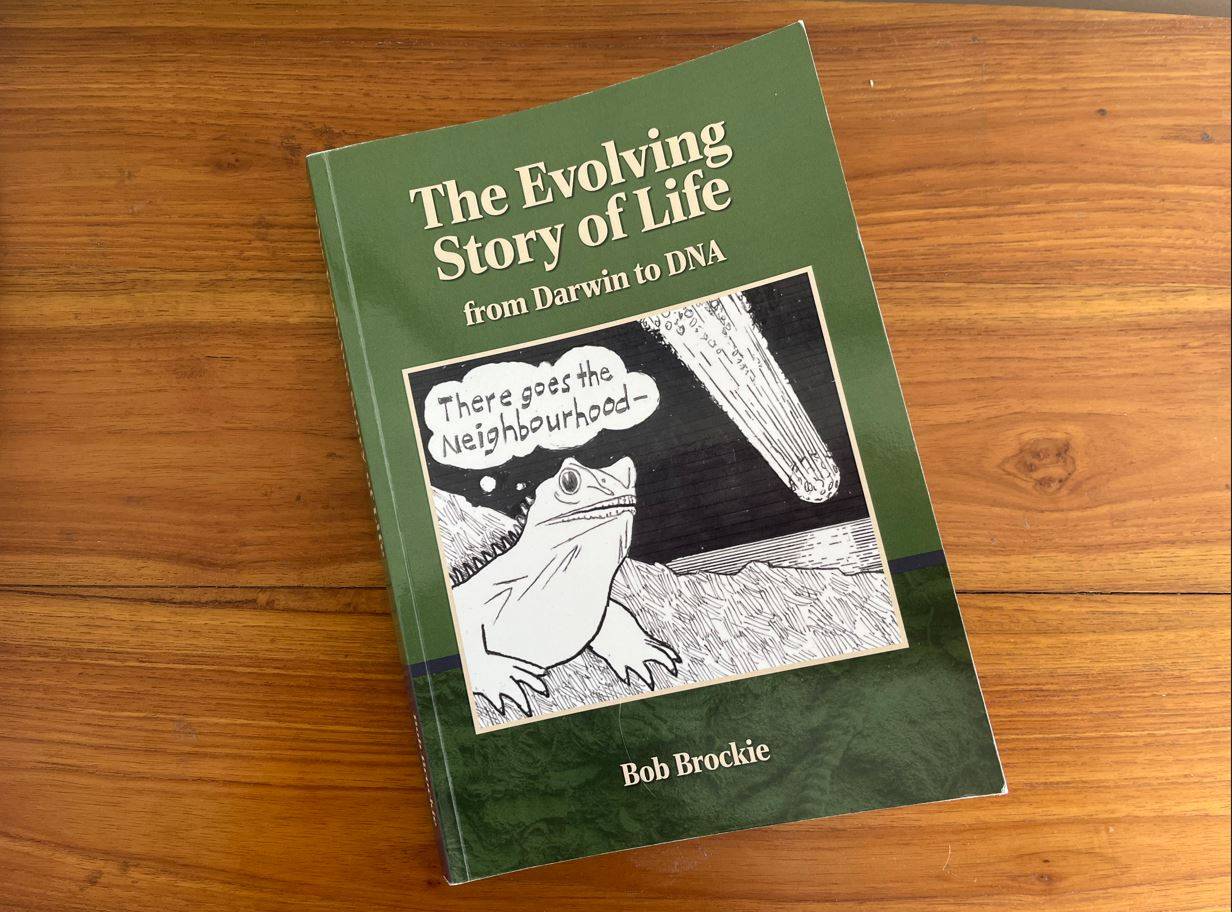
This is the starting point for one of New Zealand’s leading scientific popularisers, Bob Brockie, who died last year aged 93. The Evolving Story of Life: From Darwin to DNA is a posthumous book edited by two close friends, John Lekner and Allen Heath, and pared down from an 800-page manuscript to a reader-friendly 218.
Brockie’s career straddled work as a biologist at the then DSIR, a government agency for industrial and scientific research, and as an award-winning political satirist and cartoonist for The National Business Review for 40 years from 1975. His weekly columns on science were published in The Dominion Post (now The Post).
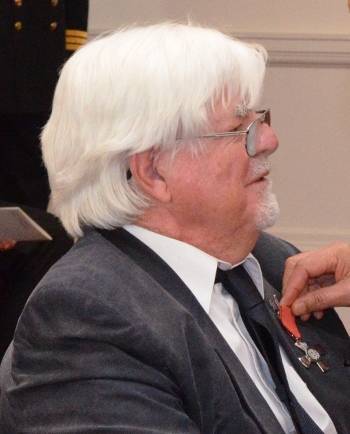
Bob Brockie in 2013.
“Darwin knew that questioning the immutability of species challenged deeply ingrained religious beliefs … His thinking grew darker, and he came to dread the day when he must expose his dangerous ideas,” Brockie says.
That day came in July 1858 when Darwin and another naturalist, Alfred Wallace – who had authored a paper on evolution by natural selection – combined their ideas for a presentation to the Linnaean Society, the world’s oldest biological organisation.
The Origin of Species, a 501-page publication, followed less than two years later. Its central thesis still holds, though Brockie notes a large chunk of the world’s population – such as those in the Muslim-dominant countries and 40% of Americans (mainly Mormons, Evangelical Protestants, and Jehovah’s Witnesses) – cling to religious rather than scientific explanations of life.
Catastrophe survivor
In other words, not much has changed since Victorian times. Brockie summarises evolution as a process in which, “Every organism alive today, including yourself, is the improbable survivor of a remotely long, tumultuous succession of catastrophes.”
It demonstrates “how simple organism evolved into complex plants, animals, and people, connected to each other by historical intermediaries … how all organisms sit meaningfully on a family tree of life, and how mankind evolved from other animals”.
Just how this knowledge occurred is recounted chronologically over 10 chapters in a crisp, accessible style – vignettes, essentially, written like encyclopaedic entries but in a narrative form. It’s an excellent introduction for those whose academic or career interests have avoided subscriptions to New Scientist or the science and technology section of The Economist.
The early chapters introduce figures such as Thomas Huxley and Herbert Spencer, who popularised evolution, and those like Gregor Mendel and Ernest Haeckel, who pioneered genetics and listed hierarchies among species.
‘Fossil mania’ became well established in the search for ‘missing links’ between all types of life. The Belgian Louis Dollo collected thousands from a former coal mine, establishing Dollo’s law that evolution was irreversible.
In America’s Wild West, Edward Cope and Othniel Marsh engaged in the ‘bone wars’ – a quest for who could find the most ancient forms of life. The results formed the collections at the American Museum of Natural History and Yale Peabody Museum, respectively.
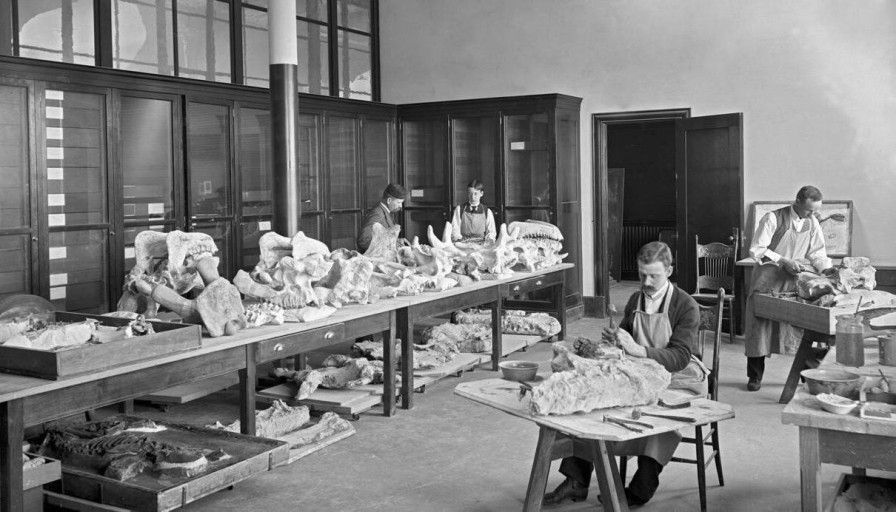
The fossil room at the American Museum of Natural History in New York.
‘Social Darwinism’
Brockie does not resile from the more contentious conclusions of these scientists, who often formulated aspects of what is known as ‘Social Darwinism’ and made eugenics a popular political option until Nazism ended it with the Holocaust in World War II.
Other interesting identities included Eugene Dubois, who found the skulls of Java and Peking man; August Weismann, who divided the body into the germ (sperm, eggs) and somatic (bones, blood) parts; and Alfred Wegener, who in 1912 said the separation of species was due to continental drift and plate tectonics, long before the mechanics were established in the 1950s.
Ronald Fisher’s Genetical Theory of Natural Selection (1930) and Julian Huxley’s Evolution: The Modern Synthesis (1942) were two seminal works that made evolution the central organising principle of biology. In 1943, Erwin Schrödinger, a Nobel Prize winner in 1933, scotched the idea of a ‘vital force’ by saying all life was explainable through atomic chemistry or quantum physics.
His Dublin lectures, published as What is Life? (1944), were influential and led to the discovery of DNA in the 1950s and the era of molecular biology. Among these pioneers was New Zealander Maurice Wilkins, who also became an anti-nuclear weapons activist.
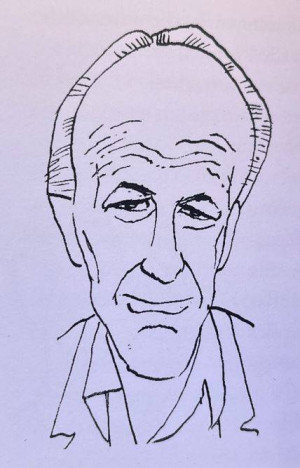
NZ-born biologist Allan Wilson. (Credit: Brockie)
Molecular clock
Another New Zealander, Allan Wilson, was prominent in the development of the molecular clock that subsequently dated important events in the evolution of microbes, plants, and animal.
The 1960s also produced Lynn Margulis, whose concept of “jumping genes” from bacteria to protozoans was initially dismissed before becoming mainstream; and William (Bill) Hamilton, who identified altruistic genes that sacrificed themselves for future benefits, thus widening the study of genetics to game theory and burying the notion that evolution was all about ‘survival of the fittest’ and did not allow for collaboration or cooperation.
This broadening of science led to the new disciplines of sociobiology and evolutionary psychology. Robert Trivers extended Hamilton’s findings to show how “cooperation and altruism could gain a foothold in animal or human societies, despite competitors, predators, or cheats”.
The influence of genetics on human behaviour was popularised by Edmund O Wilson and, of course, Dawkins. By the end of the 20th century, it became possible to establish the evolutionary milestones from the beginning of the universe to the modern day.
Ten were identified by John Maynard Smith and Eors Szathmary in 1995, ranging from the transition from inanimate to animate molecules, and the switch from replicating molecules to replicating chromosomes, to the advance from asexual to sexual reproduction, and the transition from speechless apes to speaking humans.
Some of these milestones – such as the links between apes and humans, and the development of speech – are expanded in chapters that follow the chronological section. The index lists 163 names of contributors to evolution.
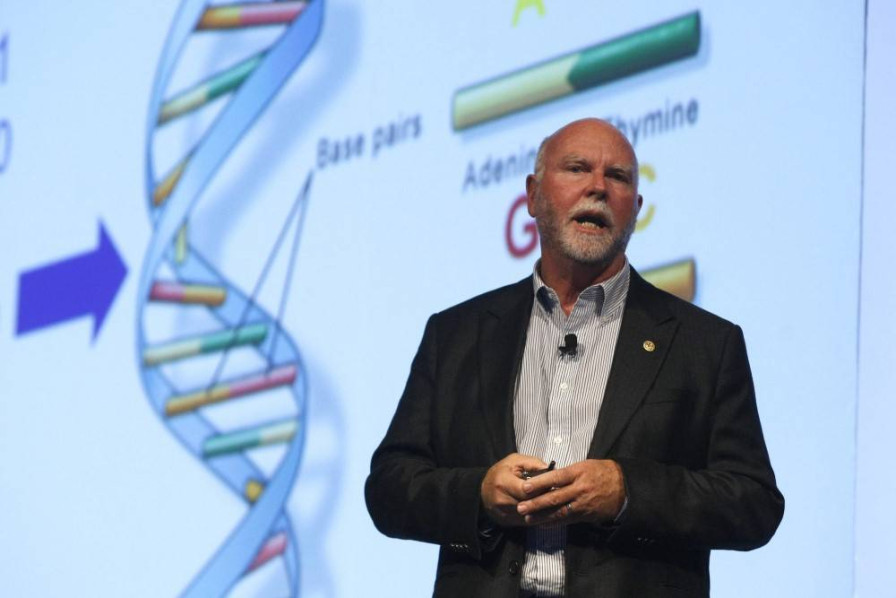
Biotech billionaire Craig Venter, who created the Human Genome Project.
The early 21st century was dominated by the contribution of the world’s first biotech billionaire, Craig Venter, who died on April 29, aged 79. He invented a quick way to decode DNA through his ‘shotgun technique’, enabling his team to read the genome of a living cell for the first time.
This led to the decoding of the human genome and, in 2010 – after 15 years of research and a cost of US$40 million – the creation of an artificial life form. Venter called it Mycoplasma laboratorium, or Synthia for short. This, Brockie suggests, could mean adding to Darwin’s world a “more complex species of our own making”.
That story has yet to unfold. If you are deficient in understanding it, but feel the need to, this is an excellent introduction and worthy legacy to Brockie’s serious side.
The Evolving Story of Life: From Darwin to DNA, written and illustrated by Bob Brockie. Edited by John Lekner and Allen Heath (Fraser Books, also publishers of Brockie, a memoir in words, cartoons, and sketches).