
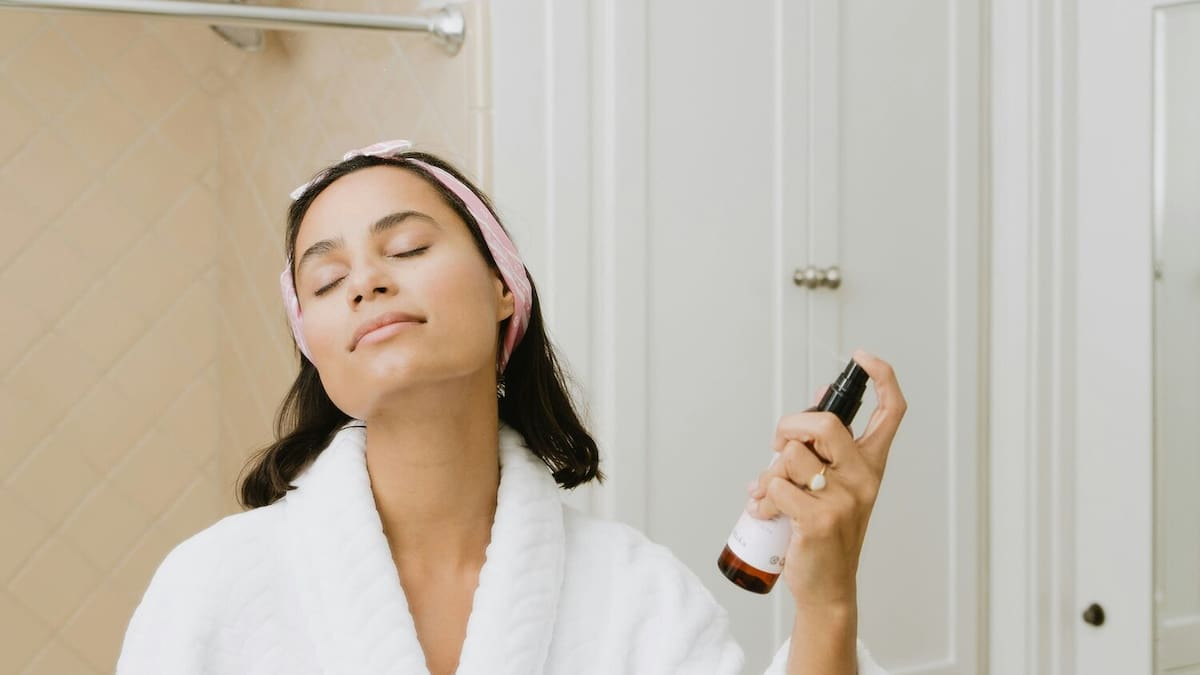
It’s not just the lower temperatures, either. During winter, your skin is exposed to lower humidity and drier winds, and use of central heating.
Go easy on the exfoliation
Yes, skin needs regular exfoliation, but it needs to be the right type. It’s all too easy to assume we can double down on ingredients such as exfoliating acids and retinols because the lack of sunlight means our skin is less likely to react to these powerful exfoliators, but proceed with caution. After all, your skin can be just as sensitive when it’s cold, windy and damp.
Look for exfoliators that remove dead skin cells with ingredients like lactic acids and fruit enzymes rather than those containing particles such as apricot kernel. We’re huge fans of exfoliators containing gluconolactone (5% is the gold standard). This polyhydroxy acid (PHA) smooths away dead skin cells while locking in moisture.
Don’t underestimate the UV
Remember that ultraviolet light exposure happens year-round in New Zealand, although levels can still fluctuate. “Refer to Niwa’s (National Institute of Water and Atmospheric Research) daily UV forecast for your area – levels can change according to factors like anticipated cloud cover,” Dr Amanda Oakley, a dermatologist at the University of Auckland’s Department of Medicine, suggests.
“The Niwa app will explain whether sun protection (such as clothing, shade and sunscreen) is required on any particular day.”
Love your lipids
Lipids are part of your skin barrier. They occur naturally, but they can become depleted by conditions such as eczema or colder, drier weather.
And for Scardamaglia, they’re an absolute essential. “Moisturisers with lipids such as ceramides help restore barrier function, reduce transepidermal water loss and improve hydration,” she points out.
“They are among the most evidence-supported ingredients for dry and sensitive winter skin.”
Bring on the barrier
Your skin’s barrier (the skin’s outermost layer, also known as the epidermis) is essential for locking in moisture, which is harder for your skin to do in winter.
“During winter, many regions of New Zealand are exposed to cold winds and periods of low humidity, which can impair the skin barrier and contribute to dryness and irritation, and this is why New Zealanders benefit from a greater focus on barrier repair,” Scardamaglia said.
We’ve flagged ceramides, but other ingredients that can help max out your moisture levels include glycerine, which is a humectant. In other words, it attracts and retains water within the skin’s outer layers.
Products containing glycerine can also boost skin elasticity and improve hydration levels while strengthening your skin barrier.
Moisturisers containing petrolatum and paraffin might sound scary but for many, they’re winter essentials that create a protective layer to reduce moisture loss.
Moisturisers containing these ingredients are generally thicker than the products you’ll use in summer, but when it comes to maintaining and improving moisture levels, they’re hard to beat.
Finally, there’s hyaluronic acid, a skincare hero and a humectant – in other words, it improves moisture levels by locking in and holding onto moisture.
Pout perfection
Our lips lack the same protective features (such as oil glands as the rest of our skin, which is why lip balm is another winter essential.
And for winter, bland is better – focus on scent-free balms packed full of barrier-boosting ingredients such as shea butter for hydration, camellia oil to seal in the moisture and squalene to repair dry skin.
Avoid salicylic acid, which is too harsh for the delicate skin on our lips. Don’t take our word for it though; in America, the highly respected American Academy of Dermatology advises steering clear of lip balms containing this ingredient.
Hero products
Vaseline Lip Balm Original Stick
A handbag essential, this wallet-friendly balm contains moisture-boosting glycerine, while vitamin E offers an extra dose of protection.
$3.32, chemistwarehouse.co.nz
Vaseline Lip Balm Original Stick.
CeraVe Moisturising Cream
The killer combo of ceramides and hyaluronic acid in this paraben-free moisturiser strengthens and repairs your skin’s barrier.
$10.49, chemistwarehouse.co.nz
CeraVe Moisturising Cream.
RID Insect Repellent SPF50+ Sunscreen Combo
It’s a myth that the best sunscreens cost more, proof of which is this skin-saver from RID. It’s got an SPF of 50, but it’s also water-resistant for up to four hours and contains insect repellent, too.
RID Insect Repellent SPF50+ Sunscreen Combo.