
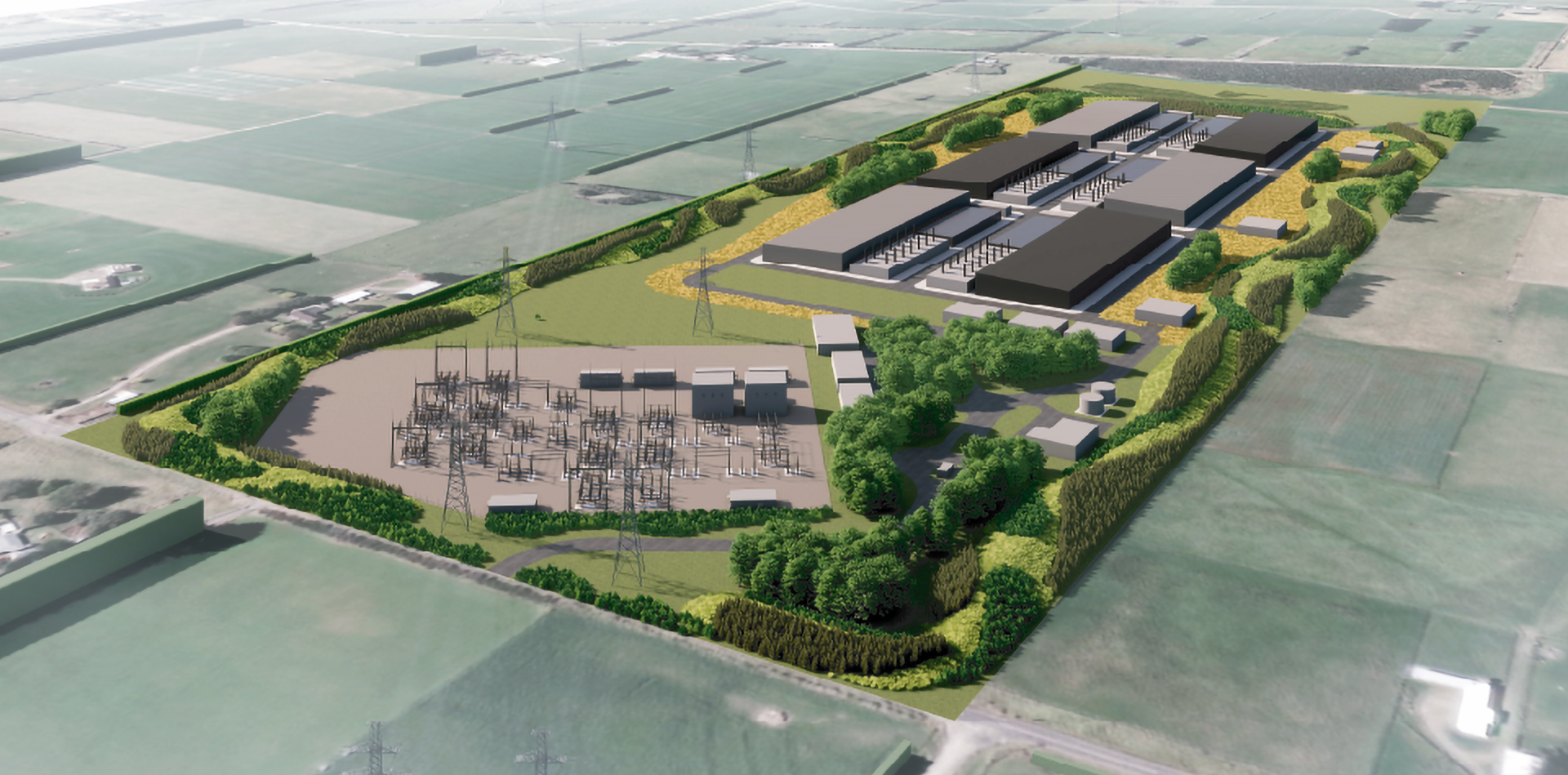
Analysis: As tech entrepreneur Rémi Galasso tells it, he was having dinner with “a very famous New Zealand minister” in Queenstown about 10 years ago, celebrating the final investment decision for his Hawaiki Cable project, when he told the minister his plan to build a big data centre in Southland.
There was an echo of the Rolling Stones in the minister’s reply. “You want to build a data centre in Invercargill? But Rémi … Invercargill is the end of the world!”
Galasso replied: “Minister, with all due respect, the world is a globe – so there is no ‘end’. And if you look at it from a sub-sea cable perspective, Invercargill actually sits right in the middle of the US-Singapore-India-Middle East route.”
Now, Galasso says he’s ready to prove it: that Invercargill is the centre of the world.
You may well raise your eyebrows when I tell you, officials believe there’s an opportunity for the South Island to become a green data centre hub with its lower temperatures and high share of renewable energy sources. It’s precisely this that NZ Trade and Enterprise, and its new sister agency Invest NZ, have been successfully pitching to global investors.
But hang on, I hear you say. Hasn’t the Government just this week confirmed it’s asking two big global gas infrastructure firms to pitch for the billion-dollar-plus contract to build a big LNG import terminal at Port Taranaki – and that’s because we don’t have enough electricity supply, especially in dry winters?
Yet the proposed $5 billion Datagrid artificial intelligence data centre has obtained Overseas Investment Office sign-off to expand from an initial 280MW to an absolutely eye-watering 1GW capacity, across a 49-hectare site in Makarewa, north of Invercargill.
That’s a lot of demand. It’s twice the power consumption of the nearby Tiwai Point aluminium smelter, which already drains so much power from New Zealand’s grid that national energy strategies have hinged on whether it stays or goes.
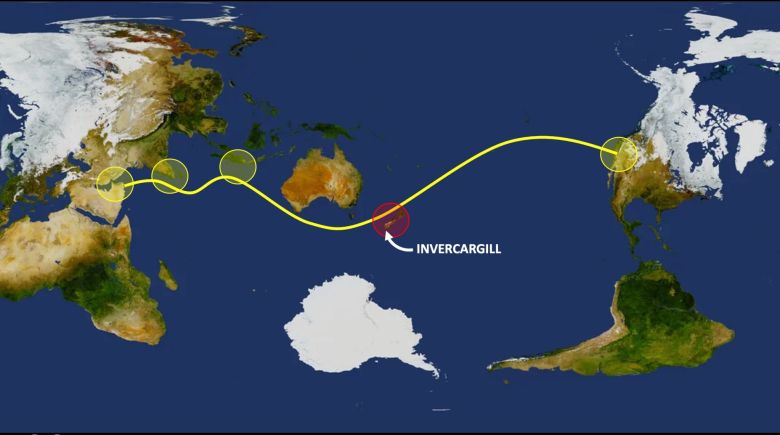 From Rémi Galasso’s chosen perspective, Invercargill isn’t the end of the world, but sits in the middle of a subsea cable route from the West Coast of the US, to Singapore, India and the Middle East.

Want to stay across stories like this? Start your day with Newsroom’s top stories and analysis in your inbox.
The data centre was initially conceived as an alternative to Tiwai Point, when the smelter was expected to close.
But now, Rio Tinto has signed a landmark 20-year electricity agreement to keep the smelter in Southland – and at the same time, Galasso is pushing ahead with his data centre. Like the smelter, it would have two dedicated 220kV transmission lines running direct from the Lake Manapōuri hydro dam.
New Zealand’s peak real-time demand is about 6GW. But the smelter and the data centre, combined, will suck out 1.5GW – which begs some questions.
With sufficient warning of a dry winter, the smelter can close down one or two potlines and sell the power back to the rest of the country.
But an AI data centre of the scale proposed would have to run 24/7, 365 days, every year. There’s nobody else nearby to offload that much computing to.
My colleague David Williams says, on The Detail podcast: “Data centres need continuous power. If they power down, it’s actually damaging to their units or their processing centre. It needs to be a constant supply.”
So Datagrid plans diesel generation as an emergency backstop. That might be viable for a few hours, but not for the long months when the lakes are low.
Fundamentally, it needs vast quantities of renewable energy. All the time. And it needs it to be cheap. That’s the official pitch that brought it to New Zealand.
“NZ Trade and Enterprise believe New Zealand could emulate what Nordic countries have achieved through emphasising their natural advantages and commitment to green energy,” officials briefed South Island Minister James Meager, ahead of a meeting with Datagrid leaders.
“In doing so, these countries have attracted significant investment and driven the formation of AI superclusters in the region.”
So, here are three tests that Datagrid still needs to pass. If it fails any one of them then, frankly, it’s not in New Zealand’s interests for the project to proceed.
1/ The data: Chorus had planned to partner with Datagrid to commission a $3.4b, 6000km sub-sea fibre cable to digitally connect Auckland, New Plymouth, Greymouth and Invercargill with Sydney and Melbourne.
But last August, Chorus walked away, saying it would have taken till 2030 to build.
Galasso vows Datagrid will push on with the so-called Tasman Ring.
Without it, New Zealand’s existing cables simply don’t have capacity to carry the additional data that would be processed through the giant AI centre.
2/ The heat: The massive amounts of electricity that go into a big AI centre like Datagrid are emitted afterwards as waste heat.
In Finland, Google’s Hamina data centre captures that heat and supplies about 80 percent of the local heating network; another Microsoft data centre hub will heat the homes and business of 250,000 residents across the districts of Espoo, Kauniainen, and Kirkkonummi. Here in Auckland, waste heat from a Spark data centre will warm the wave pool at a new surf park.
South Island data engineer Harvey Cao reckons Datagrid is good for New Zealand. “We’re a long way from everywhere, and distance has always worked against our exports, but computing power doesn’t care about distance.”
Yet for it to justify its existence, there’s a tight window of a few months in which it must design a heat recovery plan.
“It will turn almost everything it draws into heat, roughly 1.5 terawatt hours a year, right next to big food processors and one of our coldest cities,” he tells me. “Releasing that heat into the atmosphere would be a complete waste.”
3/ The power: As the economy electrifies, New Zealand homes and businesses need more and more electricity. We’ve heard this week that we’re struggling to meet even the existing demand in dry years – so any major new power user like Datagrid must not only finance the construction of new renewables and perhaps baseload to serve its own needs, but also to leverage new generation for the wider community.
Datagrid has signed a Power Purchase Option Agreement with Mercury Energy – a contract that secures it the right, but not the obligation, to purchase a specific amount of power at a fixed price in the future.
These deals are critical. They provide the big gentailers a degree of certainty of future revenue streams, giving them confidence to invest now in projects that may not start paying a return for many years. Datagrid has probably been aided by hiring Vince Hawksworth, Mercury’s former CEO, as its head of power.
His successor at Mercury, Stew Hamilton, tells me that having guaranteed customers buying a significant amount of generation means the power company can continue to invest significantly in new renewable generation for New Zealand, helping meet future demand growth and build resilience.
“That is particularly important for large new electricity users,” Hamilton says. “Our intention is to build new renewable generation to match new demand, so growth from customers like data centres does not come at the expense of supply for the rest of New Zealand.”
Mercury has recently switched on stage 2 of Kaiwera Downs Wind Farm near Gore, and its next anticipated wind farm build is stage 2 of Mahinerangi Wind Farm in Otago. That would add up to 190MW of renewable generation in the South Island.
Mercury is expecting a fast-track decision on the wind farm imminently, with a final investment decision by September.
Contact Energy isn’t saying whether it’s negotiating any deal with Datagrid, but it has announced plans for a 380MW Southland wind farm nearby. Chief executive Mike Fuge says a final investment decision is expected next year.
“The wind farm will contribute around $400m to the economy during construction, much of which will stay in Southland,” he argues. “We are always looking at ways to grow demand for our renewable energy in regions where we are developing power stations, but in this case it is very early days.”
There are still questions about whether the maths of such data centres works out in New Zealand’s favour. Harvey Cao says it would put a lot of pressure on the country’s power network that might be slightly offset by harnessing its waste heat; Waikato University hydrologist Dr Earl Bardsley is even more dubious.
“I do get a bit frustrated when politicians et al blather on about abundant renewable energy,” says Bardsley, the architect of the Lake Onslow pumped hydro scheme for dry years. “The problem is, just about all the new renewable power over the next decade will be wind and solar – not the baseload that data centres and aluminium smelters need.”
So I went back to Invest NZ to ask why the agency is still pitching New Zealand’s “abundant renewable energy”.
Chief executive Robert Wall confirms they’re still encouraging new investment in productive growth companies excited by New Zealand’s renewable energy potential – like the new $100m Olam Food Ingredients dairy plant in Tokoroa. “These industries add value to our economy through export revenue and jobs.”
He believes New Zealand’s renewable generation capacity can grow with the demand, providing the opportunity to attract data centres and other new industries.
According to the Electricity Authority there were 288 generation projects in the pipeline last year, with a combined total capacity of 44.3GW. That’s a lot of power supply still awaiting consents, finance or sign-off to be built – but Wall sees that as an opportunity. “Currently the Transpower connection queue has more than double New Zealand’s current generation capacity – and the thing that will underwrite the build of that is new demand.”
This analysis was first published in the Newsroom Pro subscriber newsletter. If you’re interested in seeing more content like this, you can subscribe here.