
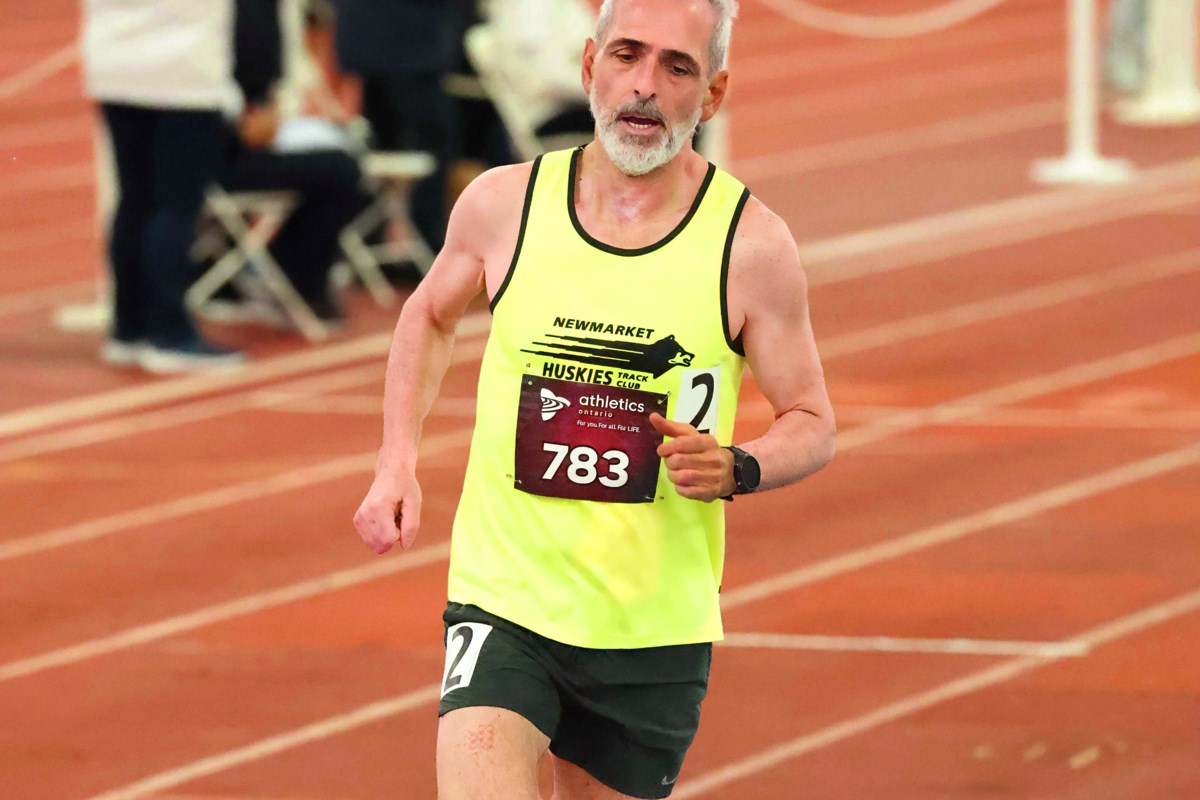
‘If I hadn’t lost the ability to run, I never would have built something that helps explain performance,’ says Dr. Danny Grossi, who built a running app with 97.4% accuracy
One year ago, Dr. Danny Grossi was lying in an ICU bed, facing the possibility of losing his leg.
Today, the Aurora runner, physician and Canadian masters champion is preparing for the World Masters Athletics Championships — and leading a made-in-Ontario sports technology company that is attracting attention from runners across the province.
The journey from hospital patient to founder of PIRX, a performance intelligence platform for runners, began with a question born out of a crisis.
“I was told I’d never run again. But if I am fortunate enough to run again, how do I rebuild this intelligently?” Grossi recalled asking himself.
That question changed everything.
A devastating diagnosis
In 2025, what began as a severe blood clot in Grossi’s left leg quickly became a life-threatening medical emergency.
He spent 29 days in hospital, including eight days in intensive care, and underwent four surgeries to save his leg. At one point, doctors warned he was at risk of losing the limb and that running again was highly unlikely.
For Grossi, who had recently returned to competitive running after decades away from the sport, the prognosis was devastating.
“Having only recently returned to competitive running, that was incredibly difficult to hear,” he said. “The focus shifted from athletics to survival.”
Yet during recovery, something unexpected happened.
Rather than dwelling on what he had lost, Grossi became consumed by understanding how athletic performance actually works.
Turning recovery into research
Armed with years of training data and a scientific background that includes degrees from Princeton University and the University of Toronto, Grossi transformed his rehabilitation into a personal research project.
He meticulously tracked blood lactate levels, heart rate data, recovery patterns, training loads, nutrition, pacing and race performances.
Unlike many athletes, he had a unique advantage.
“I wasn’t guessing,” he said. “I had two versions of myself — before and after — and I needed to understand exactly what changed, what worked, and what actually moved the needle.”
Using artificial intelligence to help organize patterns within his training history and scientific literature, Grossi began identifying what consistently influenced running performance.
Over time, he found that performance appeared to be driven by a handful of measurable factors rather than countless variables.
“Performance was not random,” he said.
Building PIRX
What started as a personal recovery tool soon evolved into something much larger.
Grossi identified five core drivers of performance: aerobic base, threshold density, speed exposure, running economy and load consistency.
“These aren’t abstract concepts,” he said. “They are measurable, trainable and — most importantly — predictive.”
The findings became the foundation of PIRX, short for Performance Intelligence Rx, a platform designed to help runners understand whether their training is actually improving fitness and what they can realistically expect on race day.
The system integrates data from popular wearable devices including Garmin, COROS, Strava and Apple Watch.
“Every runner trains hard,” Grossi said. “Very few actually know what their training is doing. PIRX changes that.”
According to Grossi, early validation testing has shown approximately 97.4 per cent accuracy in predicting race performances.
The platform is currently being tested by athletes ranging from high school runners to elite competitors and masters athletes.
Athletics Ontario has also begun collaborating with PIRX and introducing the platform to members across the province.
The comeback continues
While building a technology company might be enough for most people recovering from a life-threatening illness, Grossi wasn’t finished.
In March, less than a year after doctors warned he might never run again, he won the Canadian Masters Indoor 1500-metre championship in the men’s 55-59 division.
Now he is training for the 2026 World Masters Athletics Championships with hopes of returning to the international stage.
In many ways, PIRX has become both the product of his recovery and the tool guiding his comeback.
“The irony is that this only exists because everything went wrong,” Grossi said. “If I hadn’t lost the ability to run, I never would have built something that helps explain performance.”