
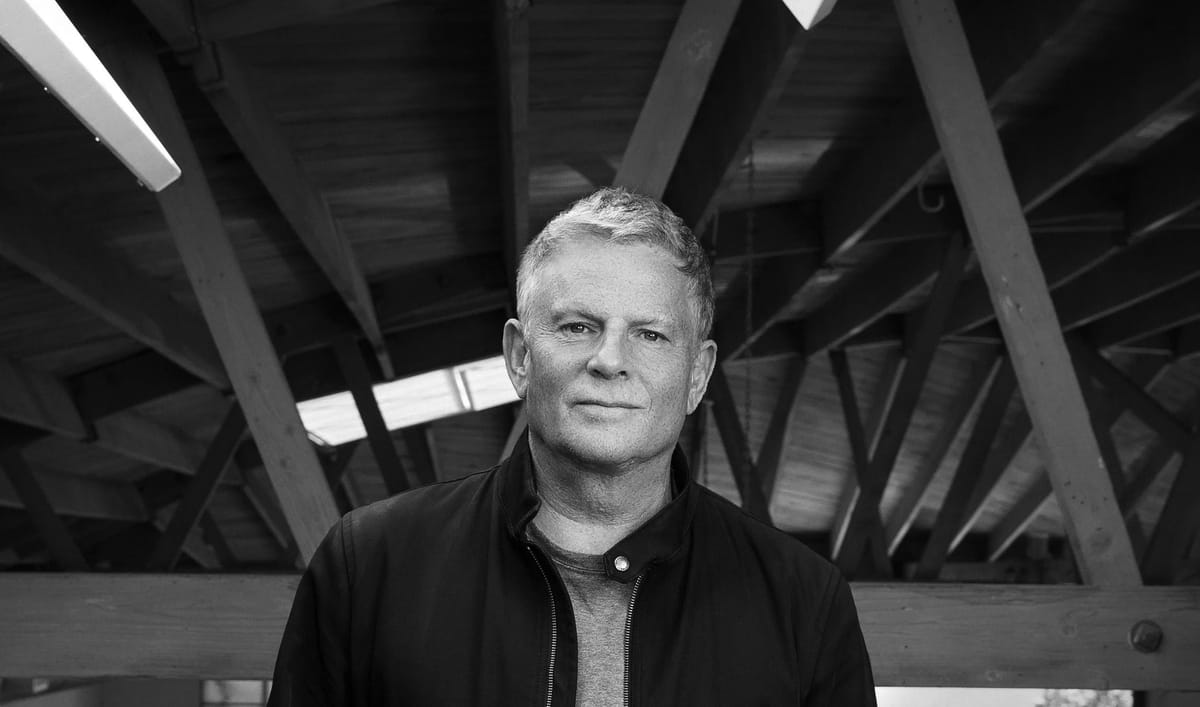
Lorcan O’Herlihy, the Irish-born, Los Angeles-based architect whose influential body of work helped reshape conversations around housing, urbanism, and the social role of architecture, has died at the age of 66.
His firm, Lorcan O’Herlihy Architects [LOHA], shared the news in a statement, saying O’Herlihy died peacefully in Malibu with his wife Cornelia Hayes O’Herlihy, and sons, Daire and Darcy, by his side. The cause of death was glioblastoma, according to Architectural Record.
“With heavy hearts and deep gratitude for the life he shared with all of us, we share the news of the passing of Lorcan O’Herlihy, founder of LOHA,” the firm wrote. “Lorcan was a visionary architect, a teacher, and a mentor whose work transformed cities and urban housing into humane, socially-engaged spaces.”
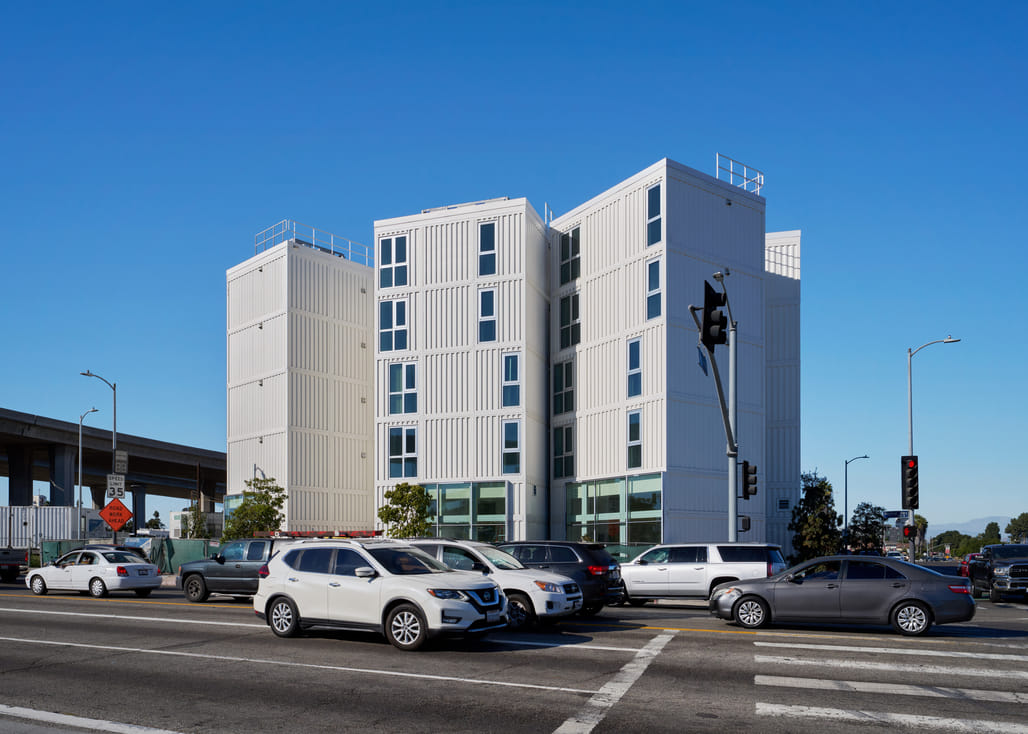 Shipping containers rise to form Lorcan O’Herlihy’s new supportive housing development for South LA
Born in Dublin in 1959, O’Herlihy moved to Los Angeles with his family as a young child before returning to Ireland for part of his upbringing. He later studied architecture at Cal Poly San Luis Obispo and continued his education at the Architectural Association in London, where he pursued history and critical thinking. His early professional career included work with Kevin Roche John Dinkeloo and Associates, I. M. Pei and Partners, and Steven Holl Architects, with O’Herlihy contributing to the team behind the Grand Louvre Museum Pyramid before establishing his own Los Angeles practice in 1994.
Over the next three decades, LOHA became one of Los Angeles’s most admired architecture firms, especially known for multifamily housing, supportive housing, affordable housing, and urban infill projects that treated housing not as background fabric, but as a site for formal invention and civic ambition. The firm’s work often explored the edges between public and private life, using courtyards, paseos, terraces, stairs, outdoor corridors, and pocket parks to create new forms of social connection within dense urban conditions.
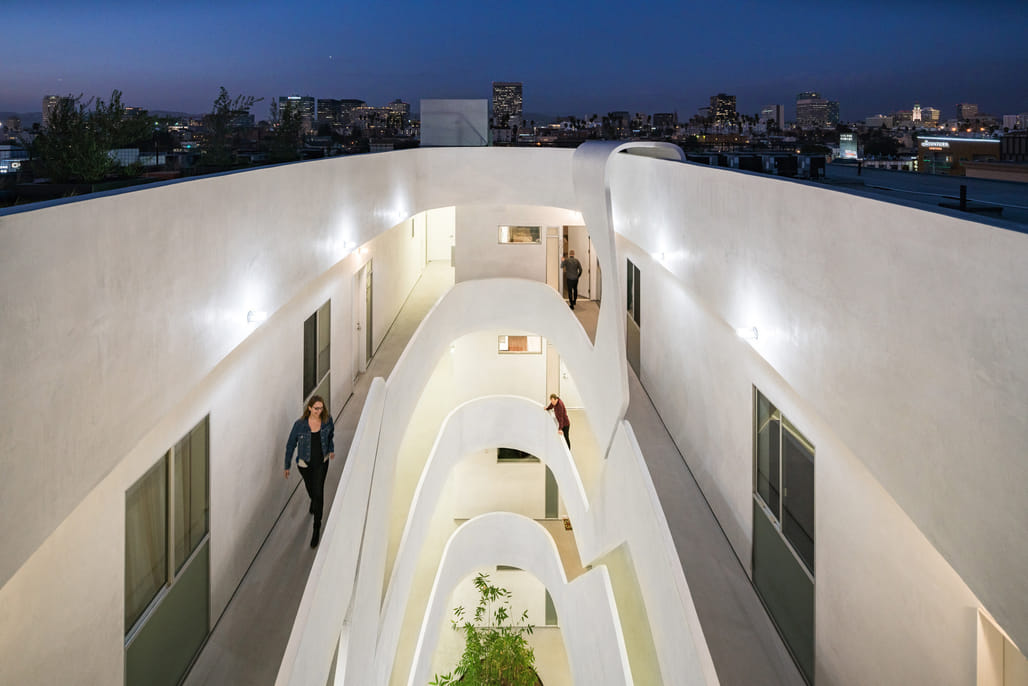 Lorcan O’Herlihy Architects design efficient spaces for Los Angeles density
Among the firm’s best-known projects are Formosa1140 in West Hollywood, Habitat825 near the Schindler House, Mariposa1038 in Koreatown, MLK1101 Supportive Housing, SL11024, and Isla Intersections in South Los Angeles. LOHA also expanded its work beyond Los Angeles, opening a Detroit office in 2016 and contributing to projects including City Modern in Brush Park and other urban revitalization efforts.
I believe that architecture is a social act and that the role of the architect is to do work of consequence
In a 2017 Archinect conversation connected to the LAX >< DET Mini Sessions, O’Herlihy described the core belief that guided his practice. “I believe that architecture is a social act and that the role of the architect is to do work of consequence,” he said. “The goal of our field is not so much about how to design a building as an isolated object, but how to use architecture as a tool for engaging in development, politics, and social structures, in order to amplify our urban landscapes and elevate the human condition.”
That same conversation offered a clear expression of O’Herlihy’s interest in the relationship between Los Angeles and Detroit, two cities that shaped the later trajectory of his office. In Los Angeles, he said, the challenge was “how to strategically design projects on dense infill lots.” In Detroit, it was the opposite condition, “the inverted figure-ground relationship of a dramatically underdeveloped neighborhood fabric.” He emphasized that working in Detroit meant designing not simply for newcomers, but for “the people who are already there.”
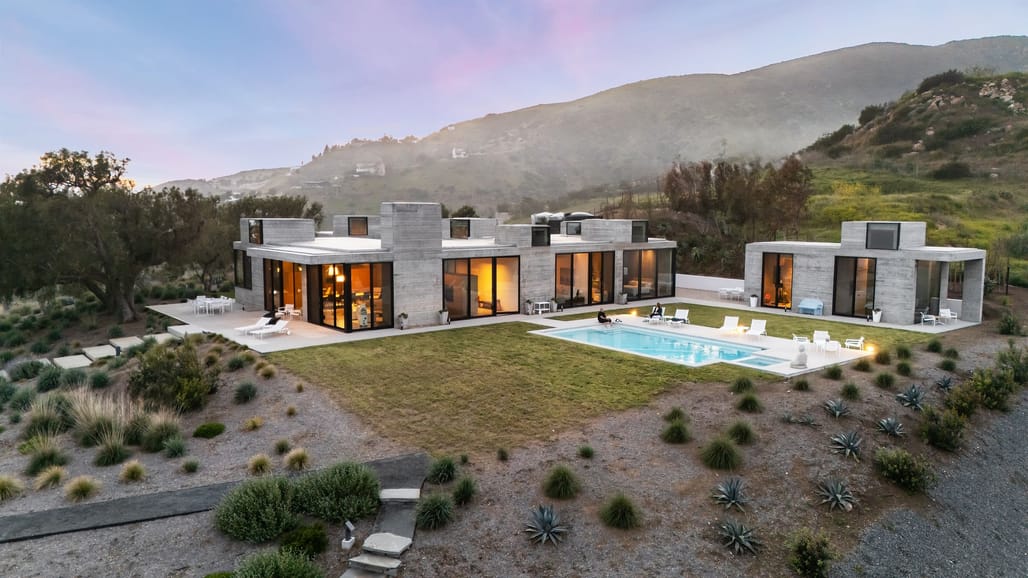 Lorcan O’Herlihy’s Trancas House 2.0 emerges as an example of fire-resilient design
That commitment to the civic and social dimensions of architecture was also visible in O’Herlihy’s discussion of Formosa1140, where LOHA worked with the City of West Hollywood to create a public pocket park on private land. Rather than treating the residential building as an isolated object, the project used open space to extend the public realm. O’Herlihy described that kind of negotiation as central to his work, arguing that architects should understand buildings as tools for social and civic interaction.
LOHA’s work has been widely recognized, with the firm completing more than 100 projects across three continents and receiving more than 200 awards. O’Herlihy was named an Emerging Voice by the Architectural League of New York in 2004 and was elevated to the College of Fellows of the American Institute of Architects in 2009. His personal honors included the AIA California Maybeck Award and the AIA Los Angeles Gold Medal. LOHA’s firm honors include the AIA California Distinguished Practice Award, AIA Los Angeles Firm of the Year, Architect Magazine’s top design firm in the United States, and Fast Company’s number one Most Innovative Company in architecture for 2025.

LOHA Adopts Collective Ownership
In March, just months before his passing, LOHA announced that it was adopting a collective ownership model. The firm described the change as a formalization of how it had long operated, “through dialogue and shared authorship.” The expanded ownership group includes Brian Adolph, Abel Garcia, Ghazal Khezri, Jason King, Nicholas Muraglia, Kevin Murray, and Geoffrey Sorrell, who the firm said have helped shape LOHA’s work and culture over many years.
“We’ve built a creative, committed team that is dedicated to doing great work,” O’Herlihy said at the time. “It’s important to me that ownership reflects the people who drive the studio forward every day.”
In light of O’Herlihy’s passing, this structural change reads as an especially meaningful act of continuity for the practice he founded. The firm’s statement on his death said LOHA will carry forward his vision, guided by “care for people and place, honesty in work, and a quiet belief in the power of good design.”
Beyond the buildings themselves, O’Herlihy’s influence rests in his insistence that architecture could engage the broader forces shaping city life. His work demonstrated that housing could be experimental, formally ambitious, socially attentive, and deeply urban all at once. Across Los Angeles, Detroit, and beyond, he helped expand the idea of what multifamily housing could contribute to a city.
“His life was too short, but full,” LOHA wrote, “and the work he leaves behind will continue to speak for him.”