
For many years, Auckland’s rail network has been going through a substantial, and disruptive, rebuild. While the programme is reaching its end date, with CRL opening later this year it’s vital we no longer see this level of disruption on the rail network again. KiwiRail has provided us with a guest post explaining how they will be approaching track maintenance and renewal in the future.
As always, feel free to add your thoughts and any questions in the comments.
This is a guest post by Jon Knight – KiwiRail’s General Manager Auckland Metro Network
Why and when the Auckland rail network will close in future
In a few short months, Auckland will have a modern rail network befitting any growing city as the region’s population approaches 2 million.
We’ve heard a lot about the benefits the City Rail Link (CRL) will usher in – better manage congestion on our roads, less need for purchases of costly petrol and a more efficient way for Aucklanders to move around the region for school, work, recreation and major events.
So what happens when our shiny new network is open? Will those lengthy complete network closures be consigned to the dustbin of history?
How we got here
CRL will bring more frequent trains across Tāmaki Makaurau and shorter journeys. It required several significant programmes of work to bring the whole system up to date.
Getting the metro to a ‘steady state’ was a major effort, requiring more than $2bn in funds from central government (excluding the direct City Rail Link project investment) and support from our partners Auckland Transport and City Rail Link Ltd.
Originally built for freight trains, Auckland’s rail network had little or substandard drainage in place – leaving it over-reliant on swales and vulnerable to climate events. Most of its foundations were more than 60 years old, and some of Auckland’s rail tunnels were built in the early 1900s.
We brought the priority areas of our 150-year-old rail network up to modern standards at the same time as building brand new lines, such as the Onehunga-West Line from West to South Auckland, and new underground CRL and other stations.
Big-ticket items
Delivering the major capital projects needed to support CRL meant long summer closures over the past few years, along with multiple weekend and holiday full and partial shutdowns at other times. These big-ticket items included the now-completed Pukekohe to Papakura electrification, Third Main Line and Wiri to Quay Park projects – and the current construction of three new stations in southern Auckland.
In addition, those full network closures allowed for more concentrated and difficult work, such as the digging under rails to replace foundations and drainage. The five-year Rail Network Rebuild replaced foundations and ballast across almost half the network, along with more than 1600 sleepers, and built rail that can cope with a high-speed metro network.
Happily, that rebuild work is now complete and the large-scale infrastructure projects are all but done also. Taken together, these set the Auckland metro network up to support more frequent train services in the decades to come.
Regular, proactive maintenance of our network
It falls to rail network owner, KiwiRail, to manage and maintain the metro tunnels and rail infrastructure, including signals and train radio systems.
About two years ago, we shifted to a proactive and scheduled maintenance approach to increase our productivity. Our Metro Maintenance Plan identifies what assets (e.g. track, signals, foundations) within the rail network require repair, replacement, or upgrade and over what time frame, creating a work schedule that can be relied on.
Our teams are now out six days a week, all through the night, to keep our modern metro network in tip-top shape. This is consistent with how urban passenger railways operate all around the world.
We divided the Auckland network into 36 zones, and cycle through each of these zones every 14 weeks. That means we are looking at each part of the network three times a year, inspecting our assets and undertaking scheduled maintenance and any repairs necessary to keep it working at full capacity.
Each zone is self-contained enough to allow for maintenance work, even on rails, while trains continue to operate elsewhere.
This schedule of regular preventative jobs has meant we’ve reduced our reactive maintenance work programme by around a third. It prevents gear from breaking and small problems from becoming ones large enough to necessitate capital works and lengthier shutdowns.
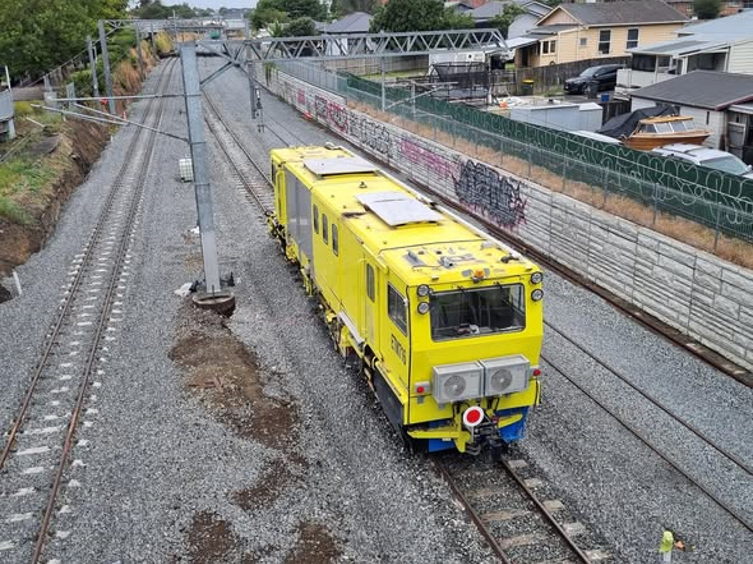
The Automated Track Inspection System (ATIS) is equipped with modern inspection systems positioned around the vehicle to assess the condition of the track and electrical network. This state-of-the-art system, now at work on the Auckland metro, is designed to enhance our track maintenance and safety.
How will KiwiRail keep trains running?
The work we have done on the network in past years creates this maintainable network.
In addition to fixing underlying problems, we have created on-tracking points for our maintenance vehicles, further sectioned overhead lines, built additional cross-overs, and enhanced bi-directional signaling.
This gives us the means to access and work on individual sections of the network at different times.
We are leveraging technology, automation, and mechanisation, to increase the speed at which our teams can work on the network.
A dynamic track stabiliser is just one of machines that helps keep the network in shape. It simulates train pressure and movement, applying tonnes of pressure and vibrates the ballast to lock everything into place, so it fits together.
Closures for asset renewal & upgrade
Weekly night maintenance occurs on the network throughout the year commencing around midnight through until around 5am daily. Asset upgrades and renewals work on major rail assets must also continue to keep the infrastructure healthy, so it performs effectively. This type of work is more invasive than regular weekly maintenance and requires more time to complete.
As such, asset upgrades and renewals are scheduled around a year in advance, targeting Christmas, Easter, public holidays and weekends. This work occurs in 24-hour shift patterns to make best use of both daylight hours and evenings over the calendar year.
These activities are scheduled for partial network closures, which enables targeted intervention and lower levels of disruption to train services. This is standard practice for other modern international metros so they can successfully and reliably operate when passenger demand is highest.
After CRL opens, some lines and sections of lines will still have to close from time to time. But our new approach will mean train services can continue operating in the region on most days of the year.
Shutdowns will be shorter and forecasted much earlier in advance via long-term asset management plans. A summer closure will still be needed to deliver intensive, often more invasive work, but it will be targeted and work forecasted far in advance.
All this supports a more resilient, reliable, sustainable rail network with reduced disruption. Aucklanders will have the certainty they need to plan around the holidays and get to major events and New Year’s celebrations.
Greater Auckland’s work is made possible by generous donations from our readers and fans. Support our work by joining our circle of supporters here and setting up a reoccurring donation.
Share this