
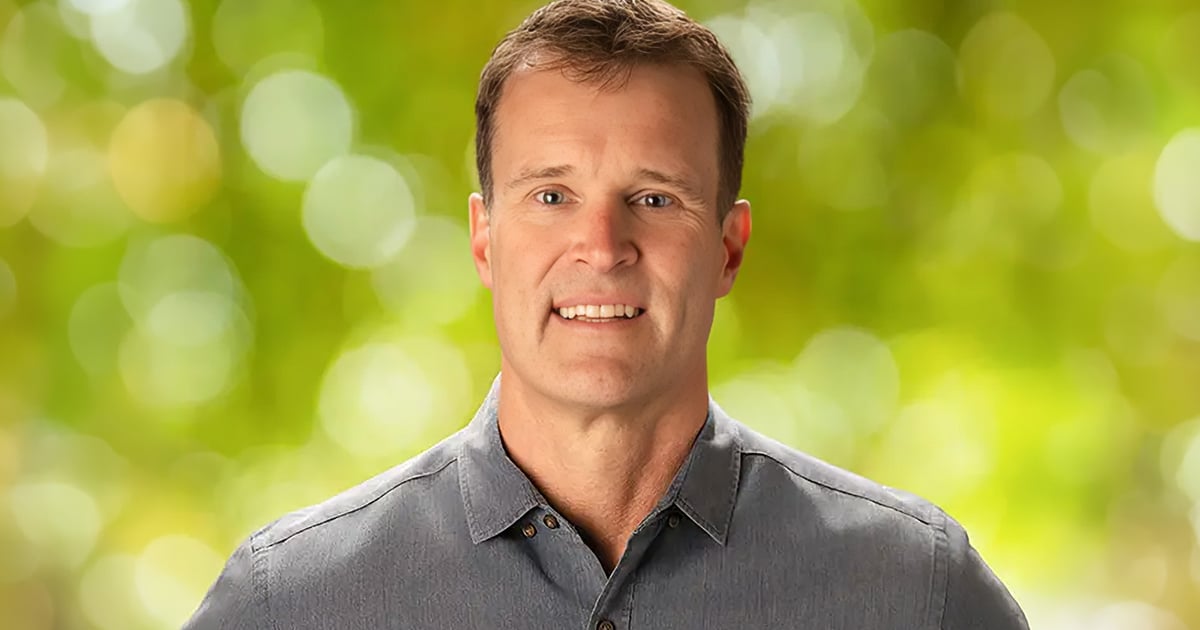
Kevin Fitzwilson was appointed CEO of Coldstream last summer, but he’s been with the company since the beginning. He’s seen the firm go through its ownership changes, including a decade when it was owned by Boston Private. The management team decided to buy out the bank in 2011, and Coldstream has remained employee-owned ever since.
In a recent conversation with Wealth Management, Fitzwilson discusses the RIA’s ownership journey, how the C Corp structure is a big differentiator, and the pressures that come with being employee-owned.
The following has been edited for length and clarity.
Wealth Management: How was Coldstream created?
Kevin Fitzwilson: Coldstream was started in 1996, with four founders who came out of Bank of America. I joined the year after in 1997, and the original business was investment management and financial planning. Back then in the late ’90s, Microsoft and Amazon were just getting started. Our office was located strategically next to Microsoft’s campus, and literally over half of our clients were employees at Microsoft.
Then, as the business kept growing, it was really driven by a lot of the tech growth in the region. We went through our first round of succession planning in 2002, where two of our founders were looking for liquidity. We started asking, do we sell out? Do we take minority capital? We went through a whole process. A couple of us were in our 30s, didn’t have any money, had mortgages on houses. So we ended up ultimately going with a partner of a publicly traded bank in Boston, Boston Private, and they bought a minority interest in Coldstream. We were reporting into a public company for almost 10 years. And that back then was incredibly rare for minority investments to occur in these small wealth management firms.
And then Carlyle Group, the big PE firm, recapped that bank. They, like many banks in ’08, had their balance sheets messed up, so they needed money. That further got us learning about what it’s like having a private equity partner and a publicly traded bank in our cap table.
Meanwhile, our business kept growing. And then we did a management buyout in 2011, where we completely cashed out the bank and the private equity firm, and became 100% employee-owned again. At that point we had about $6 million revenues, $700 million to $800 million in assets under management. And currently we’re around $15 billion in assets with $100 million revenue run rate. And going back to being employee-owned really motivated me and other key leaders at that time to lean into a disciplined growth plan that included half of our expected growth from M&A and half organic growth. We’ve been able to execute on that pretty well over the last 15 years.
We’ve complemented our core investment management and financial planning business with tax prep, tax consulting, risk management, property and casualty insurance. We have a couple private funds we run. We have a sell side investment bank, and hopefully soon we’ll have a trust company as part of our complementary business lines. Currently, we have about 250 people in our offices concentrated in the West Coast and the Pacific Northwest.
WM: How do you plan to go about adding trust services?
KF: We’re looking to merge in an existing team that already knows what they’re doing. We’ve evaluated going de novo and are aware of a couple of our peers/competitors that have done that, and I don’t think that’s the route we want to pursue.
Some of the other firms that have done that have not been as active as us in M&A. We have developed some competency in that area and learned a lot doing it several times; you get better every time. So we feel more confident going the merger route if we can find the right group.
.jpg "Coldstream-card_(1).jpg")
WM: What does the firm’s ownership structure look like today?
KF: We’re a C Corp, which is a bit unique in our industry. It seems like most businesses are organized as LLCs or some sort of flow-through structure. I think that’s a differentiator for us, and how that plays out is that it allows us to involve owners at much lower dollar thresholds. If you and I are partners in a national or regional wealth management firm, and if you and I are going to own equity in that company and it’s a flow-through structure, we’re going to be filing state tax returns in a bunch of different places. There’s an administrative cost to do that. If I’m the young new guy and I say, “I want to make a big investment in the company. I’ve saved $10,000 to buy in.” Well, at $10,000, and if we’re filing in 10 different states, I’d probably be spending $5,000 to $10,000 a year in tax compliance just to be an owner. It makes no economic sense. Being a C Corp, where we’re not a flow-through, I can take my same $10,000, invest it in Coldstream, and I don’t have to deal with any of that because the C Corp structure blocks all that state tax stuff that the state filings are done at the corporate level.
That’s allowed us to significantly expand our ownership group versus some of our industry peers. We have about 170 owners in Coldstream of our 250 team members, and the minimum is just $1,000 to buy in. Every quarter, we have a quarterly trading window, and people can buy and sell. We set a price based on market valuations with outside investment banking valuation counsel. It’s a market-based valuation, and we allow people to buy and sell.
Another difference is for someone to buy, there doesn’t need to be a seller. A lot of the firms you run into will say, “Well, I want to buy in, but there are no sellers.” And so they get stuck. We take the position that if we want broad ownership, we want young next gen people buying in and if we can grow and build an attractive business that people want to keep buying in, that will further the flywheel effect of our succession planning. It’s not perfect, but it’s allowed us to have a really strong, broad ownership group.
Another benefit of being a C Corp is that we can issue stock options. If you think about a lot of the tech companies out there where people have non-qualified options or incentive stock options or stock grants, those are all compensation tools that we use liberally across our company to further deepen the breadth of ownership.
WM: When did the firm come to this decision that it wants to stay independent and not take outside capital?
KF: There are a couple of us who are still around, going back to the late ’90s. We always felt like that would be the best way to run the business, but the reality is, you build a business that has some level of success, and the sellers want fair value for it. So I don’t know that there was any sort of aha threshold moment, but the realities of succession planning are real. We went through that, and we reluctantly went with the partnership structure that we did. At Boston Private, the people were phenomenal, first class, wonderful, competent, capable people, but having half your company owned by outsiders, you feel it. One of the things that attracted us to Boston Private was that they were, at that time, a public company, and they weren’t a fund.
With private equity, there’s a clock ticking. So we said, “Well, if we’re going to take outside capital and we’re going to deal with them, at least these people should be around long term.” After 10 years of working with them, you learn a lot about relationships personally, your spouses, your friends, your business partners, during times of adversity, not when everything’s great.
It really came through at that time, the importance of preserving our finances and making decisions to keep EBITDA at certain thresholds. And I remember going back to Boston saying, “I need to be with the team, and I need to be with clients.” And they’re like, “Well, we need you to present at this conference and talk about this and that.” I remember writing out a business plan back then, and one of the top things was, “Can we find a way back to being employee-owned?”
It took a couple of years to make it happen, but here we are now. We still believe that is the optimal way to align client teammates, everyone’s interests, but like any other business, the pressures are real. We have people who have been with us for a while who have substantial ownership stakes in the company, and they want fair value, rightfully.
All we have is our EBITDA to facilitate cash flows, and there are other demands on that, such as reinvesting in the business and doing M&A. So it’s a constant balancing act. We’re not dogmatic about being employee-owned indefinitely. There are very few firms of our size in the industry that are still employee-owned, and that’s for good reason. We feel it almost every day, but our intent is to continue on this path as long as we can.
WM: Last summer, the firm went through a leadership restructuring, and that included naming you as CEO. What was behind that restructuring?
KF: It was really a recognition of our growth. Going into COVID, we had 60 people at the company, and last summer, we were at more than 200. We need to keep up our organizational structure and leader structure with the demands of the business as far as our growth. And so that reorg was symptomatic of growth. I mean, we tripled in three to five years and you just can’t do things the same way. But I’ve been managing partner of the company since 2010, leading the company. So it’s literally no change.
WM: What does the firm’s succession plan look like? Are you part of that plan?
KF: Our succession plan as it is now is, we look on a rolling three, five, and 10-year basis forward, and we have all our owners on a spreadsheet. You never know when someone will retire and want liquidity. We have people that are well north of 65, for example, that tell me they’re going to work until they can’t. And then you have people that are well younger than that, that are retiring in their 50s because they can. But my point is that you have to make some guesses about where liquidity bubbles are, where you have a bunch of people stacking.
Ideally you want everyone on your cap table to own less than 10% of the company because the math has a better chance of working, and I didn’t really believe that until I started banging on spreadsheets and really looking at this. And then ideally you don’t have everyone at the same age, meaning that they’re not going to run for the gates at the same time. I currently own about 37% of the company, and we have no other shareholders who own more than 10%.
The most significant cap table pothole issue is, if my family wanted liquidity. I am very transparent with our team that, as long as I’m able and I’m able to add value, I have no intention of selling. That allows us to continue to process, if you will, our cap table.
WM: What is the firm’s M&A strategy, and how is it different from others out there? I know you’ve got Rush Benton on the board, who’s a major M&A guru.
KF: That was intentional. We wanted someone on our board who could really guide us and help us not make as many mistakes as other people.
We’re continuing to look for culturally aligned partners that don’t just bring more assets, more revenues, more EBITDA. The math has to make sense for everyone, but we’re really interested in finding partners that can be accretive from a human capital and intellectual capital standpoint to our combined organization. One of our other non-employee directors, her name is Heather Redmond, she runs an AI-focused venture fund in Seattle, is also on the board of the Federal Reserve regionally.
And one of the things she told us a couple years ago was, “You need to think about M&A in a sense of don’t marry yourself. You want people who are culturally aligned, but have people join this org that can level things up.”
So we take that to heart. We don’t have an outside investor forcing us to meet some IRR or multiple of growth because we have to meet a threshold and look past the culture. We control the pacing, and we’ll do no M&A if we can’t find a good fit.
Our stated business plan is to have two mergers per year. In late 2024 and into 2025, we did three mergers in 11 months, which was a lot for us. There were two $2 billion firms, both of them in Portland. And then we did a wealth management and tax firm in Seattle in between those two, and we purposely just said, “We’ve got to take time to slow down and actually integrate.”
We want to continue to expand geographically as well throughout the West, particularly as we observe these wealth migration patterns. Despite what you may be hearing in the news, the data we see is that there are a number of wealthy individuals and families and business owners that are leaving the coastal states-—Washington, Oregon, California. We want to move a little bit further east into some of these states where we see many of our clients and prospective clients moving. For example, I plan to open an office in Incline Village in Nevada later in the year.