
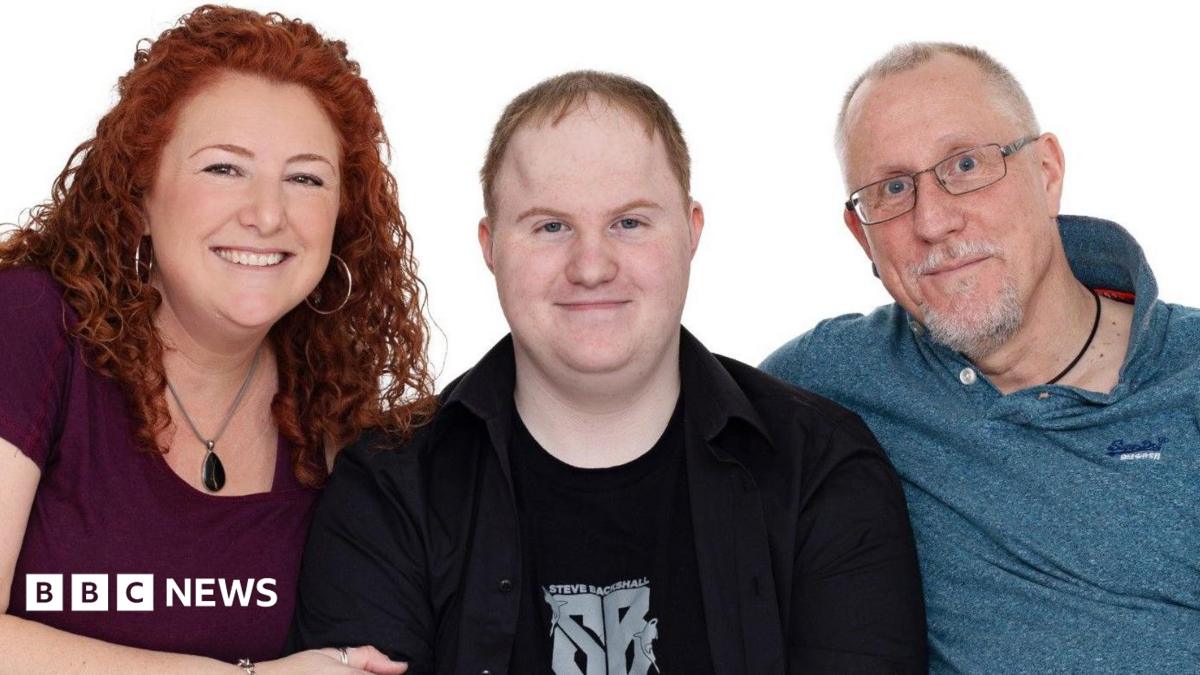
Jonathan and Catherine said the hospice care meant they were able to concentrate fully on being a loving mum and dad, making every moment matter with Daniel, his brother and two sisters.
“When you say, ‘it’s where children are ill and go to die’ you expect it to be gloomy and everyone walking around with sad faces [but] it’s just an amazing place,” said Jonathan, 61.
“It was somewhere that Daniel, in his last months, grew to love and instead of it being that place where children go to die, it was that place where our son went to live for the last months of his life,” he said.
“That difference doesn’t sound as huge as it actually was, but that’s the best way I can say it.”
Daniel made his first visit to the hospice in August 2023 before deciding to go to the hospice for full-time care in December.
He died on St David’s Day, 1 March 2024.
“I can’t even begin to imagine it without that gift of Ty Hafan, without that team around us who guided us through the fun and the awful,” said Catherine.
“I can’t imagine if we didn’t have them what this would have looked like for us and so what this looks like for other families, it’s almost too awful to try and imagine really.”
Wales has two children’s hospices, Tŷ Hafan and Tŷ Gobaith in Conwy.
A joint report has found that families are “routinely” left to navigate a “fragmented and complex system of health and social care, and often reaching crisis point before support arrives”.
It found that healthcare professionals did not always feel confident talking to families about hospice care and needed more support with “difficult conversations”.
It also suggested “a lack of information from the outset” leaves many missing out on support entirely.
The report has called for urgent, system-wide change so families can get the help they need earlier, and more easily.