
California’s Santa Cruz Mountains lead a curious double life. Each year they pull in millions of hikers, runners, and mountain bikers from the surrounding Bay Area counties.
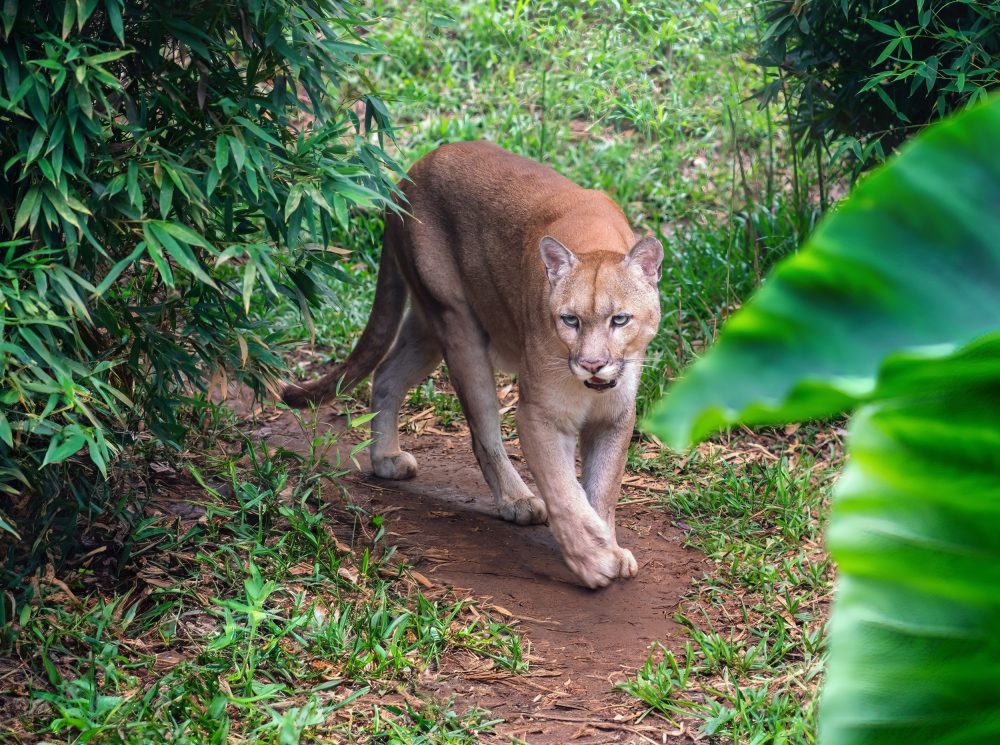
The same ridgelines also shelter one of North America’s largest land predators. Mountain lions, also called pumas, still prowl these forests despite the steady human tide.

A new study asked a deceptively simple question. How do big cats and weekend adventurers manage to share the same ground without disaster?
Mountain lions know you’re there
Researchers at the University of California, Santa Cruz (UC Santa Cruz) tracked 36 wild mountain lions over six years. Each animal wore a GPS collar that logged its position every four hours.
To map human activity, the team turned to Strava, the fitness app favored by hikers and cyclists. The comparison produced a clear pattern.
“If you’re a hiker or mountain biker in these spaces, mountain lions already know you’re there, and they’re avoiding the area,” explained Chris Wilmers, a UC Santa Cruz Environmental Studies Professor and senior author of the study.
Proactive steps to avoid people
The cats did not simply bolt when a runner appeared. They avoided the busiest trail sections in advance, staying clear of areas within 30 meters (roughly 100 feet) of the most heavily used paths.
That avoidance tracked long-term patterns rather than momentary encounters. The lions had learned which trails stayed busy, and they planned their movements around that knowledge.
“They know which trails are used, when, and how much, and they avoid places that are consistently busy, rather than just reactively getting out of there when someone comes down the trail. They are taking proactive steps to avoid people,” Wilmers said.
Some cats grow bolder
Not every puma behaved the same way. Animals whose home ranges overlapped heavily with recreation gradually relaxed their caution, drifting closer to trails than their shyer neighbors.
This pattern hints at a kind of habituation. Repeated harmless brushes with people seem to dial down a lion’s wariness over time.
Such boldness might actually help the cats survive. By tolerating people, these lions hold onto habitat they would otherwise abandon in a crowded landscape.
Where the conflicts actually happen
The stakes here run high. These lions were recently listed as threatened under the California Endangered Species Act, and every lost individual matters.
“Mountain lions in the Santa Cruz Mountains are at increased risk of extinction, due to a lack of genetic diversity and habitat connectivity,” said John Morgan, a doctoral candidate in Environmental Studies at UC Santa Cruz and lead author of the study.
“So how can we continue to provide recreation opportunities while also protecting habitat in a way that’s safe for people and mountain lions?”
Conflicts linked to trails
To answer that, the team mapped 678 reported conflict events between 2018 and 2023. These ranged from simple sightings to attacks on pets, livestock, and the rare encounter with a person.
Then came the crucial test. Using simulations, the researchers asked whether bolder, more human-tolerant lions were driving these incidents.
They were not the culprits. Conflict locations were avoided by nearly all the cats, regardless of temperament, and lined up instead with high recreational intensity.
Rethinking what habituation means
That result overturns a long-standing belief. Wildlife managers have often assumed that a habituated predator is a dangerous one, and acted accordingly.
Study co-author Mark Elbroch is director of the puma program at conservation organization Panthera.
“The long assumption here in the U.S. and beyond has been that habituation equals dangerous, with the result that wildlife agencies generally kill any carnivore they think is becoming habituated,” explained Elbroch.
“This research suggests that habituation shouldn’t be viewed as black and white, at least, and there may be a spectrum of habituation that is in fact supporting peaceful coexistence between people and these amazing animals.”
Human behavior and coexistence
The findings shift responsibility back toward us. Human behavior shaped the overlap between people and pumas far more than any individual cat’s boldness did.
That gives land managers real levers to pull. Steady, predictable patterns of human use, such as nighttime trail closures and limits on backcountry access, could help lions keep their distance.
The Midpeninsula Regional Open Space District (Midpen), which funded the work, oversees more than 28,000 hectares (over 70,000 acres) of public open space. Its 25 preserves drew an estimated 2.5 million visitors in 2023 alone.
Study co-author Matthew Sharp Chaney is a wildlife biologist with Midpen.
“We are excited to be a part of this much-needed study that researches how preserve users and mountain lions share space in the Santa Cruz Mountains,” he said.
Protecting mountain lions
Mountain lions do far more than survive on the margins of our trails. They hunt deer, leave carcasses that feed scavengers and enrich the soil, and may even curb the spread of Lyme disease.
Protecting them, then, protects something larger. The work points toward management that reduces overlap between people and wildlife rather than punishing the animals that have learned to live alongside us.
“We are lucky in this region for our community to have access to biodiverse landscapes, and studies like this help us make science-based land management decisions that will preserve and protect the wildlife and people that love these open spaces for decades to come,” Sharp Chaney said.
The study is published in the journal Current Biology.
—–
Like what you read? Subscribe to our newsletter for engaging articles, exclusive content, and the latest updates.
Check us out on EarthSnap, a free app brought to you by Eric Ralls and Earth.com.
—–