

Keeping pace with Hollywood’s awards horserace. Sign up for the newsletter here.
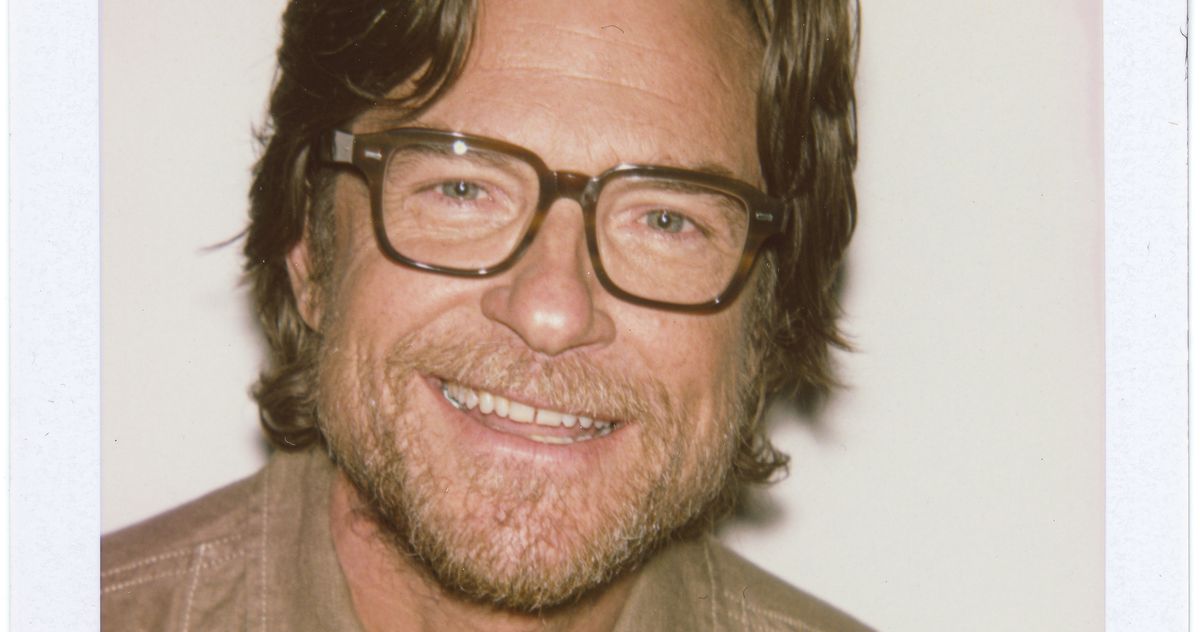
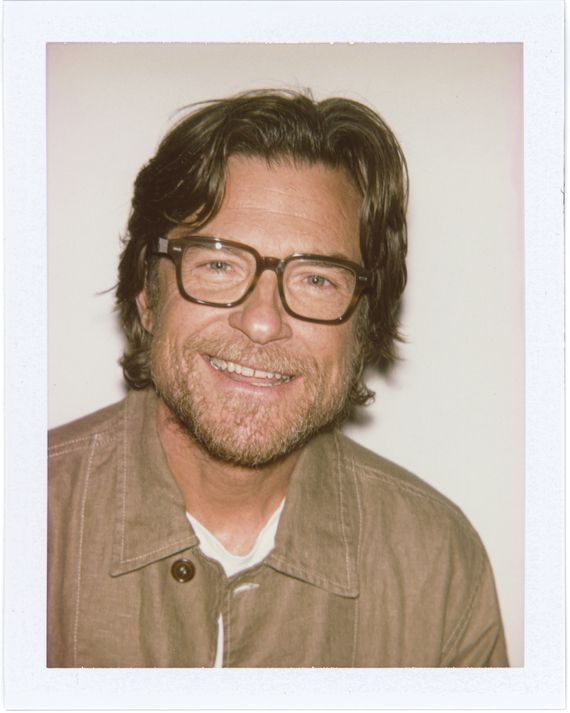
Photo: Lucas Michael
Jason Bateman has been playing the straight man since he was a boy. Since he began his professional acting career at age 10, Hollywood has asked him, if not trained him, to do what was best for every scene, both on-camera and off. Before he had a sense of self, he had a sense of responsibility to not only the casts and crews of his projects but the family he was financially supporting at a young age. Work famously slowed as he transitioned into adulthood, but when he returned with Arrested Development in 2003, he delivered one of the greatest straight-man performances in comedy history. Excited to be working again, Bateman accepted largely straight-man roles for years. Thanks to his experience as a child actor and decades in show business, he also grew cynical toward capital-A Actors who need to show the audience how much capital-A Acting they are doing. “I was like, I don’t want to be phony. I want to just be me,” he says. “That runs at odds with my fricking profession, which is to really be convincingly not who I am. So I’ve tried to gravitate to stuff where I can just be versions of me that service the story.”
Thanks to a combination of his directing on Ozark, which he won an Emmy for in 2019, and his podcast, Smartless, affording him financial flexibility, Bateman has been experimenting and challenging himself. This year, he stars in two TV limited series, the gritty crime thriller Black Rabbit and the darkly comedic mystery DTF St. Louis, in which he plays characters who are a departure from the kinds of roles that audiences have come to expect from him. So as much as his personal muse (and his eldest daughter’s interest) is pointing him toward directing, Bateman has no plans to retire from acting — especially because Jason Bateman the actor knows exactly what Jason Bateman the director is looking for. “I like being in front of the camera and behind it,” he said at a live taping of Good One during Vulture Festival at Tribeca Festival, “because it helps me hit that small target for my own personal taste.”
You said one of my favorite things ever about what a straight man does, especially in a comedy, which is, “There’s nothing funny about Martians on Mars.” Can you talk about what that means?
Well, if it’s a crazy person in a crazy situation, it’s all kind of a dial tone; it’s a hat on a hat. But if a fish is walking around on the sidewalk, that’s pretty interesting, because the fish is not supposed to be there. How does that happen? So if you have a normal person trying to navigate an extraordinary situation, that’s interesting.
Can you think of one of the hardest times you had to keep a straight face — let’s say in Arrested Development?
Any scene with Jeffrey Tambor was a real difficult thing for me. I developed a strategy once of digging my nail into my leg, which no longer worked. I just started to not look at his eyes. I would start to just let my eyes drift down, and he would be like, “What the fuck? My eyes are up here. It’s like working with Helen Keller!” I said, “Well, stop being so funny!” I felt bad about ruining the takes, because he would do something hilarious, I’d start laughing, we’d have to do it again, and then he wasn’t as funny, and then he’d get mad at me. I’d screwed up the timing.
You often will even play straight men when acting in dramas. Is there a difference between dramatic acting and comedic acting?
It’s similar. I like being a little bit of a freak, but I like being the person who is reacting to the comedy person. I like to be the guy who reacts to someone who just farted, and I also like to be the guy who reacts when someone reveals a knife. I live next to the median, and the big comedy person’s over here, and the big drama person’s over there.
One of my favorite times you did a big swing was in Dodgeball. You’re in one scene, and you’re really going for it. I imagine you had a day where you could do anything. Do you remember shooting that?
I do. I think I worked in the morning on Arrested Development and drove down at lunchtime. It was just a half a day to do that. I remember saying to the director before we went out there, “So what’s the tone of the film? How crazy is ‘crazy’?” He goes, “Oh, pretty crazy.” “Should I ask a makeup lady to put a neck tat on me?” He goes, “Perfect.”
The other thing I was thinking about is you’re a really good Saturday Night Live host. I remember after your recent episode, which was during COVID, being like, This is one of the best episodes in a really long time.
I just remember how impressive that machine is over there. It’s like a Swiss watch. They don’t really commit to anything until Wednesday or something like that, so they’ve got only three or four days to build all those sets and make all those wigs. It’s stunning what they do there. They write, I am going to guess here, 60 sketches, from which they narrow it down to maybe 15 or something, and then 10 make it to the show or something like that. You read all 60 of those sketches around a table, and you read them cold. With each sketch, you have to figure out what your funny is in each of those sketches: Are you the straight man? Are you the crazy person? Should you do an accent? Should you not? It’s awesome to me that they’re able to get such a high batting average of success without really having any time to work on that.
I believe you’re currently out East because you’re working on The Cackling of the Dodos, the new feature you’re filming for Netflix. Can you share the general premise of that?
Sam Rockwell and Woody Harrelson find a dead body in a grain bin on a farm that they both run, and they try to get rid of this dead body and create two more dead bodies doing it. It’s a very, very, very dark, dark comedy. It’s like early Coen. It’s more like Blood Simple than, say, Raising Arizona. I’m loving it. We just finished our first week last night.
You started directing at 18. I believe at the time you were the youngest person ever in the history of the DGA. What’s it like being an 18-year-old directing grown-ups?
It’s nerve-racking, because you don’t want to tell any adults what to do. You can make suggestions. But that was maybe year three or four of the show I was doing, so we were all very close, and the crew was very supportive of me and helped me out. I didn’t know what the hell I was doing, and it was really, really fun. I just loved it. Sitcoms are very near and dear to my heart, and I wish they would come back.
Do you guys miss sitcoms at all? They’re really, really fun to watch. You’re basically watching a play, and to do them is incredible. If we were doing a scene and had some joke, we would hear the audience laugh, hold for the laugh, wait until the laugh came down, and keep talking again. There’s a partnership with the audience. We’ve been practicing this material Monday through Thursday, and nobody’s laughing at it anymore by Thursday on the set. And then on Friday, you guys come in, and suddenly it’s new to you guys and you’re laughing. It buoys you. Then you get all-new material the next week, and it goes on like that for 22 weeks. Nowadays shows are only ten episodes.
For a while, you considered becoming a sitcom director in the style of Cheers director James Burrows. One of my favorite things about your IMDb page is, in 1997, you directed an episode of Family Matters. Do you remember the plot of that episode?
I remember that Donna Summer was one of the big stars in that particular episode. I think she played the aunt of the family or something, and she came into town and was leading some Gospel set piece at a church. I remember being really nervous about having to direct. You have a full Gospel choir up there and all these actors in a church. That’s the tricky part. You’ve got only four cameras, and all these people talking, and you have to work out the puzzle to choreograph.
Here’s the plot. It’s a very Family Matters plot.
Was I right?
You were pretty close. “Steve’s Aunt Una from Altoona returns to visit her nephew and the Winslows again. Unfortunately, she’s embarrassed about the extra weight she gained from eating so much. She’s desperate to lose the extra weight to impress Reverend Fuller at church. Steve comes up with a solution for his favorite aunt —”
A GLP-1?
“A fat-compressing invention.” Then — classic Family Matters — it works and then she —
Blows up a little bit. Yeah, she had an inflatable suit or something. Oh my God. See, this is why we love sitcoms!
Can you talk about the moment, or series of moments, where you decided to really make a go at being a director — to seriously be seen as one?
That started really early on. I really was that T-shirt — “What I really want to do is direct” — but you need people to let you. That can come in various forms. Either you’re independently wealthy enough where you can finance your own film, or you’ve got enough capital in the industry where you can say, “Hey, cool if I do this?” Maybe you’ve got enough of an audience as an actor where if you play the lead, then maybe the financier feels confident enough to finance this because people are going to go see it and don’t care who directs it.
I think that’s kind of how Bad Words came about. My agents found this script that they thought I might really like. I was like, “Yeah, I love this. Where can we find the money for this?” Fortunately, I think Arrested Development had provided enough of the paddles on the chest of my career where people might want to go see me in the lead of a small film. It didn’t turn out to be some big, huge box-office success that facilitated the next directing opportunity, but it was enough: Well, he knows how to take the lens cap off the camera, and he didn’t screw it up.
You joked about it, but were you self-conscious of the I’m an actor who wants to actually direct trope?
My cynic radar was definitely up. I try not to embarrass myself by being too much of a cliché at times, but the fact of the matter was that I really wanted to direct, and I just knew that I’d have to ignore the eye-rollers. Hopefully, the proof would be in the pudding: Well, he’s not bad, and I would see something that he would direct again. So you cross your fingers that you don’t clank it and that they give you another opportunity.
In 2019, you win the Emmy for best directing for Ozark, and when they announced it, you were frozen. You had won and been nominated for acting awards before then, but do you remember what went through your head when they announced your name?
I knew that I was not favored to win in that category at all. In fact, I think there were two or three directors for Game of Thrones in that category who everyone was talking about.
All I wanted out of Ozark was directing. Playing the character as an actor, too, was great, but that’s not what excited me about Ozark. So to win for directing, I just immediately thought about the group that I had assembled there who helped me so much — the cameramen and the cinematographers and the production designers and those actors. There were so many good people involved in that show. To be able to be the person who got to go up on the stage and say “Look what we did!” was kind of overwhelming.
Had you considered stopping acting after that? Why do you still act?
It’s fair to ask, especially given what I’ve been saying about acting. But I do really enjoy acting, and I don’t want to stop that. I like acting in the things that I direct, because there’s a tone that I am really attracted to as a viewer, which is the dance between comedic and unsettlingly dramatic — a real murky line. David O. Russell does a really good job of that. There’s no real knee-slapping broad comedy, but there’s some funny stuff in it, because people are just being really raw. Someone’s losing their dignity, and that’s funny. There’s no winking. Hitting that tone is often reliant on either how you cast the bad guy or who the protagonist is. If I can rely on, for better or worse, an actor who’s reading my mind effectively, it makes the process that much more efficient for me. So I like being in front of the camera and behind it, because it helps me hit that small target for my own personal taste.
You have worked and had success at different parts of your life, and you had a ten-year period where you had nothing. I was curious about your shifting relationship to money versus the passion of it.
It is an interesting subject for me personally, because I had a complicated relationship with it growing up because both my parents were my managers. What I made was very helpful to our bottom line each month, so there was a great deal of pressure to not get fired. If you don’t keep a C average in school, you don’t get your work permit and you’re fired. But as anxiety inducing as that was, there was also this early muscle that I developed where I knew I could generate money. Going forward, I feel enormously fortunate that things have worked out for me — knocking on wood — where I don’t have to take jobs that aren’t creatively exciting to me and consequently could be a detriment to my longevity. You do some really terrible thing that no one likes, and people might not want to hire you next.
You’ve been around the industry for a really long time. You’ve seen a lot. Now there’s a number of streaming services, and AI is taking over more and more parts of certain people’s jobs. Martin Scorsese said he’ll start using AI to do his storyboarding. Where do you see Hollywood in the next five years?
I am not smart enough to really give a firm take on AI. I haven’t educated myself on it. I look forward to learning a lot more about it. My super-duper smart friend Ben Affleck is very well educated on it and has just sold that company to Netflix. I’m looking forward to talking to him and people like him who can let me know what it can do to help our business, help the product, make it more entertaining for the audience, and how it can also help preserve some of the jobs that it may absorb. But, just like any technology, there’s an adjustment period that may be uncomfortable for some parts of that industry. We’ve certainly seen it making cars or in music, with music stores and selling albums going away. There are multiple industries that have had to go through this technological integration. I just choose to be bullish about it. I’m assuming it’s going to be great. I hope.
I will tell you, I’ve seen some stuff, and it’s just incredible. We’ve all seen it on the internet, these AI videos and stuff. It’s like, Wait, is that AI? My personal preference would be that anything that is computer generated has a bug in the bottom-right corner so that we can, if we want, see if this is real or not. Or some sort of right-click where you can see the metadata and know whether this is real or not. It’s so incredibly convincing that the most discerning of us might be tricked. And I don’t think that should be right.
This year, you had two series that came out that did show a different side of your acting: Black Rabbit and DTF St. Louis. In Black Rabbit, Jude Law plays the character who often you would be cast as, and you get to play the other person, the fucked-up brother. What was that experience like for you?
It was great. I’d read the scripts not knowing which part they were thinking for me, because Jude and the writers sent me the script. So when Jude and I got on the phone with the writers, we had the conversation, the four of us, “Well, which part? What are you thinking?” And I said, “I think people would expect me to play your part, Jude, but I’ve got a great take on Vince.” And he was like, “Yes, exactly. That’s what I was thinking. That would be great and maybe more interesting for you.”
We all have somebody in our life who just can’t get out of their own way. They don’t have the coping skills to deal with some of the tricky choices we all have to make. It’s tough to love those people sometimes until you really take the time to try to understand and empathize with them. There was some math in there — I know for the first few episodes, it’s tough to like this guy, but eventually, if you stick with it, you see there’s a reason why this guy is broken. Then eventually — I won’t spoil anything for those who haven’t seen it — there’s somewhat of a winning sacrifice that he makes that hopefully earns it back a bit. But it’s a long play, and he might be a tough guy to like until then.
A line that comes up a lot in DTF St. Louis is “No one’s normal. It just looks like that from across the street.” Are you normal? Why or why not?
I’m nuts. I think we’re all pretty fricking crazy. I think if you have just a thimbleful of intelligence, you are pretty crazy, because you can justify many different ways to live, many different decisions to make, many different people to love, and many different jobs that you could take on. By definition, that’s kind of nuts. We are all somewhat schizophrenic if you’re smart enough to be, and certainly my job is to convincingly be multiple people. So from a very young age — I started at 10 — my job was to really be convincingly somebody else before I was really fully developed into who I would be at my core. You don’t really figure out who you are until you’re, I don’t know, 20? It was tricky for me.
I developed a bunch of different parts of me that might not have taken the lead had I just been just waking up and going to bed every day, just being me. I’m not schizophrenic, but I have to figure out, Well, who are you most dominantly today? It’s fun being an actor, because I’ll read a script, and like this guy in DTF or this guy in Black Rabbit — they’re me. They’re at the far end of my spectrum, but I get those guys; I have those guys in me. Fortunately for my wife and my kids, they’re not the lead part of me. I love how much it takes for all of us to get through every day and be functional and have our coping skills. It’s beautiful that we’re all able to keep it on the rails.
Do you think we should ban child actors?
When parents come up to me and ask, “What’s your advice?” I say, “Well, be careful.” If they’re really good, they’re going to develop parts of themselves that may or may not have come to fruition. They’re going to become much more dynamic people as a result. But, in any business that deals with — pardon the term — the arts, the best painter is not guaranteed the most sales, the best actor is not guaranteed the job, and the best singer is not guaranteed the most albums sold. It can be really frustrating and unfair for those who are super-talented if they don’t have access to the room. There’s a healthy level of indifference there that one has to hold on to, but you still have to make a passionate commitment, too. So it is tricky. You don’t have a diploma that can guarantee you a base salary.
I was thinking about The Family Fang, your second feature. It’s about two kids who were raised by performance artists and were incorporated into their arts. I often think there’s something missing in the nepo-baby conversation, which is that there’s a unique burden placed upon the kids of aspiring artists, because their parents care so much about their work in a different way than any other parent might. You have always been pretty adamant about not wanting your kids to pursue acting and directing, but now it seems like they both are pursuing that.
Literally last night, my 14-year-old daughter, I was directing her. I gave her this one line in the movie, and it was the greatest thing ever. But I’ve had all these conversations with her about this. Every parent is going to be able to make their own decisions; you know your own kid better than anybody. Is it going to be safe for them? Do they have the coping skills to manage the complexities of it?
You feel like your kids do?
Yes, absolutely. My 19-year-old daughter got the directing bug a couple of years ago, and that’s been the greatest thing, too, because we have another thing to talk about. It makes you feel great as a dad, because right at about 15 or 16, they don’t want anything to do with you. A couple of years ago, she came home — and because kids don’t know what the hell you do — she goes, “Hey, so you do this, don’t you?” I was like, “What do you mean? The directing stuff?” She goes, “Yeah. There was that one shot in the movie that we saw the other day. How did they do that? You know how to do that, don’t you?” So we got to talk about technique and all that stuff, and now she’s in film school. This summer, she’s my assistant on this film, and we’re living together, we’re driving to work every day, and she’s soaking it all in. And maybe I’m just telling myself this, but I think she’s looking at me like, Huh, I guess he does know how to do something.
Sign up for the Vulture Daily
An entertainment newsletter for the pop-culture obsessed.
Vox Media, LLC Terms and Privacy Notice
Related