
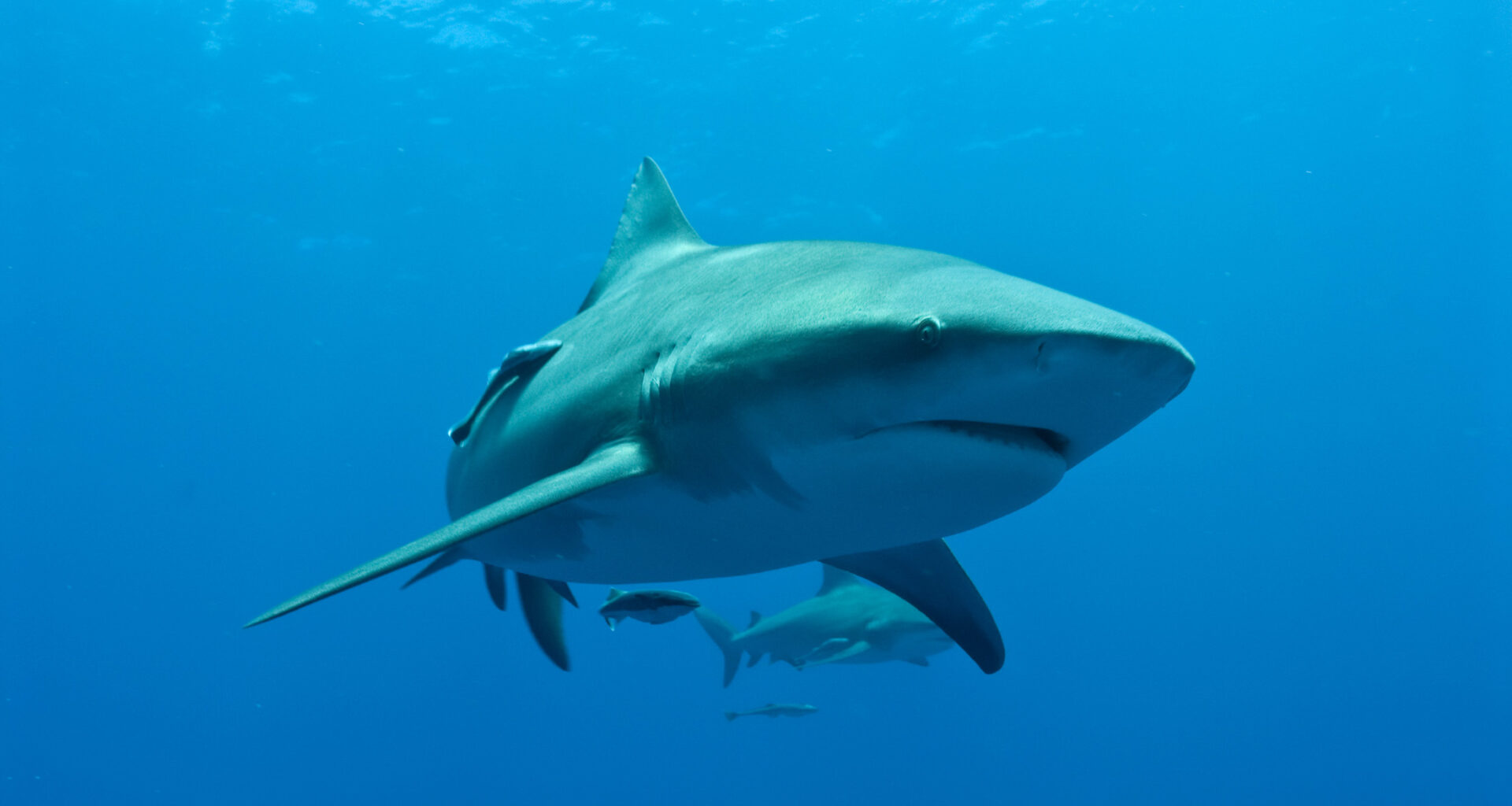
Bull shark breeding is usually cast as a brief, anonymous affair. Two animals cross paths in open water, mate, and drift apart, unlikely to ever meet again. Whoever is nearby will do.
Bull sharks off Fiji are quietly complicating that story. Some females seem to return to the same waters each year to give birth. And the genetics hint at something stranger about the partners they keep meeting.
Gathering at the reef

Off Viti Levu, Fiji’s largest island, adult bull sharks (Carcharhinus leucas) crowd into a protected zone called the Shark Reef Marine Reserve. Fishing is banned there, and divers come to watch them feed.
Near each year’s end, the pregnant females leave for nearby rivers to give birth. Their pups grow up in murky water, part fresh and part salt, before heading out to sea.
Researchers long suspected the reef adults and river pups were one population, but the family links stayed hidden. Pinning that down fell to marine biologist Kerstin Glaus and colleagues at the University of the South Pacific (USP).
Building the family tree
Over more than a decade, the team gathered tissue – muscle from reef adults between 2007 and 2017, and fin clips from young sharks netted in the rivers. In all, 353 animals.
They read thousands of tiny markers in each shark’s DNA and ran them through software that rebuilds family trees, flagging siblings and parent-offspring pairs.
After repeat captures were removed, 296 individuals remained. What came back was a web of relatives.
The analysis found 375 related pairs, 146 of them full siblings and the rest half siblings, scattered across the reef and the rivers.
Reef adults, river pups
Earlier tracking had shown pregnant females entering the river estuaries, so a link was suspected. The DNA made it concrete.
Reef adults proved close kin to newborns and juveniles in the Navua and Rewa rivers. One adult sampled at the reef in 2011 was a full sibling of four young sharks later pulled from the Navua.
They shared parents but were born seasons apart. Different years, same bloodline.
Taken together, the links show how much these rivers carry. Much of the population is born and raised in them, knitting Fiji’s coastal sea and freshwater into one connected system.
Mothers that return
Within a single river, some related youngsters were caught more than two years apart, matching the species’ two-year breeding cycle.
That spacing is a signature of reproductive philopatry – returning to the same place to give birth, season after season.
About 15 sharks showed these across-year ties, a sign the same mothers kept coming back. Lemon sharks at a Bahamas nursery return to give birth roughly every two years, a long-running study found.
Not every river told the same story. In the Sigatoka, the team found almost no links – just one. Far fewer bull sharks turn up there, perhaps because the river has changed and numbers have fallen.
The same partners
The strangest result sat inside the family trees. Of the sharks sampled years apart, 54 traced to the same family groups, sharing both a mother and a father.
These were offspring born seasons apart but tracing to one pair – what the team calls repeated pairings. In all, 13 such family groups turned up.
One stretched a full decade, with the same mother and father producing a pup in 2007 and another in the Rewa River in 2017. The DNA reveals the shared parents, not whether the two mated again.
Returning to the same mating grounds is known in some sharks – one study followed a nurse-shark breeding site for three decades. But two individuals reuniting is far rarer; in bull sharks, no one had shown it at all.
Why it happens
A few explanations fit. The simplest is arithmetic: in a small population, only so many partners exist, so the same two can meet again by chance.
Larger males may also dominate breeding, with females favoring bigger mates. A biological wrinkle needs ruling out, too.
Some sharks store sperm for weeks or even years, which can make one mating look like several. But in bull sharks elsewhere, stored sperm lasts only four to five months – nowhere near a decade.
That leaves a tantalizing idea: that some sharks truly re-pair, helped by social bonds formed while crowded at the reef.
For now it is a possibility, not a proven pattern. Confirming it means watching wild sharks mate, which no one has managed.
Rethinking bull shark breeding
The genetics also sized up the bull shark breeding pool, and it is small.
By one count of how many adults effectively pass on their genes, Fiji’s sharks sit between about 150 and 280 – under the 500 seen as a safe minimum.
A small, isolated population with little genetic diversity could disappear locally – part of why the species is listed as Vulnerable in a global assessment.
Protecting it, the authors argue, means guarding the birthing rivers and estuaries, not just the reef.
What was guesswork is now on the record. Reef adults parent the river pups, certain females return to the same rivers to give birth, and some pups born years apart trace to one pair.
Bull shark breeding, the authors argue, runs on more order and more continuity than anyone had credited.
The study is published in the journal Royal Society Open Science.
—–
Like what you read? Subscribe to our newsletter for engaging articles, exclusive content, and the latest updates.
Check us out on EarthSnap, a free app brought to you by Eric Ralls and Earth.com.
—–