
‘Exciting’ is the word chairman Alan Shingler uses to describe 2025 at Sheppard Robson. It was the best year yet for the practice, which has climbed from fifth to third place in the AJ100 rankings after increasing its headcount of qualified architects in the UK from 207 to 264.
The total number of permanent staff rose from 350 to 397 over the same period, while architectural fee income jumped from £33.7 to £37.5 million.
Shingler says the culture at the 88-year-old practice, with its focus on staff career progression, diversification of work, and a balance in the scale and stage of projects, is key to the continued growth. Early investment in the life science sector has ‘started to reap more reward’ – in 2025 Sheppard Robson completed the first veterinary school in New Jersey, at Rowan University, working with Philadelphia firm Erdy McHenry Architecture.
Nevertheless, the practice, which has offices in London, Manchester and Glasgow, is ‘very deliberately’ focused on the UK market. Only £51,000 of its 2025 fee income came from overseas projects.
Shingler says any international work is typically the result of an invitation rather than the practice trying to expand overseas. ‘If we feel it can continuously grow that diversification of skill, or it offers something as a unique opportunity to our team for a project to work on, then we will gladly do international work,’ he says. ‘But it can also be a more volatile area to work in, hence our priority being the UK.’
Existing clients are a top priority – 76 per cent of Sheppard Robson’s work comes from repeat clients – because Shingler says that gives the practice a ‘secure framework to invest in new, diverse sectors’.
The area that saw the greatest growth in turnover in 2025 was technical and delivery expertise. ‘Some of that has been down to changes in legislation through the Building Safety Act,’ says Shingler, ‘and clients wishing to retain us as architects to deliver our own projects more [because of] concern around the “golden thread” and maintaining that delivery knowledge through various phases.’ Another factor, he adds, is that the scale of the practice brings a depth of expertise and knowledge that can be applied to large, complex projects.
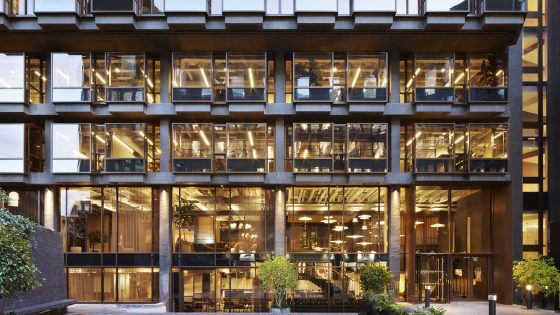
Significant completions by Sheppard Robson in 2025 included the retrofit of a Grade II-listed 1960s office building, Pall Mall, in Manchester city centre, for property provider Bruntwood SciTech. The block will be the new location of the practice’s Manchester office from this summer. It says its intervention saved 7,900 tonnes of embodied carbon compared with a rebuild.
Shingler, a former chair of the RIBA Sustainable Futures Group, says that about 85 per cent of Sheppard Robson’s current office projects are retrofit. The practice launched SEED:SR, its new sustainability brand, in April this year to complement its existing ID:SR interior design brand, AXIS delivery arm and GRAPHIC:SR, the brand identity team launched in 2025. SEED:SR, which follows last year’s appointment of a new head of sustainability, Liam Kelly, will support other parts of the business and provide new consultancy services.
Shingler says Sheppard Robson may face a challenge sustaining responsible growth towards the end of the 2027/28 financial year if there is a continuation of global wars, rising fuel prices and increasing interest rates, and if UK commercial sectors such as universities and residential do not bounce back. The practice is planning ahead, considering sectors where it has limited exposure and researching where it could ‘branch its expertise into international markets’.
For now, however, it continues to expand. Shingler says total headcount was about 460 in May 2026 and he expects further growth, while he predicts turnover will increase by 8-to-10 per cent in the current financial year. Key projects include the masterplan and design of buildings for North Manchester General Hospital.
So, despite the ‘volatile global market’, Shingler is ‘very confident’ about 2026.