
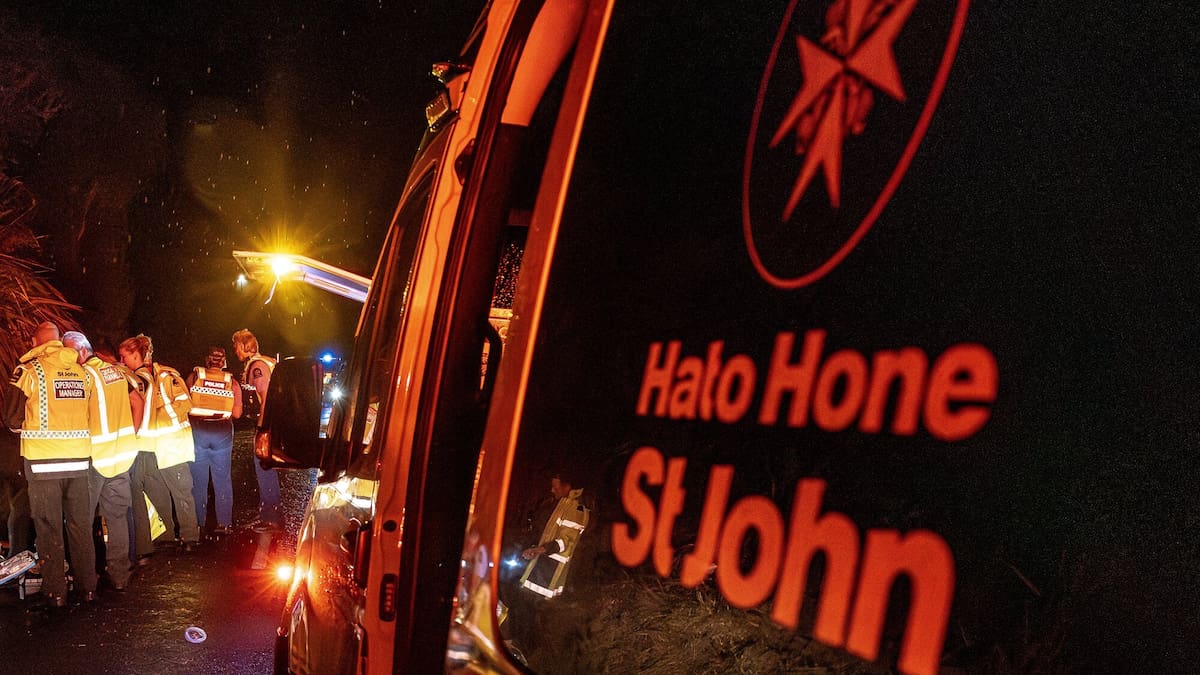
That experience, and a 10% rise in assaults against Hato Hone St John staff in just one year, prompted him to act.
Figures showed assaults rose from 387 in 2024 to 426 in 2025.
On March 31, he submitted a petition calling for “decisive action” from the Government to protect emergency responders from assault and abuse.
It gained more than 500 signatures.
Minister of Justice Paul Goldsmith said the Government introduced new offences to ensure those who assault on-duty first responders or prison officers spent longer in prison.
“The Bill is due to have its second reading soon, and we hope to pass this into law before the election.”
He said the Government would not oppose minimum sentences in the future if needed to ensure real consequences.
Todd said it was devastating to know how widespread the issue was for frontline workers, including firefighters, police and hospital staff.
A terrifying encounter during a callout last year is one example EMT Paul Todd gave when speaking about the abuse and violence faced by frontline responders in New Zealand. Photo / Mike Scott
New Zealand Nurses Organisation Northland delegate Rachel Thorn said she has had nurses in tears after being verbally abused by patients’ family members.
People swore at staff, and made veiled or direct threats, she said.
“I find it quite surprising that people feel they can talk that way to somebody who’s trying to help them.”
Official Information Act data released to the Northern Advocate showed there had been 44 physical assaults, 18 threats and 38 instances of verbal abuse at Whangārei Hospital in the year up to April 30.
Thorn was concerned about the safety of staff in wards where security was not immediately nearby.
“They’re a good few minutes to five minutes away, and a lot can happen in five minutes,” she said.
Health New Zealand says it takes a zero-tolerance approach to violence and abuse. Photo / 123rf
Thorn said mandatory de-escalation training had been helpful, but she wanted to see stronger lines drawn to show violence and abuse were not tolerated.
Deborah Barrow, Health New Zealand Te Whatu Ora acting group director operations Northland, said they took a zero-tolerance approach.
According to Barrow, 10 trespass notices had been issued at Whangārei Hospital in the past 12 months in response to “unacceptable behaviour”.
She said situations could be complex and involve multiple factors, such as people in distressed states, under the effects of drugs and alcohol or suffering from underlying conditions.
Police also report assaults on frontline staff as a growing issue.
Police Association regional director Murray Fenton said assaults on officers felt more common and were becoming more intense.
In Northland, 118 assaults against police have been self-reported in the past five years up to May 8. Of those, five officers needed serious medical intervention, 45 needed medical attention, 38 received first aid, and 30 needed no treatment.
Fenton gave the example, outside Northland, where a woman high on methamphetamine dragged an officer to the ground and attacked her.
The officer had given her a ride, before running a check that revealed she had a warrant for arrest.
Fenton claimed the officer had only survived because other staff intervened. Had it happened in Northland, the member may not have survived, he said.
“They don’t have the luxury of having backup not that far away,” he said.
Police Commissioner Richard Chambers said large distances were common between police stations nationwide.
A significant amount of police training focuses on dealing with and de-escalating situations, he said.
“No first responder comes to work to be assaulted when they’re just turning up to do their job.”
While assaults had gradually increased over the past decade, Chambers believed greater reporting and visibility also played a role.
Northland’s numbers have remained relatively steady, with 86 recorded occurrences last year – slightly fewer than in 2024.
Chambers encouraged police to report all assaults because it “shines the spotlight” on the realities of frontline policing.
He had asked district command centres to report all assaults against staff.
“I might be the commissioner of police, but I’m still a policeman myself and I’ve worked on the frontline through my career and I’ve been assaulted myself. I know what it’s like.”
Police Commissioner Richard Chambers wants officers to step forward with reports of assault, no matter how minor. Photo / Mark Mitchell
Body-worn cameras were an opportunity to improve transparency, alongside their evidential, training and safety benefits, he said.
Firefighters say interactions with the public have changed.
While Fire and Emergency said it could find no recorded assaults against Northland staff in the past five years in its search, New Zealand Professional Firefighters Union Northland president Paul Ballantine had seen an escalation in aggression over his 30-year career.
He said firefighters had at times been pulled back from callouts due to safety concerns.
Firefighters have the luxury of having a larger team with one member often watching the scene, says Paul Ballantine, unlike ambulance staff who have their backs turned to potential danger while treating patients. Photo / 123rf
Drugs, alcohol or heightened emotions could cause situations to escalate, Ballantine said.
Firefighters had to be “very careful” when telling family their loved one was not going to survive, he said.
Ballantine believed firefighters were more fortunate because they were better manned.
He said they could have a crew member watch the surroundings, whereas ambulance staff treating patients could not see what was happening behind them.
Brodie Stone covers crime and emergency for the Northern Advocate. She has spent most of her life in Whangārei and is passionate about delving into issues that matter to Northlanders and beyond.