
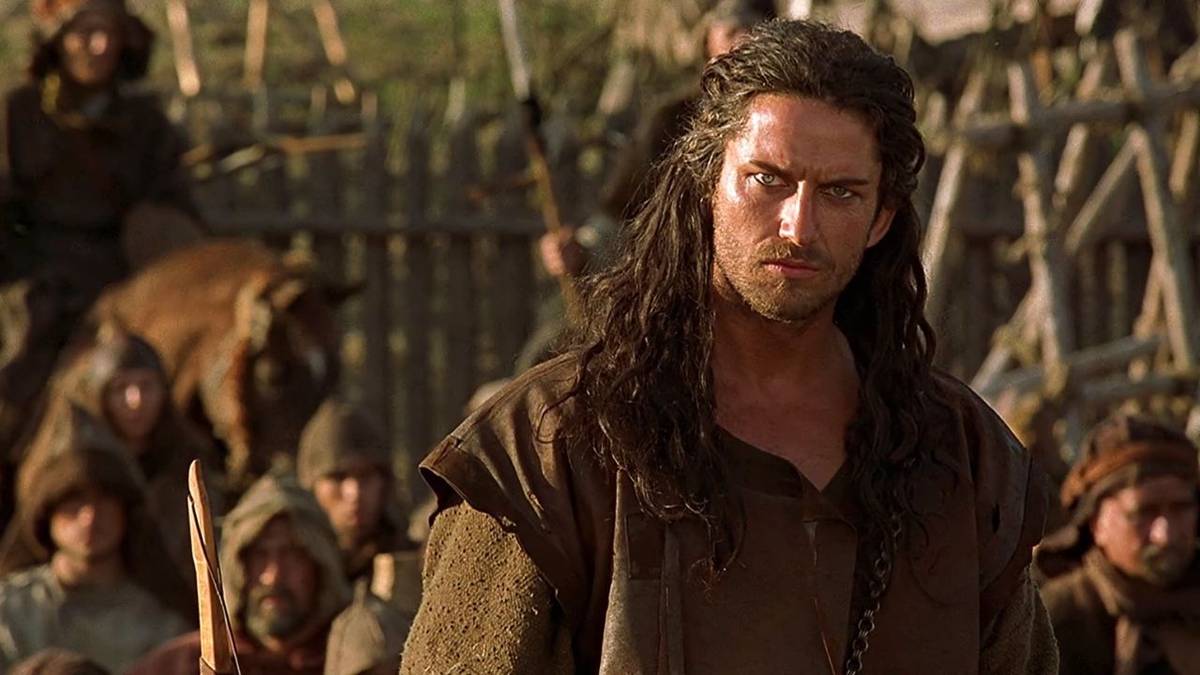
I’m still a little sad about the cancellation of Spartacus: House of Ashur. How could they? May the gods send thunder down to the Starz offices. The good thing is that the show might continue elsewhere since Lionsgate Television owns the rights. Whether that will happen or not remains to be seen. For now, there is no need to cry over spilled wine. There is more at the banquet. That’s why I’ve been looking around for similar shows. Thankfully, I found one that really impressed me. Even better, it stars Gerard Butler.
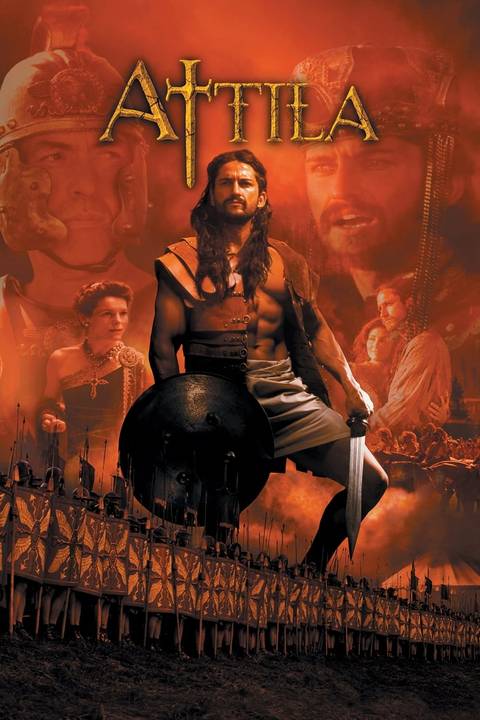
Released in 2001 by the USA Network, Attila (alternatively titled Attila the Hun in the UK) is a miniseries about the title character, who was one of the most feared enemies of the Western and Eastern Roman Empires. At his peak, Attila, aka The Scourge of God, conquered many territories and subsequently invaded the heart of the empire (Italy), cutting his way through the northern provinces. However, he was unable to take Rome. Butler plays Attila in the two-part miniseries, supported by a star-studded cast that includes Tim Curry, Tommy Flanagan, and Powers Boothe.
Like ‘Spartacus’, ‘Attila’ Depicts the Roman Empire as a Goliath-Like Monster That Should be Struck Down
USA Network
History celebrates the Roman Empire and its numerous rulers. So does Hollywood in most cases. However, Spartacus reminded everyone that Rome was mostly the bad guy. In the original Starz show, Spartacus, a Thracian, gets captured for defying the orders of Roman general Gaius Claudius Glaber. He is then sold to a gladiatorial training school where he engineers a revolt. House of Ashur pretty much follows the same path, with the antihero, Ashur, pitted against a young and arrogant Julius Caesar.
Spartacus fans will thus love Attila’s “Underdog Vs. Mighty Roman” tale. The show is set during the Migration Period in Europe (300 to 600 AD). This was the period when various Barbarian tribes – Huns, Vandals, Bulgars, Goths, Alani, Suebi, and Franks – ventured into what had been the Western Roman Empire.
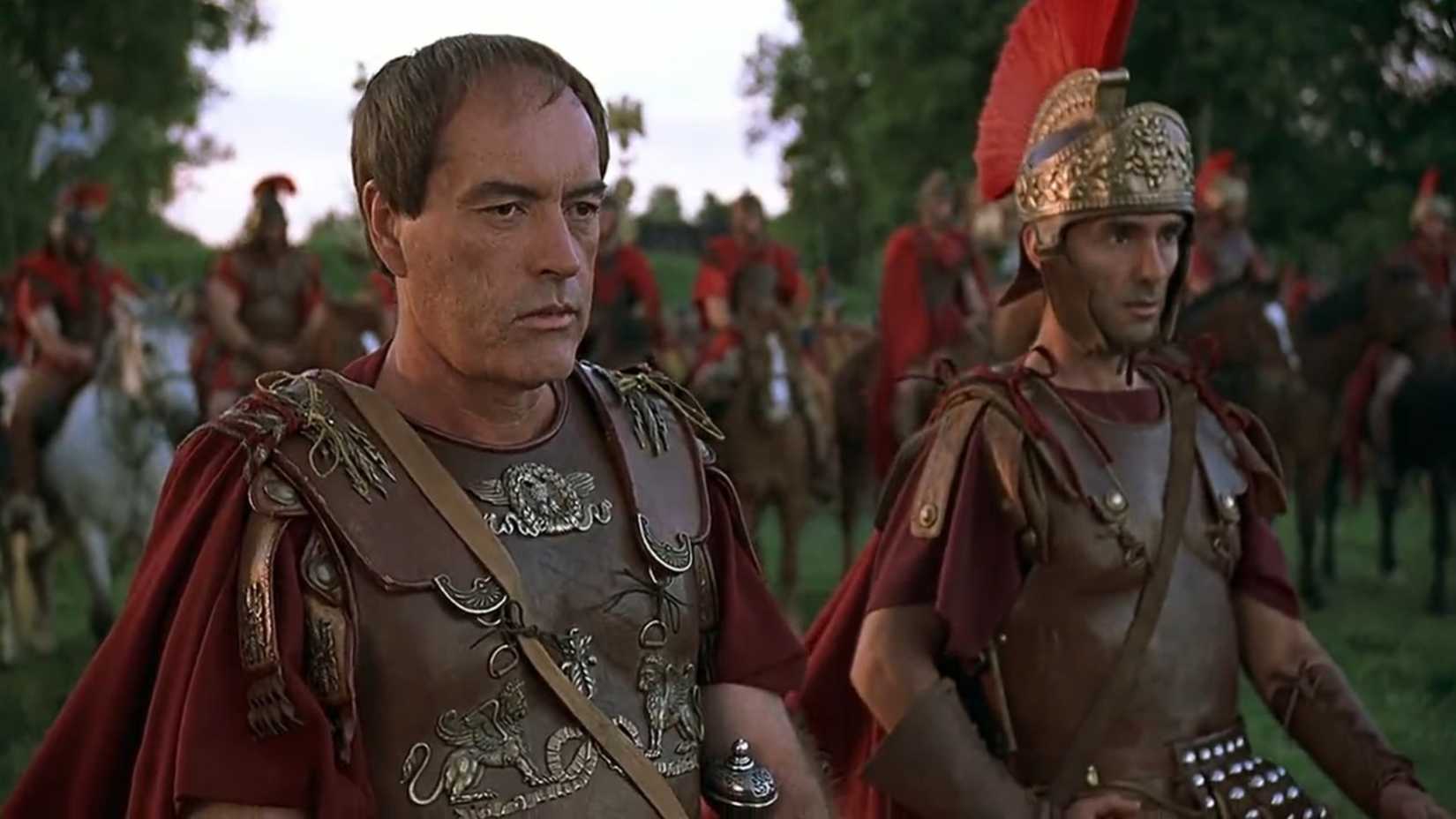
The main narrative follows Attila the Hun as he rises to power. We see his violent unification of the numerous Hunnic clans, his first war against the Eastern Roman Empire, and later his battles against the Visigoths and the forces of the Western Roman Empire. A parallel plot follows Roman general Flavius Aetius, Attila’s archenemy, who is jailed for trying to overthrow the empress but is later pardoned to deal with the Huns and preserve Rome’s political hegemony. He then dedicates his life to keeping the Western Roman Empire intact despite divisive politics, bureaucracy, and endless attacks by barbarians.
It’s sad that the life of Attila only got a two-part treatment, whereas the original Spartacus had three seasons, featuring dozens of characters, twists, and locations. However, it doesn’t feel incomplete. Attila is an unforgettable look at a society devastated by dictatorial politics and neglect, and a salute to those desperate to change things. Given that it would take the television industry another decade (Spartacus came out in 2010) before it imitated this level of blood-soaked history-based storytelling, you could say that the show was ahead of its time.
Does ‘Attila ‘Honor History?
USA Network
How faithful is Attila to history? Well, some scenes feature what ancient sources and modern researchers have recorded, making this one of the few historical dramas with incredible attention to detail. Still, series creator Robert Cochran (better known for 24 and La Femme Nikita) doesn’t shy away from toying with facts a little.
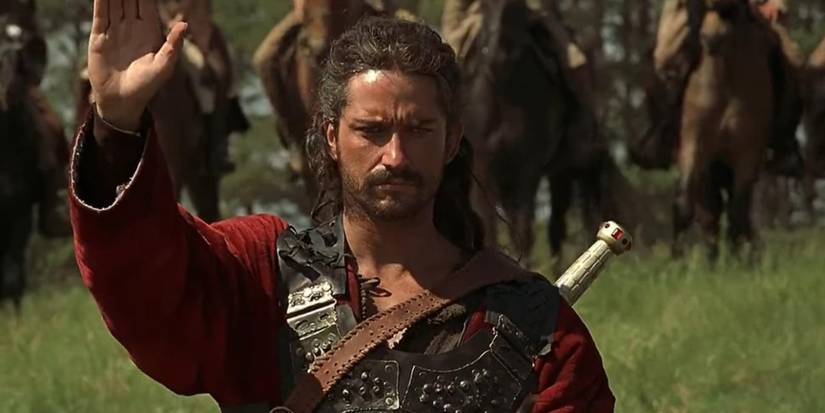
For example, there is no clear information about the exact physical appearance of the Huns, and their origin has remained a hotly debated topic. The Huns’ origins are debated, though some scholars link them to Inner Asia. Recent archaeogenetic studies suggest that Hun-era individuals had DNA similar to the people of ancient Mongolia. In that case, it would have been better to cast actors of Mongolian or Central/East Asian descent in the miniseries. However, the cultural aspects are spot on. In one scene, a young Attila identifies the wolverine, the she-bear, and the horse as three of the Huns’ sacred animals. This detail is presented as historically inspired according to historian Priscus.
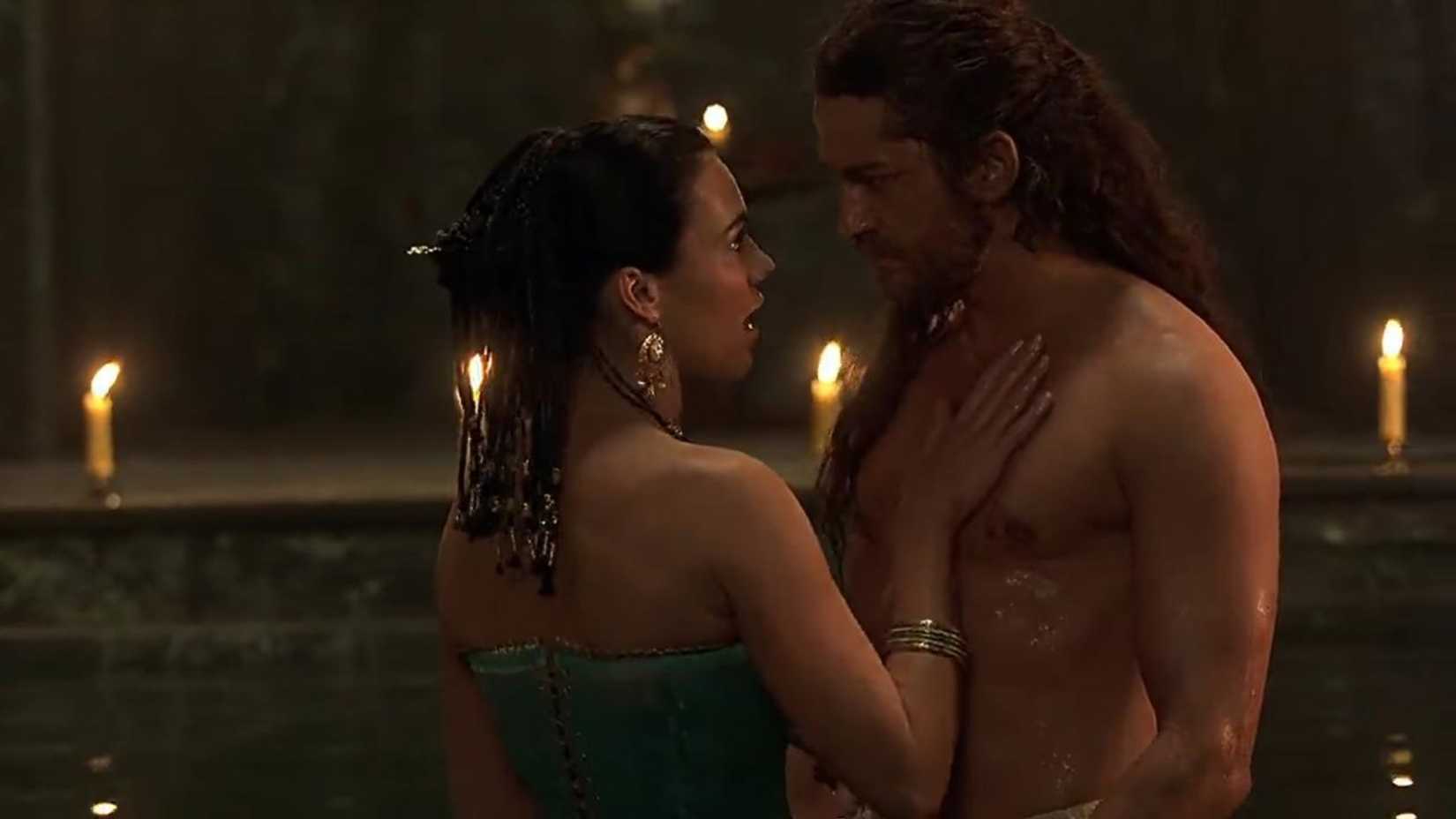
Regarding romance, Attila and a slave girl fall for each other, only for his elder brother, Bleda, to take her as one of his concubines. A mud-covered witch then comes along with some pretty strange family planning advice. “These seeds. Swallow one every day. They will keep little Bledas out of your womb,” she says. Research by the National Library of Medicine (NLM) reveals that fertility control and contraceptive practices existed in the Roman world, so this ubplot passes the accuracy test. However, Attila never dated this particular woman. Regarding the witch, many cultures did have prophetic priests, so the Huns might have had some, too.
USA Network
In a Spartacus-style scene, Attila arrives in Rome, which is full of seductive women enjoying baths and orgies. We are then introduced to Honoria, sister of Emperor Valentinian III, wearing a turquoise corset. She gladly shows off her bathtub to Attila. Later, he hilariously laments to a friend: “We conquer cities, we rule the world, and yet we can’t even build a bath.” Honoria later seduces our hero.
Rome’s culture of hedonism is well-documented, and so is the penchant of the elite to lounge in water.
But Attila did not take Rome and withdrew before entering the city. Neither did he meet Honoria. He probably showered, for sure… but not in the manner we are shown. Various historical documents reveal that he marched toward the city, but stopped near Mantua and went back. The fifth-century historian Priscus suggests that Attila was afraid of suffering the same fate as Alaric, the Visigoth leader who died after invading Rome. Emperor Marcian of the Eastern Roman Empire was simultaneously attacking Hunnish territories, prompting Attila to go back.
Attila is thus a perfect blend of fact and fiction. Thankfully, fiction doesn’t ruin anything. I finished the show with a pretty good basic knowledge of the conqueror’s life, encouraging me to dig even more. I was awed by Gerard Butler’s performance, too. No wonder he was cast in 300. It’s a shame that he doesn’t take on such roles more often.
Release Date
2001 – 2001-00-00
Network
USA Network
Directors
Dick Lowry
Writers
Robert Cochran