
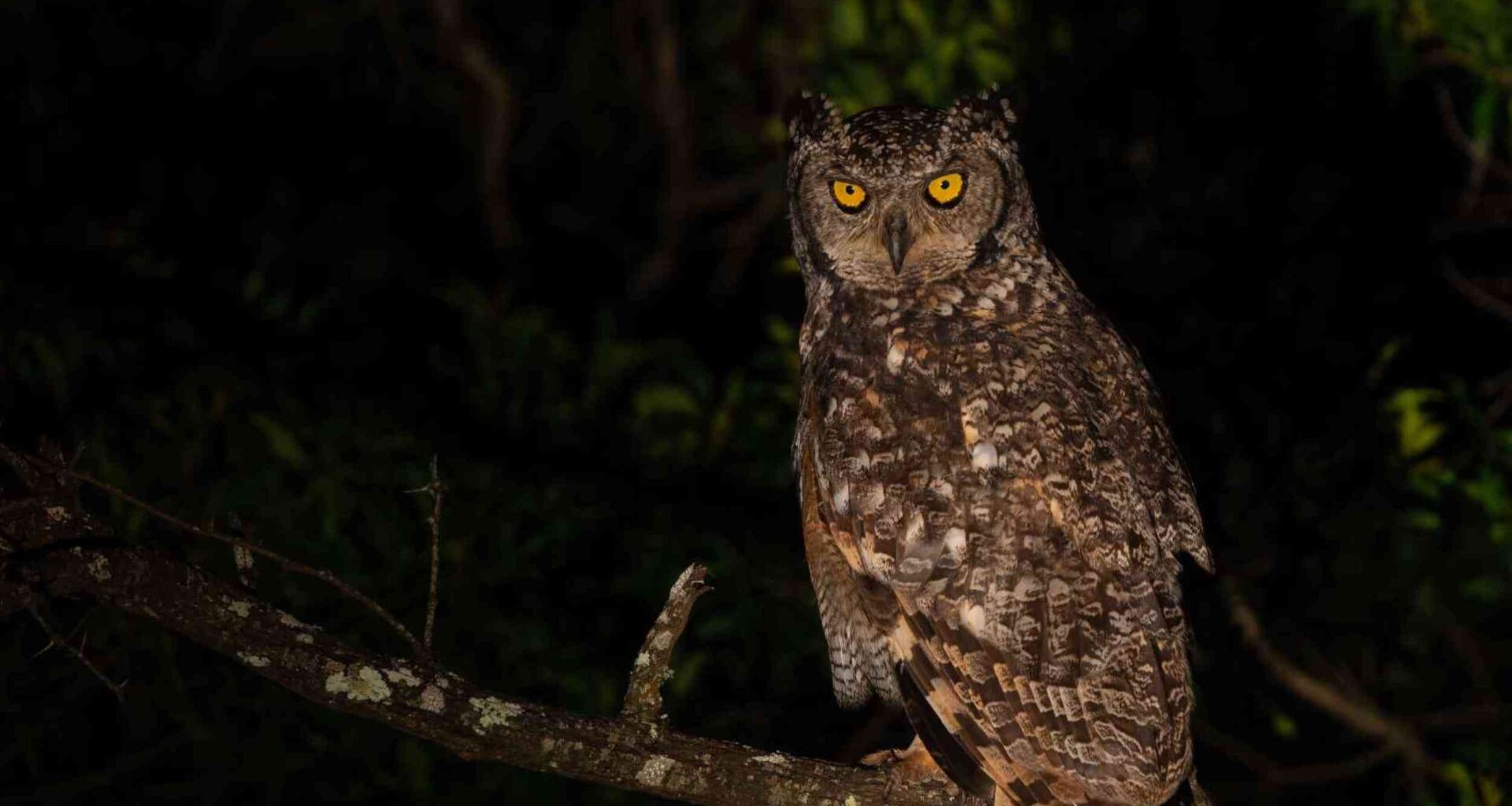
A barn owl’s success is supposed to depend on staying hidden. Silent flight and darkness give a hunting owl its edge, so anything that makes it easier to spot should work against it.
Some barn owls seem to break that rule. The palest birds glow almost white under a full moon, yet a new study found they hunt most successfully on the brightest nights.
A glowing paradox

These pale hunters are barn owls called Tyto alba, found across farmland and grassland in much of the world.
Their feathers vary widely, some rusty red and others nearly snow white, turning the species into a natural experiment.
A bright coat ought to be a burden for an animal that kills by stealth. For years scientists weighed two explanations.
One held that pale feathers blend into a moonlit sky. The other, that a bright bird startles its prey into freezing long enough to be caught.
Determining which explanation held up in the wild fell to Dr. Kim Schalcher, a movement ecologist at the University of Lausanne (UNIL) in Switzerland.
She and her colleagues wanted to watch the owls do what the theories only described.
Tracking every flight
The team fitted 69 male owls with small motion sensors, a method called biologging that records every flight and strike in fine detail.
Across 354 nights, the tags captured more than 17,600 separate hunting attempts.
Every tracked bird was a father feeding chicks, so each one hunted hard from dusk onward to keep up with hungry young.
That constant pressure made them ideal subjects because they logged dozens of attacks per night.
Earlier work had shown how quietly these owls move, with separate research measuring how they hush the sound of a strike.
With all that data in hand, the team went further, comparing how light and dark owls behaved across the moon’s phases.
Facing the moon
What the trackers revealed had never been watched in the wild before. As moonlight grew stronger, the white owls did not retreat into cover.
They leaned into it, aiming more of their attacks toward the moon and choosing open, unshaded ground. They became bright, conspicuous targets in open ground.
They also timed their hunting to the brightest stretches of the night, working hardest when the moon rode high.
The reddish owls did the reverse, hanging back in shadow and staying cautious exactly when the white birds grew bold.
On dim nights the pale owls flipped their approach, keeping a lower profile and exposing themselves less.
The brightness itself seemed to change how they hunted, turning what looked like a weakness into something they used.
Until this tracking, no one had shown owls organizing a night’s hunt around the moon. The behavior suggested the white birds had found a way to put their bright feathers to work.
Catching more prey
Better tactics did not translate into higher success rates per attack. Strike for strike, the white owls were no more likely to land a kill than the red ones, however bright the night.
The payoff showed up across the whole night instead. On bright nights the white owls brought home more prey and finished sooner, spending less time in the open to feed the same brood.
Those extra catches add up fast for a parent with a nest full of chicks. A shorter hunt means more rest and a steadier flow of food during the critical weeks when chick survival is determined.
Why prey freezes
All of this fits one of the old explanations far better than the other. The startle hypothesis holds that moonlight bouncing off white feathers briefly stuns a mouse, freezing it a moment too long.
An earlier study tested that directly, using stuffed owls to scare voles and timing how long they sat rigid.
Under full-moon light, the white decoys held them still noticeably longer than the dark ones did.
The tracking data did not directly capture that freezing response in the wild. The link stays an informed guess, not a recorded moment.
What the team could show was the behavior around it. What the team could show was that owls chased the light and came home fuller and faster.
Light and evolution
Before this, the case for bright plumage rested on lab tests and guesswork about wild behavior.
The tracking closes that gap, showing for the first time that white owls build a whole hunting strategy around bright nights instead of avoiding them.
That tilts a long-running debate toward the startle explanation and gives biologists a new way to ask why some night animals are so oddly bright.
Color in the dark can be adaptive rather than incidental. There is a practical edge here too.
Barn owls clear huge numbers of rodents from farms, and a separate study links their presence to fewer pests.
Knowing how the moon tips the odds could help growers who rely on owls. It also gives ecologists a new question to ask as artificial light spreads into once-dark landscapes.
The study is published in Current Biology.
—–
Like what you read? Subscribe to our newsletter for engaging articles, exclusive content, and the latest updates.
Check us out on EarthSnap, a free app brought to you by Eric Ralls and Earth.com.
—–