
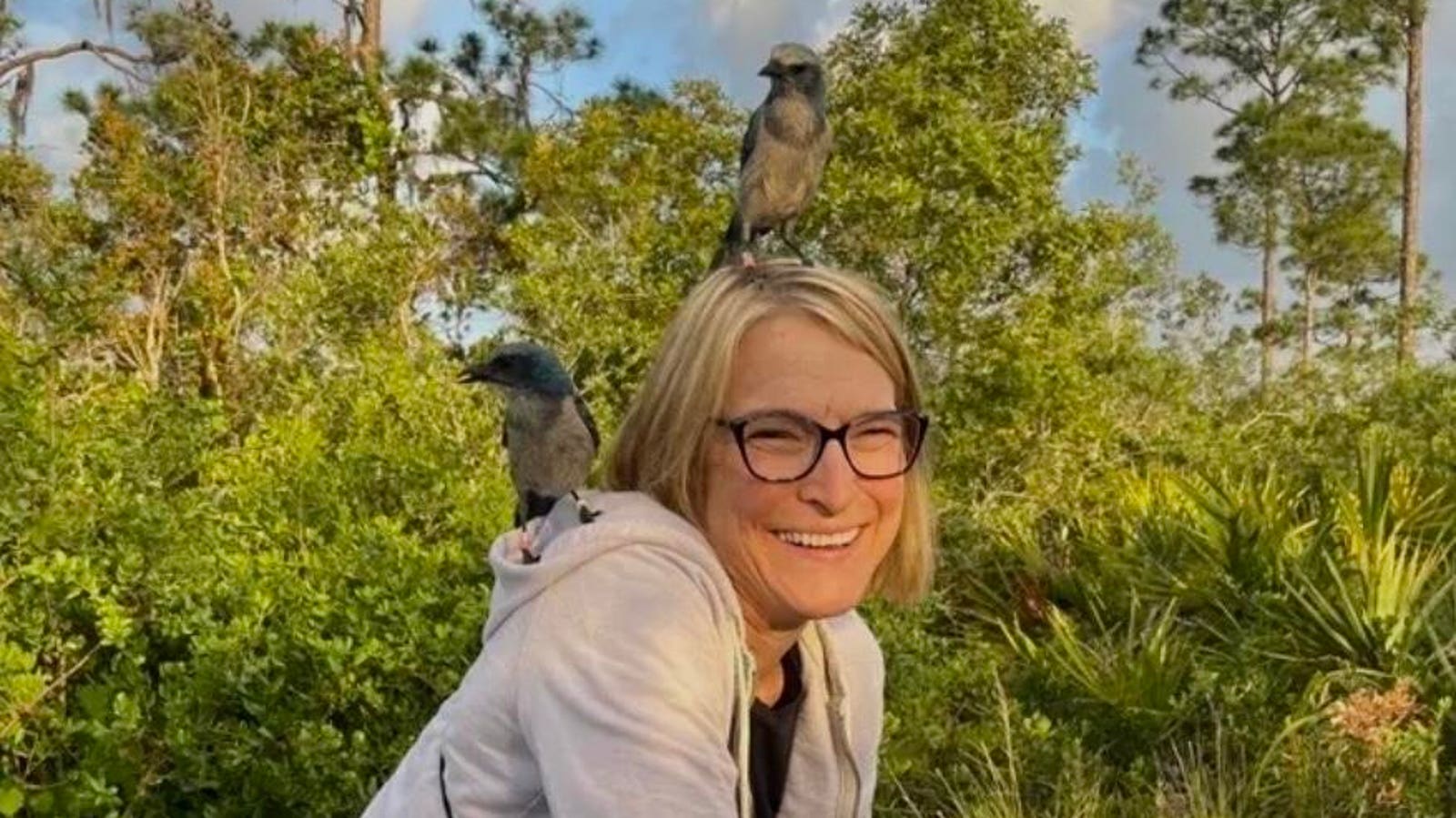
Jennifer Owen, executive director and CEO of Archbold Biological Station, Lake Placid, Florida.
Courtesy of Archbold Biological Station
Jennifer Owen, 54, has been CEO and Executive Director at Archbold Biological Research Station, Lake Placid, Florida, since November 2025. Before that, she was a professor at Michigan State University in the Department of Fisheries and Wildlife, specializing in aviary diseases. She also founded a small research field station in Michigan while teaching at Michigan State.
I thought it would be interesting to chat with her about the challenges of her new job while visiting Archbold last week. Following are edited excerpts from a longer conversation. (This is Part 2 in a series about Archbold.)
Jim Clash: What made you leave Michigan and move to the heat of Florida to take your new position?
Jennifer Owen: I knew of Archbold by its stellar reputation, but had never been there until my interviews. When they finally offered me the job, it took a month-and-a-half for me to decide. I was conflicted. My heart and soul were with my students and the field station I had created in Michigan, but Archbold was a fantastic opportunity. My husband said to me at the time, “What the hell are you thinking? Archbold is the crème de la crème. It’s a no-brainer.” So here I am [laughs].
Clash: What needed to be done right off the bat?
Owen: The previous executive director, Hilary Swain, was here for 30 years before she retired, and had 17 direct reports responsible for 96 total employees. That’s too many reports. I immediately cut that to seven. I didn’t let anyone go, though.
Some of the 17 were disappointed they now needed a second layer before getting to the CEO, but once they realized I value all employees’ opinions, they were more comfortable. I’m a people person. Anyone can come see me at any time with ideas or concerns.
The entire restructuring here will take more time, of course. I’m currently doing a huge analysis of all directors’ responsibilities, and have an executive coach familiar with the organization to help.
Clash: Was your impression of the job before you took it what it’s like in reality?
Owen: That’s a great question [laughs]. Much of my job is working with people outside of the organization – donors, visitors and all that – which I love. I did know there was going to be a lot of internal stuff right away, but it was more than I anticipated. There were a lot of policies that didn’t exist. This was a small organization that grew to become a large one, but without any real planning. That’s great, but we need to become more financially sustainable now.
The wealthy explorer Richard Archbold when he founded the research station last century bought time for science with his money instead of monuments and mansions. He had a lot of foresight. That worked for a while. But things that worked 50 or 60 years ago, the endowments to do the science back then, are not the same as now with expensive and sophisticated state-of-the-art equipment and a more complex infrastructure. All of that requires more grant funding.
Buck Island Cattle Ranch, Lake Placid, Florida.
Alex Wallace
Clash: In my previous story, we focused on the rare, endangered bird here, the popular Scrub Jay. Was that a reason you came to Archbold?
Owen: I’m more about an entire ecosystem than one species. Unusual species like the Scrub Jay and Gopher Tortoise are what attract people to Archbold, make them care. You need to connect people through something they understand.
I love the science of the Scrub Jays, but our cattle ranch is really moving the needle. It’s 3,000 head on a 10,500-acre cow ranch, one of the top 20 cattle ranches in Florida. Surprising to many is that Florida is beef cattle country. The scientists here have been studying this ranch for a long time, structuring it so as to not contribute carbon to the environment.
Clash: The carbon idea seems to contradict public perception of cattle ranches?
Owen: Yes, it goes against everything we thought we knew – basically that cattle equals greenhouse gasses, and that’s bad for the environment. But it’s because you’re just considering the animal itself, not the whole ecosystem. To me, it’s unbelievable that grazed land can contribute less carbon than un-grazed land, but ours does.
Buck Island shows that ranching in Florida can be both economically and environmentally sustainable. We’re hoping our unique procedures with soil, water, etc., will effectively be a blueprint for other cattle ranches. That, to me, is exciting.
ForbesThere Are Birds And Then There Are Rare Birds. Meet The Scrub JayBy Jim Clash