
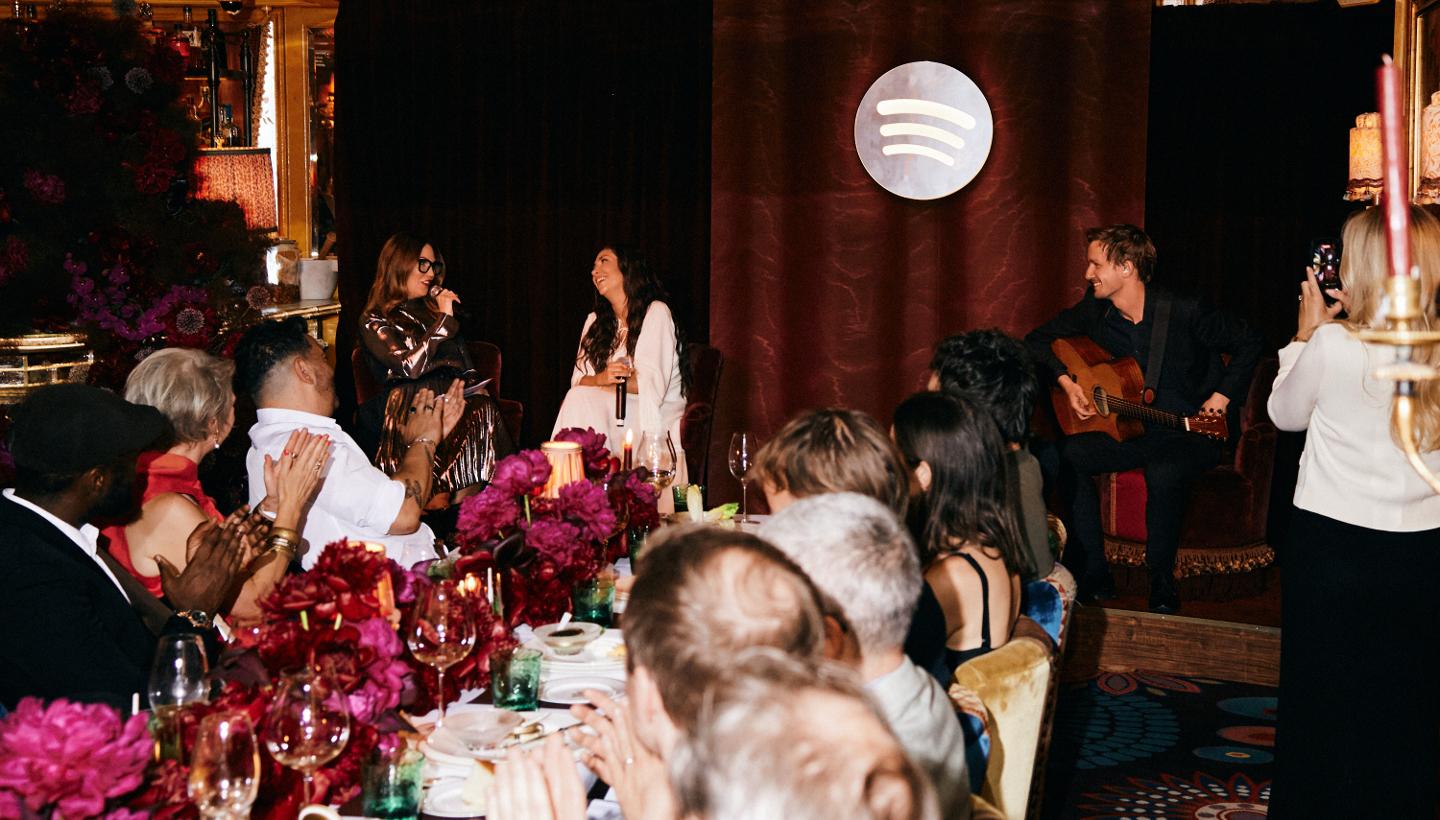
“RuthAnne’s career is a powerful reminder of the impact songwriters have on culture,” said Dustee. “Whether writing global hits for some of the world’s biggest artists or stepping into the spotlight as an artist herself, she has consistently combined extraordinary talent with authenticity, creativity, and a deep understanding of what connects people through music. We were honored to celebrate her and bring together leaders from across the U.K.’s and Ireland’s creative industries for an evening of conversation and inspiration.”
For the Record also sat down with RuthAnne to talk about her songwriting journey, how she approaches different genres and getting the best out of the artists she works with.
“Too Little Too Late” turns 20 next month, and you wrote it when you were just 17. What do you remember about that moment in your career, and why do you think that song continues to resonate with fans?
I had just arrived in Los Angeles, and it was my first big co-writing session. I remember being very nervous but really excited because I was working on it with Billy Steinberg, who is a legendary songwriter, and Josh Alexander, who is just amazing. Both were so welcoming and encouraging of my ideas. When the song came out two years later, it changed my life forever.
I think fans still resonate with it because it brings them back to that exact time and place—screaming along in their cars or feeling that way about someone. The video was so iconic as well, and it still feels relevant today.
You’ve worked across a wide range of genres. How do you approach different genres and what stays the same in the process?
I love music across all genres and I’ve always enjoyed writing in different styles. The one thing that always stays the same in the process is the drive to write something that’s universal and makes people feel like they need to do something, whether that’s cry, dance, or laugh. I’m always trying to make sure the feeling is at the heart of my work.
What does the creative relationship between songwriter and performer look like, and how do you make sure the artist’s voice comes through in the song?
This relationship is probably the most important part of the songwriting process. I always want the artists I work with to feel comfortable and safe to say what’s in their heart and to sing what they feel. That space lets us get the best out of them, and allows me to help fill in the pieces they need or want support with. A lot of the time, songwriters are like therapists; through conversations and good energy in the room, a song appears, and that makes it feel even more special.
Songwriters have traditionally been behind the scenes. What does it mean to have Spotify spotlight your work with features like SongDNA?
When I hear a song I like, my favorite thing is to go look at who created it. I love SongDNA because it makes that so easy to do. It lets fans go behind the scenes and they get to see every person involved in making the song. That’s so important because songwriting is really a team effort.
Are there any songs that you wrote that you have a special connection to? What’s the story?
I have a special connection to “In the Name of Love” because when I wrote it, I was really struggling. I was very close to giving up music. The day I helped write the song feels like fate. Me, Ilsey, and Matt Rad weren’t scheduled to write that day, but all of our sessions were canceled on us. So we got together and wrote “In the Name of Love” in 45 minutes. It was a special writing moment that felt really magical.
Working on that song showed me I had to keep going because you never know when the song that can change your life is coming. I’m so lucky to still be here making hits and getting to write music.
Stream RutheAnne’s essential tracks on Spotify.