
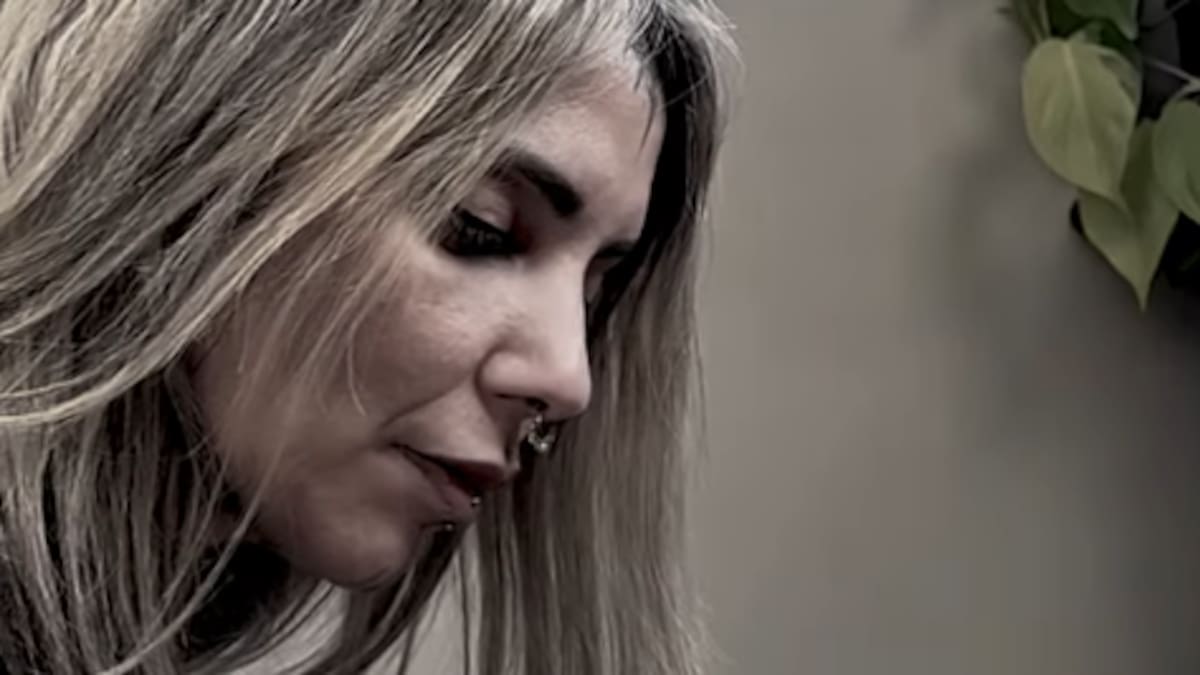
Her focus is a different kind of restoration: helping people rebuild confidence, one hairline at a time.
“People are coming in for very different reasons,” Singh explained.
Scalp micropigmentation is changing the lives of Kiwis suffering hair loss. Photo / Supplied
“For men, mainly it’s baldness – it gives that natural buzz cut look. Some guys they just want a little bit at the front where it’s a bit receded; some want the crown where they start to go thin; and some just want density – they just want to fill it in to look thicker.
“For women, lots of people thin when they’re pregnant or go through perimenopause; some have alopecia or lose hair from stress.”
Singh said the clients she had tattooed so far had been completely transformed – and not just aesthetically.
“It might be quite upsetting for them, what they’re going through with hair loss,” she said.
Tattoo artist and quake survivor Bonnie Singh. Photo / Logan Church
“The feedback is just the confidence they get – guys not having to cover their heads with hats and hoods and women that don’t have to like worry about putting the powders and things on to cover their patches.
“They just say it’s an incredible booster for their confidence and self-esteem … it’s a game changer.”
Singh was a receptionist at the Southern Ink tattoo studio in February 2011.
When the quake shook the city, Singh was crushed by falling concrete and knocked unconscious but managed to drag herself through a tiny hole in the rubble to safety.
Bonnie Singh escaped Southern Ink Tattoo during the earthquake, suffering a bad knock to the head and a broken back and neck. Photo / Sarah Ivey
She broke eight vertebrae, suffered a head injury and concussion and was diagnosed with post-traumatic stress disorder (PTSD).
Since then she has trained as a tattoo artist, as she battled her way back to health.
Among her specialities is scar coverage – but she felt that she could give more back to people who had been through trauma.
“I just know what it’s like to feel good after that kind of experience,” she said.
“I can cover up scars, stretch marks … and that led me to SMP because I was like, I do love that I can help people.
“It’s a really easy thing for me to be able to learn to do to help them … It’s cosmetic, and people will say it’s superficial, but it’s life-changing.
“That real confidence thing, that’s huge … It’s just so important. One client, he never went without a hat or hood, and now he’s strutting his stuff. You can just see it in his walk; he’s a different person now.”
Scalp Micropigmentation (SMP) is done using micro-needles that deposit specialised pigment into the scalp.
Artists like Singh create tiny, realistic dots to simulate natural hair follicles, which gives the illusion of a closely shaved head or a thicker head of hair.
“It is a lighter, cosmetic ink and a different technique to normal tattooing,” Singh explained.
“It’s quite light. It takes a few sessions; you don’t just slam in dots; you have to build them up so it looks natural.
“After each session you let it heal, see if the pigment and colour is right and then at the next session build up more dots. Basically, it’s just a series of dots, and you put more dots in between, and it starts to build up to look like hair.
“You have to match the dots in with the client’s actual hair follicles- you have to mimic the spacing, the colour. It’s very specific.”
Bonnie Singh is creating hairlines – and giving people back their confidence. Photo / Supplied
Singh underwent specialised training in SMP and is excited to offer it to more people from her B-List Tattoo in Addington.
She offers a free consultation with prospective clients and said each person needed up to three or four sessions. Session pricing depended on the size of the area being inked but was around the $700 mark.
She noted people spent much more than that on other cosmetic procedures – Botox, fillers, hair extensions and the like.
“It’s pretty new here but in Australia dudes are doing it everywhere – it’s a no-brainer,” she said.
“Here, it’s about getting people – especially men – over that ‘tough guy’ stage.”
One of her clients explained how SMP felt compared to his many other tattoos.
“The pain’s definitely not as much,” he said.
“It’s not that ‘cutting’ feeling. Obviously, having dots done over and over for a certain amount of time, it does get a bit annoying but nothing like what a normal tattoo would be.”
He has had his entire head done and recommended the process to others living in misery and shame because of hair loss.
“I love it so much,” he said.
Singh said people with medical issues such as alopecia could apply for funding for SMP.
“I think it’s just so important,” she said.
“There were times when I was really ill, and I was having mad nervous system issues, and my hair was starting to come out in clumps, and that almost flipped me more than anything – I was like, I cannot lose my hair like it’s the one thing that makes me feel okay.
“And you see a lot of bald guys who are pretty devastated when they lose their hair and women going through chemo … when it’s taken away from you, it’s awful.
“I just thought if there’s one thing I can do, it is give someone a hairline back. I’ve seen the look on this young guy’s face when I gave him a hairline – he was reluctant to get SMP, and I convinced him, and after the second session he was looking in the mirror going ‘oh my God, I haven’t seen a hairline in years’.
“He looks 10 years younger, and he just feels so good. SMP is an art form – I get the same reaction as I do when I do some beautiful artistic tattoos.
“It feels good to help – and it does help.”
Anna Leask is a senior journalist who covers Christchurch issues and national crime and justice. She joined the Herald in 2008 and has worked as a journalist for more than 20 years with a particular focus on family and gender-based violence, child abuse, sexual violence and homicides. She writes, hosts and produces the award-winning podcast A Moment In Crime, released monthly on nzherald.co.nz