
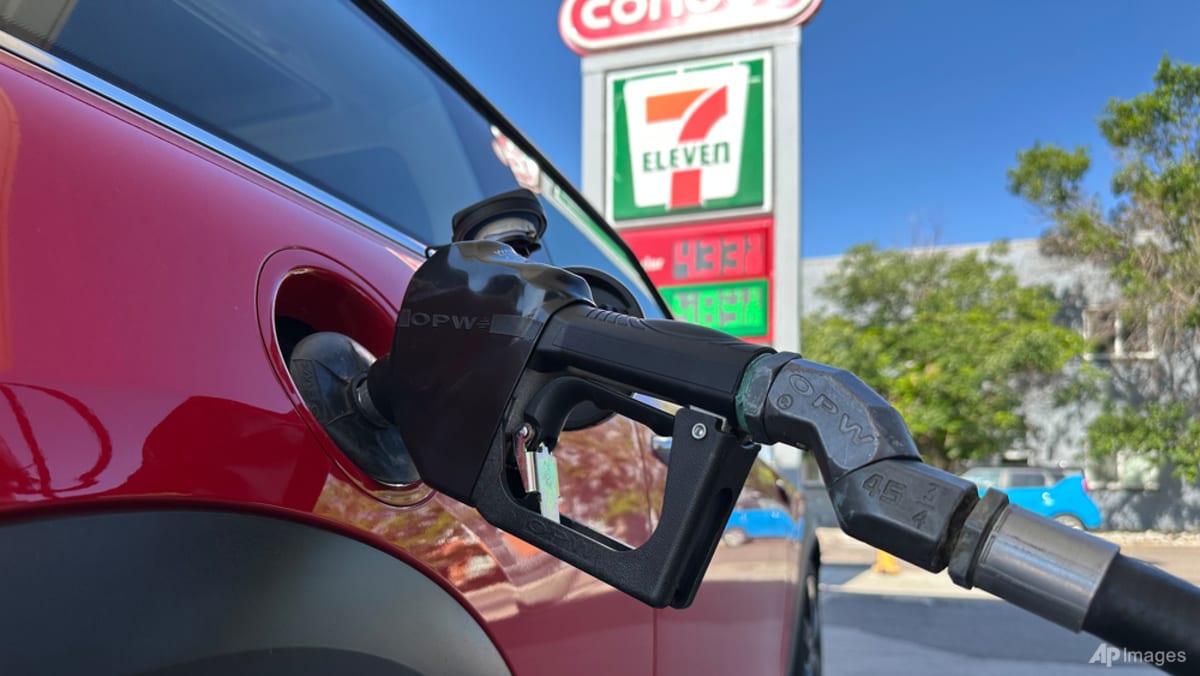
WASHINGTON: The US Federal Reserve’s preferred inflation measure hit a fresh three-year high in May, as elevated energy prices from President Donald Trump’s Iran war pose a key test to his Republican Party ahead of midterm elections.
The personal consumption expenditures (PCE) prices index jumped 4.1 per cent from a year ago, the Commerce Department said Thursday (Jun 25), up from 3.8 per cent in April.
The US-Israel war on Iran has sent global energy prices skyrocketing and snarled supply chains, as Tehran’s retaliatory action targeted Washington’s regional allies and virtually blocked the Strait of Hormuz.
Washington and Tehran are in the midst of peace negotiations, but markets continue to deal with a high degree of uncertainty and economists warn it will take months for fuel prices to come down to pre-war levels.
Trump has dismissed recent surging inflation data as being temporary, insisting that prices will come down “like a rock” once the war is over.
Economists and oil industry experts say this is unlikely, as it will take months to ramp production back up to normal levels and to resume regular traffic through the Strait. Negotiations over the key commercial waterway are ongoing.
Still, some analysts believe US inflation has hit a peak and will begin to slow as oil prices fall in the wake of the peace negotiations, as the major contracts for Brent and West Texas Intermediate have begun to do.
“The good news is gas prices have come down substantially since May,” said Heather Long, chief economist at Navy Federal Credit Union.
“Some relief has already come for American households and this should translate to cooler inflation readings in June and beyond.”
Affordability is a key political issue in November’s US midterm elections, with the Democratic Party hoping to wrest control of both houses of Congress from Trump’s Republicans.
“Trump promised to lower costs on ‘Day One,’ but he’s made clear he just doesn’t care,” said Democratic Senator Elizabeth Warren in response to the latest inflation data.