
There was also “public interest” in identifying him with respect to the safety of sex workers.
However, a person connected to him successfully argued they would face “undue hardship” if the defendant was named.
After weighing the connected person’s arguments against the principle of open justice, the victim’s views, and the public interest in publication, she permanently suppressed the defendant’s identity.
‘People should be protected and safe’
Aotearoa New Zealand Sex Workers’ Collective national organiser Dame Catherine Healy said the outcome was disappointing.
She said the offending was “really distressing and an incredible violation of an intimate situation. People should be protected and safe.”
Healy said it would have taken the woman involved a lot of courage to come forward and go through the court system.
Dame Catherine Healy. Photo / Rebekah Parsons-King, RNZ
“There’s a lot of stigma associated with this, and there’s a perception by sex workers that they’re treated differently, so when there’s this kind of outcome, it … can act as a barrier coming forward.”
While this was a “disappointing” outcome, she urged those impacted not to let it be a barrier to reporting the crime to police.
“And for people who are perpetrators, think very carefully about what you’re doing. Because you will be discovered.”
A victim of intimate visual recordings who works in the technology space, but was not involved in this case, said the man’s role as a software engineer made a transparent justice system even more important.
“People around him would be none the wiser.
“It’s a real shame for the community and the survivor of the case.”
She felt the law needed to keep up with changes in technology.
The survivor felt the case highlighted a “loophole” in a recent law change that banned judges from granting permanent name suppression to anyone convicted of a sex offence unless the victim consented.
Judge Fitzgibbon said at an earlier hearing that it did not apply in this case, as no conviction was entered for the man’s offending.
Justice Minister Paul Goldsmith Photo / RNZ, Mark Papalii
Minister of Justice Paul Goldsmith said yesterday that he could not comment on any judicial case or decision.
However, he said the Government was open to going further with this law in the future, “if we deem it necessary”.
‘I shudder to think what images he had’
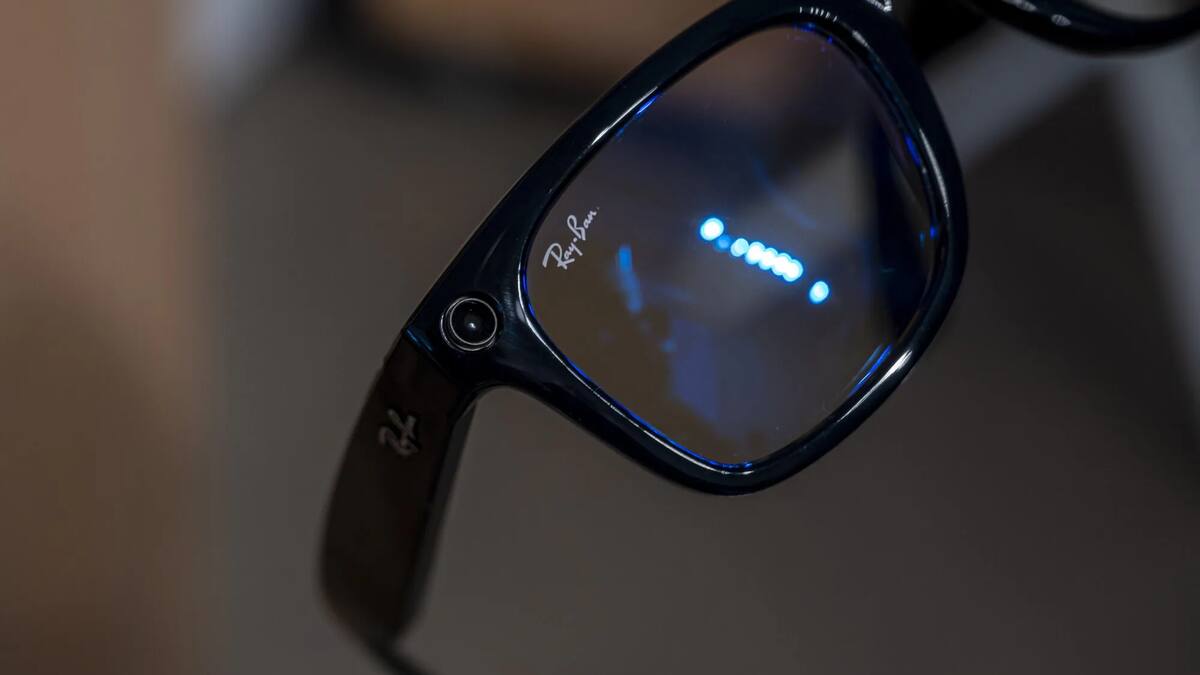
Court documents obtained by the Herald show the software engineer’s offending was discovered when the sex worker noticed him touching the upper right side of his glasses and saw a light flick on.
She immediately took the man’s glasses and told reception staff to call police.
The worker also alleged to the Herald last month that he used his Apple Watch to wipe content from his devices while she was out of the room.
She said by the time police got to his home and searched his devices, they told her the devices had been wiped clear and no illegal footage was found.
“I shudder to think what images he had, because if I was so desperate to clear every device that I owned in two f***ing minutes, what am I trying to hide?”
Barrister Sam Teppett represented the man in court.
In a May North Shore District Court hearing, the man’s lawyer, Sam Teppett, said his client would lose his job if he were named.
He also referenced social media commentary about the case, and said that while traditional media were bound by reporting rules, the same did not apply on social media and sites like Reddit.
The Herald is unable to report other aspects of the application for legal reasons.
Teppett had argued at the man’s sentencing last year that his client should be granted a discharge without conviction because the consequences of a conviction would outweigh the gravity of the offending.
He said the court was dealing with his client’s “unsophisticated, amateur attempt to secure the recording”.
There would also be immigration consequences for the man and his family that could potentially “tear apart his family unit”, Teppett submitted.
Police opposed the man’s application for suppression, arguing that any hardship resulting from publication of the offence considered together with the benefits of his discharge without conviction would not be extreme.
“It is submitted that it is in the interests of public safety that publication should occur if [he] was to engage with sex workers again. Sex workers should be entitled to make an informed decision on risk.”
Katie Harris is an Auckland-based journalist who covers issues such as sexual assault, workplace misconduct, media, crime and justice. She joined the Herald in 2020.
Sign up to The Daily H, a free newsletter curated by our editors and delivered straight to your inbox every weekday.