
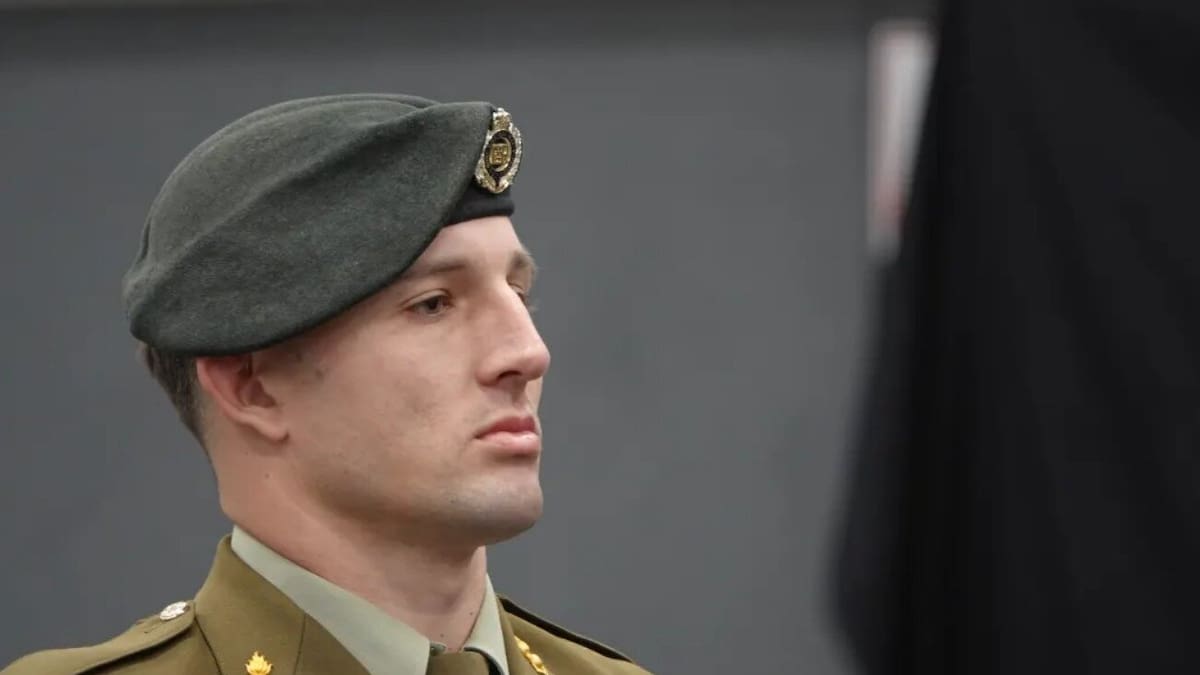
Deal’s partner said the captain had kissed her in an unwanted advance after a formal dinner, but the captain said Deal’s partner kissed him.
Deal’s partner and the captain have name suppression, as do some other witnesses in the case, for security reasons or because they’re on Defence Force deployments.
‘Profound effect’
In a victim impact statement, the captain said he was rattled by what happened at the end of a night of celebrations for officer cadets.
Deal and the captain ran into each other as they were heading home.
“The threat to kill has had a profound effect on my sense of personal safety,” the captain’s statement said. “Prior to this incident, I did not consider I was at serious harm from another member of the NZ Defence Force.
“The offending has left me feeling less secure, more vigilant, and more conscious of potential risks to me and those close to me.”
The captain said the military environment relied on cohesion and such incidents fractured this.
Suppression lifted
Deal applied to keep his name suppressed, but Judge Gerard Winter ruled the interim order keeping his identity secret should lift.
During the sentencing hearing, the defence called evidence that showed Deal mostly had a good record in his 12-year military career.
He was a top rugby player and had represented the Defence Force at three World Cups. He said he’d been attached to the Manawatū Turbos representative team and played sevens for Manawatū.
He now coached the Manawatū sevens side and enjoyed mentoring work with Defence Force sportspeople.
A carpenter by trade, he led a flood-recovery response team in Hicks Bay on the East Coast, which included getting the area’s general store running again, but it was also revealed he had an assault conviction from a military tribunal relating to an incident in Niue in 2022.
Deal said he and others were convicted when they held down a drunken soldier to stop him wreaking havoc.
Judge Winter said he and the military panel disregarded this conviction.
Deal also had an insubordination conviction from a military tribunal. He said that related to him talking to an officer who was bullying a new recruit during basic training.
Deal said that since this prosecution began, he sought counselling for anger management and assessment for alcohol management, and had worked on his communication style.
A letter from a counsellor said he previously used “extended monologues” and was prone to “hyperbolic language”.
Deal told the court he was a “very proud soldier”.
Defence lawyer Deborah Davies said Deal acknowledged the situation could have been avoided, if he had simply kept walking when he saw the officer at Waiouru.
Since the prosecution began, Deal had missed out on an deployment to Antarctica, was banned from playing representative rugby for the Defence Force and a permanent move to corporal was put on hold.
“This is a momentary lapse in judgment by an otherwise good soldier during a heightened situation at night, off duty,” Davies said.
Soldier lost discipline
Judge Winter said military courts were different to civilian ones, and they had to consider that discipline and cohesion were important to the Defence Force, and that personnel must always show integrity.
“During the heat of that confrontation, you lost discipline and became angry, and yelled at [the captain], ‘I will f*****g kill you, c***’,” the judge told Deal.
Deal hadn’t shown any remorse for his actions, including the “low-level gutter insults given in anger”.
“You lost discipline,” the judge told him. “You fell into anger.
“You threatened a superior officer in a deliberate way. To be very clear, that is totally unacceptable.”
– RNZ