
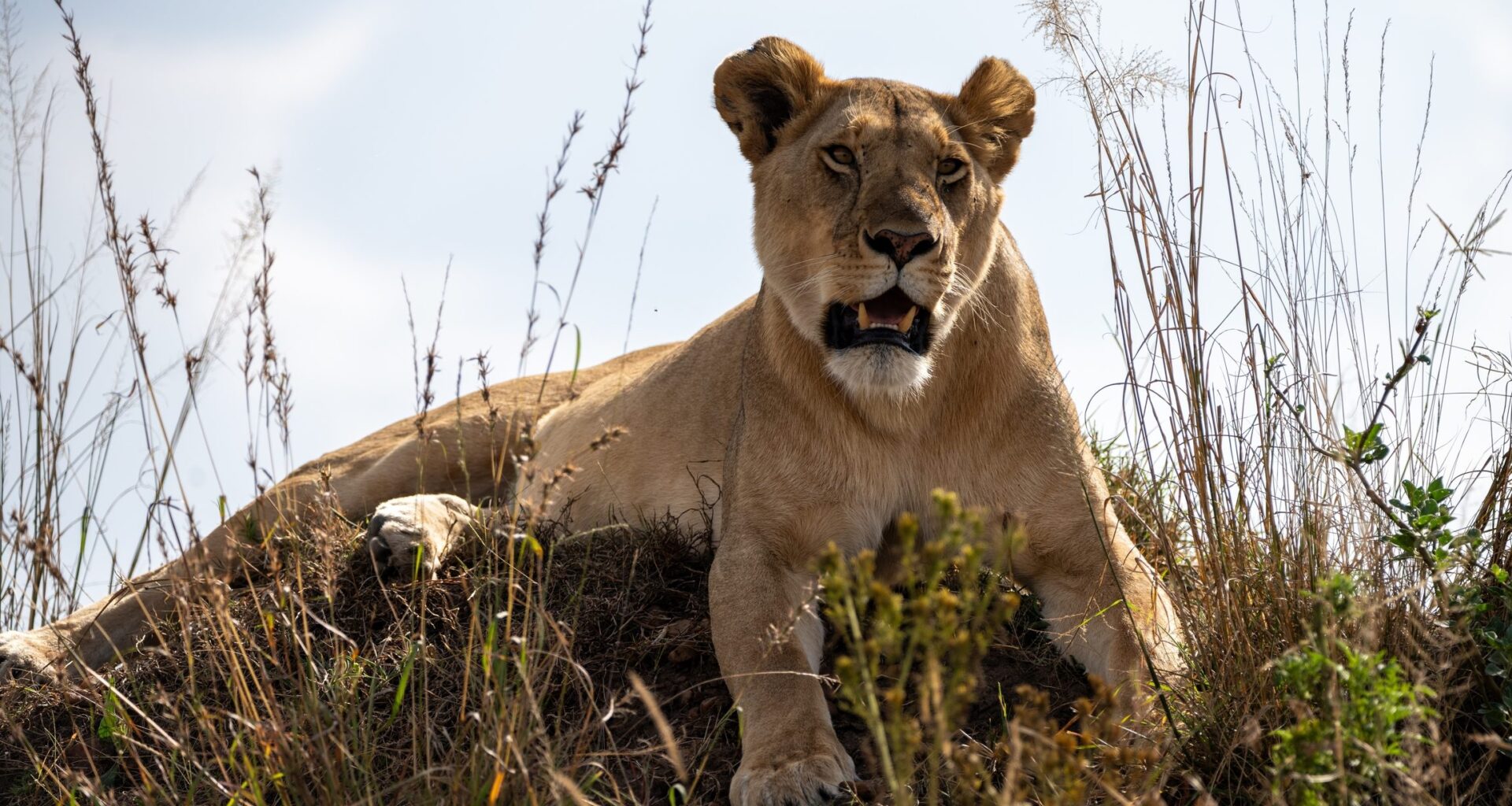
Africa’s big carnivores don’t share the land evenly. Counting every one of them at once, from a single grid of camera traps, had never been done. Until now.
Lions hold the widest ground and leopards keep to their own corridors. The cat-sized genet lives its whole life on a patch a fraction the size.

A research team in South Africa built a camera grid for that problem. The result is the first public dataset to identify individuals across six predator species at once, from one survey.
Counting from photographs
The counting method has an awkward name, spatial capture-recapture, and a simple idea. Researchers scatter cameras, then match each picture to a single animal by its markings.
Spot the same individual at enough cameras, and the numbers estimate how many live there and how far they roam. But this works cleanly for only one species at a time.
Survey grids get tuned to one animal, and the rest counts as bycatch. Laura C. Gigliotti, a wildlife biologist at West Virginia University, wanted a grid that could count many predators at once.
Why one grid fails
The trouble is how much room each animal needs. A leopard ranges across a wide territory, so cameras set to catch one roaming cat must sit far apart.
A large-spotted genet spends its whole life inside a patch a fraction that size. Space cameras far apart for leopards, and most genets trip one camera at best, too few sightings to count.
So one grid suits the big roamer or the small one, not both. Earlier multi-species surveys mostly swallowed that trade-off: solid numbers for the main target, rough guesses for the rest.
Building a smarter grid
Gigliotti’s team built the grid in two passes. They worked in the 110-square-mile (285-square-kilometer) Munywana Conservancy in eastern South Africa.
First they set 60 cameras for leopards, the reserve’s widest-ranging cat. Then they slotted the other 40 into the gaps, aimed at the small, short-ranging animals the first pass would miss.
Together the two layers made a grid no standard survey would produce. Cameras sat roughly half a mile (800 meters) apart, clustered unevenly to match how far each species roams.
The layout came from a separate method built for different-sized species. Paired cameras stood 1 foot (30 centimeters) off the dirt along the reserve roads, catching each animal from both flanks.
Carnivores caught on camera traps
From September 2021 to January 2022, the cameras identified 438 animals across six predator species. The spread is stark: 21 lions and six cheetahs at one end, 300-plus genets at the other.
In between came leopards, spotted hyenas, and the serval, a slender mid-sized cat. Software flagged matches first, then the team confirmed each by eye from the spots and rosettes on every coat.
Lions carry no spots to read, so the team picked them out by whisker spots and old scars. The marks were checked against a reserve catalog kept since the 1990s.
Identification ran high overall, topping nine in ten lion photos and reaching every cheetah. It slipped, though, for hyenas and genets.
Cameras on roads carry a known cost. A study of similar setups found road-shy animals can skew the tally, and wary cheetahs likely slipped past more than their count of six suggests.
First of its kind
Until now, no public camera dataset had managed this for every species at once. Earlier surveys caught several species together, but none held up for all of them and went public for any team to reuse.
That opens questions a one-species survey cannot reach. With every predator on one grid, researchers can see how the animals share ground and whether big cats squeeze the smaller hunters out.
That community-level view is what recent work calls essential for managing ecosystems. The practical payoff is real too.
A reserve that once ran separate surveys for each predator could combine them, cutting cost and labor for stretched teams. The data also give statisticians real numbers to test new methods.
Reading the shared map
What exists now is a ready-made map of where six predators moved through one African reserve. It is detailed enough to count each one, every animal pinned to the camera that caught it.
Reserves could track their predators differently because of it. Rather than picking one animal to study each season, a single camera network could watch the whole carnivore community.
For now, one reserve’s full set of predators has been counted together for the first time, and the recipe is open to any team willing to try it on their own ground.
Any reserve wanting a full headcount of its carnivores now has a working blueprint.
The study is published in the journal Scientific Data.
—–
Like what you read? Subscribe to our newsletter for engaging articles, exclusive content, and the latest updates.
Check us out on EarthSnap, a free app brought to you by Eric Ralls and Earth.com.
—–