
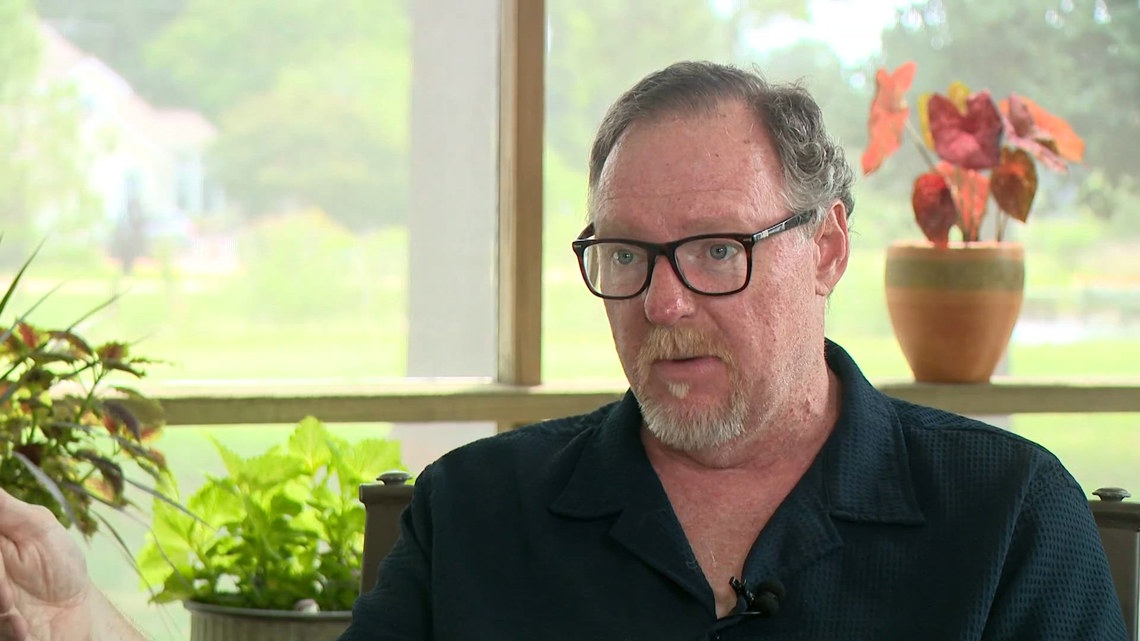
A groundbreaking new pancreatic cancer drug gave Brad Dugai a second chance at life, offering hope for families facing one of the deadliest cancers.
MATHEWS COUNTY, Va. — When Brad Dugai was diagnosed with pancreatic cancer, he spent the first week preparing for what he believed would be the end.
“I was thinking, ‘I’m done. I’m going to die. This is going to kill me,'” Dugai recalled. “‘I’ve got to make sure that my wife is good, that my kids are good.'”
Now, the 55-year-old father said he often forgets he even has cancer.

This story continues below.
More in Health
‘I don’t even feel like I’ve got cancer’: A new drug is giving hope to Mathews County man
From Devastating Diagnosis to No Evidence of Disease: One Patient’s Remarkable Pancreatic Cancer Journey
After years of treatment, a recurrence that threatened to derail his recovery and a last-minute acceptance into a clinical trial at Duke Health, Dugai is now considered to have no evidence of disease.
He credits a breakthrough drug called daraxonrasib with helping him reclaim the life he feared he was losing.
His story comes as researchers celebrate what many are calling a major advancement in the fight against pancreatic cancer, one of the deadliest forms of cancer in the United States.
Dugai’s journey began with persistent abdominal and back pain that he initially dismissed as a pulled muscle. After symptoms continued, he eventually went to the emergency room before a planned family trip to California. A CT scan revealed something alarming.
A biopsy later confirmed Stage 3 pancreatic cancer, and the diagnosis was devastating for the Dugai family.
Pancreatic cancer affects the pancreas, an organ that helps digest food and regulate hormones such as insulin. According to Dr. Ryne Ramaker, a Duke Health medical oncologist who specializes in gastrointestinal cancers, it remains one of the most aggressive and lethal cancers doctors treat.
“Pancreas cancer, unfortunately, is one of the most aggressive cancers that exists, and it’s highly lethal,” Ramaker said.
Historically, treatment options have been limited. While surgery can cure some patients whose cancer is caught very early, fewer than 20% of patients are diagnosed at a stage where surgery is possible. For most patients, chemotherapy has been the primary treatment option.
Those treatments often require frequent infusions and can come with severe side effects while extending survival by only months.
Dugai experienced those challenges firsthand. He underwent chemotherapy that left him exhausted and physically depleted.
“I lost 25 pounds. I lost all my hair everywhere on my body. My taste buds were annihilated,” he said. “Pizza tasted like cardboard to me. Ice cream tasted like unsalted butter.”
Despite months of treatment and radiation therapy that successfully eliminated his pancreatic tumor, the cancer returned in a nearby lymph node in 2025. His doctors told him he needed to find a clinical trial quickly.
Dugai threw himself into the search, contacting research centers, emailing physicians and pursuing every lead he could find.
“I made a pretty good pest of myself,” he said.
Time was running out. His oncologist warned that if he could not secure a spot in a clinical trial, he would need to restart chemotherapy.
Then, one day before he was scheduled to begin treatment again, the phone rang. Duke Health had found a place for him.
“I later came to understand from my care team that I was the last person admitted to the trial at Duke,” Dugai said.
The experimental medication was then known by its research name, RMC-6236. Today, it is called daraxonrasib.
Researchers said the drug represents something pancreatic cancer patients have been waiting decades to see.
The medication targets a genetic mutation known as KRAS, which drives the growth of the vast majority of pancreatic cancers. Ramaker compares KRAS to a light switch that becomes stuck in the “on” position, constantly signaling cancer cells to grow and divide. Daraxonrasib is designed to switch that signal off.
“It’s the first targeted therapy for pancreas cancer that’s widely relevant for the majority of patients,” Ramaker said.
The drug is taken as a daily pill at home, eliminating the need for frequent infusion appointments. Patients typically return once a month for monitoring and blood work.
Ramaker said recent clinical trial results showed the medication can double survival compared to chemotherapy alone.
“It’s completely revolutionized what we think is possible for these patients,” he said. “When people look back at 2026, they’re going to divide pancreas cancer care into before KRAS inhibitors were available and after.”
For Dugai, the impact was almost immediate. Before starting the drug, a growing lymph node was pressing on nerves and causing significant pain in his groin and leg. He had begun walking with a limp. Within 24 hours of taking his first dose, he said those symptoms disappeared.
“The pain was gone, the limp was gone, all of that,” he said.
Doctors eventually determined chemotherapy was no longer providing meaningful benefit and stopped it altogether. Since then, scans have shown continued improvement.
“My scans since then have just shown progressive shrinking in my tumor to the point where they’re not even visible on CT,” Dugai said.
Today, he remains on daraxonrasib alone. Aside from a skin rash that doctors were able to successfully manage, he says the treatment has allowed him to return to a normal life.
He is back in the yard he loves maintaining. He is back in the gym. He is boating again with his family.
“Often days, I don’t even feel like I’ve got cancer,” he said.
Ramaker said he believes the drug is only the beginning of a new era in pancreatic cancer treatment. Researchers are already studying how it can be combined with other therapies and whether it can be used earlier in a patient’s treatment journey.
“I feel pretty comfortable saying that in five years, the majority of patients’ treatment plans will involve a KRAS inhibitor of some kind,” Ramaker said.
For now, the medication is generally available only to patients whose disease has progressed after initial treatment, but Duke physicians encourage patients to speak with their doctors about whether they may qualify for expanded access programs or clinical trials.
For Dugai, the future looks dramatically different from what it did two years ago.
At one point, he wasn’t sure he would live another five months. Now, he is thinking about the next five years and beyond.
“I have no reason to believe that I won’t be here for five years,” he said. “Maybe 25 years.”
Today, he mentors other cancer patients and caregivers, helping them navigate diagnoses that once left him searching for hope. His message to others facing a cancer diagnosis is simple: listen to your body, advocate for yourself and keep searching for options.
“My oncologist at Duke reminds me every time I see him, you fought to get into this trial,” Dugai said.
For patients battling pancreatic cancer, that fight may now come with something that has long been in short supply: real hope.