
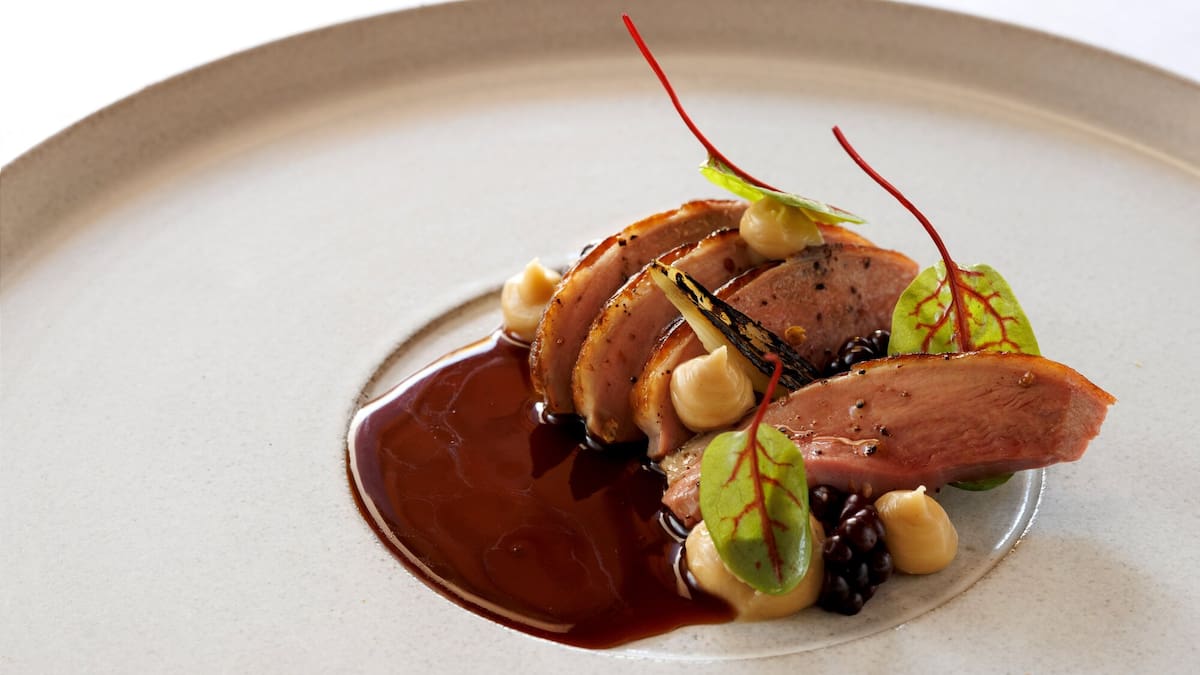
“We sell food and wine,” says Lambert simply. “I cost everything to the cent.”
If the numbers don’t stack up, “The restaurant closes.”
In the year to the end of May, New Zealand’s hospitality sector recorded 414 liquidations, an increase of 49% on the previous year. Credit reporting bureau Centrix notes that, while the construction sector led the way in absolute liquidation numbers (780), hospitality was the second-largest contributor, and the fastest-rising.
The costs of doing business are up across the board, but rising food prices are an increasing factor in hospitality hardship stories.
Last week, when the restaurant chain Burger Burger was placed in receivership, its company director estimated beef costs had risen 70% in 18 months. When the founder of Auckland’s Broke Boy Taco took to social media to plead for customer understanding of price increases, he noted the beef that cost him $11 when he opened was now around $20 a kilogram.
Stats NZ’s most recent annual price index data shows meat, poultry and fish prices up 7.8% year-on-year. Fruit and vegetables rose 3.7%, and gas and electricity by 10.8 and 13.1%, respectively. Diesel – the main fuel for the trucks that carry food around the country – was up 91.3%.
If you’re paying $25 for three birria tacos or $27 for an egg-beef-beetroot “Kiwi classic” burger, is the $50 restaurant main inevitable?
For a long time, dinner dishes sat at $48, $49 or even (cue cynical eye roll) $49.50. Restaurateurs played chicken with the $50 price tag, and consumers bought into the charade with a $15 side salad and/or fries.
No more.
A survey of Viva’s current top 50 Auckland restaurant menus reveals that at least half now feature $50-plus dishes designed for a single diner. (We can also tell you that, if you’re on a budget, set your tastebuds for the vegetarian pasta or tofu).
At Return (opened too late to make the top 50 but which was recently scored 19 out of 20 by restaurant critic Jesse Mulligan), mains are priced between $50 and $58.
Chef Matt Lambert on the pass at Ponsonby Rd restaurant, Return.
“I’m 45, I’ve been cooking for a very long time,” Lambert says. “I feel like I’ve proven I’m capable of cooking good food – it wasn’t my intention to set something up to appeal to people because it’s at a lower price point.”
And he’s happy to explain the menu matha. Start with the dish he calls chicken and egg.
“Bostock chicken. It’s roughly $12.55 excluding tax, I believe, for half the chicken. We only serve the breast; the legs go into stocks and other things. The eggs are up to 97c, and then it has leeks and a jus, and the base for the jus costs $100 and takes three days to make …”
He charges the diner $50. After GST, that’s $42.50 to the restaurant. After total food costs, that’s around $27 to the restaurant. After wages and rent and electricity and bespoke plateware and new sheer curtains for the front of the restaurant and – well, you can see where this is going, and it’s probably not on board a business-class flight to a luxury resort anytime soon.
“When did you see a chef or a restaurant owner driving around in a late-model sports car?” asks chef Al Brown.
In 2011, he opened Depot Eatery on Federal St, Auckland, with a $29 crispy pork hock. Today, that dish, for two to share, comes with apple salsa verde, parsnip puree – and a $50 price tag.
The ingredients cost almost $15 (including 8c worth of black peppercorns, 24c worth of flaky Marlborough sea salt and a 12c Granny Smith apple) and a long list of prep steps (make the herb oil, peel the parsnips, etc).
Total labour costs sit between 40-45%, Brown says.
“And then overheads. Rent, collating invoices, paying suppliers, delivery charges, food safety and compliance costs, staff meals, breakages, wastage and of course our new favourite, ‘fuel surcharge’.”
Chef Al Brown can tell you how much a dish costs, right down to 8c for the peppercorns. Photo / Carson Bluck
Every chef we spoke to knows customers have heard all this before. Nobody we spoke to wants to pay staff less or charge diners more.
But a 70% price increase for a pig knuckle?
“Over 15 years? And it serves two people? Absolutely,” says Brown. “The public are aware, when they go to a supermarket and pick up two steaks and it’s thirty bucks …”
He agrees that restaurants held their prices for a long time.
“And then I think they found they could never recover. The margins are so fine anyway, there’s no real wiggle room. Absorbing, absorbing, absorbing – and eventually you can’t. The prices go up. You’re either in business or you’re not in business.”
Once, chefs magicked up profits doing smart things with secondary cuts. One restaurateur said that even the poultry frames that are turned into stock – literally a little skin and a lot of bones – were now $2.80 a kilogram.
Pork belly, lamb shanks, chicken wings and lamb necks have long since shifted into higher price brackets.
“Have we done it to ourselves?” asks Brown. “They become popular, and then the suppliers put the price up?
“I feel the animal will, eventually, just be sold at one price. Whether it’s the lamb ribs or it’s a rack, they’re both equally delicious. The fillet of beef is wonderful, but so is the shin if it’s cooked correctly, or the oxtail.”
It is easy to think a $50 main is the domain of high-profile chefs or fancy city restaurants, but the 300g “rockin’ ribeye” at the Queen Street Lonestar (served with onion puree, buffalo chips, coleslaw and steak sauce) is $54.50.
At Hamilton’s Speight’s Alehouse, a 300g scotch fillet with roasted-duck-fat Jerusalem artichoke, shiraz jus and fries costs $60 (add aioli for an extra $2). Greymouth’s Monteith’s Brewing Company restaurant charges $59 for a 200g beef fillet with swede puree, pesto-roasted spuds, mushrooms, greens and a winter berry jus. The sirloin at a provincial Cobb and Co will set you back $54, but it does come with fries, salad and half a kilo of pork ribs.
A comparable so-called “high-end” restaurant spend in Auckland gives you the likes of Cibo’s confit duck leg, five-spice cured duck breast, parsnip puree, spiced pear and honey, and lentil gremolata or Mt Morris’s 300g Greenstone scotch with onion, truffle and celeriac (both $56).
Chef Sean Yarborough – a.k.a. Broke Boy Taco – who recently went public to plead the case for increased prices.
Ask Rob Richardson, co-director of the AUT Centre for Critical Food Studies, about the advent of the $50-plus main and he says some higher-end restaurants are actually being forced to undercharge to compete.
He says the industry needs a “paradigm shift”, listing disrupters that aren’t going away (Uber Eats, “dark” kitchens set up solely to service delivery orders and food trucks) and societal changes like more solo diners and less alcohol consumption.
“The story about Broke Boy Taco summed it up. His beef cost has doubled but he can only, and reluctantly, put the price up by $5. But at $25, he now risks being seen as sitting in a new price band, one that’s no longer takeaways. People are going to start comparing his price to those of some on-premise dining options. That’s a really awkward place for him to sit.
“He’s spoken out to try and justify it, but what he really needs is for others in that comparable on-premise dining price band to put their prices up. But they can’t, because then they start to enter into the higher-class bracket and then they start to look like bad value …”
At the top end, Richardson says it’s even worse.
“Two $50 dishes makes you think $100 straight away. Again, you start comparing value, not just to other restaurants, but to the supermarket and power bill.”
Diners want value for money, but they also want barista-made coffees and snapper in their fish and chips (“and then we complain about the price of both”). Meanwhile, rents are increasing and so are compliance costs, including a new Food Business Levy introduced last July and set to double next year.
Richardson says many budgets were tightened post-Covid, and there are no costs left to cut. Operators were looking ahead, seeing no economic change, and throwing in the towel, often in conjunction with an expiring lease.
What would his paradigm shift look like?
“Firstly, we limit the number of food outlets. If you want to open a new outlet, you have to take over a vacant licence. In places like Germany, this comes with a requirement to have hospitality business qualifications. This would condense the spend, rather than dilute it,” Richardson says.
“Should we offer financial incentives for restaurants in locations where we want to support vibrancy? K Rd is going through a really tough time, as is mid-town. And we need to ensure a fair playing field. That means Uber and its like paying fair wages to delivery people. Restaurants have to.
“I’m hearing about venues whose leases are up for renewal facing big increases even in a market that is down, with shops sitting empty. Some cities fine building owners if a shop sits empty too long. This might force some building owners to be realistic around rents.”
Costs associated with Onslow’s $62 duck dish include breaking down and dry-ageing the poultry and preserving plums from Cromwell.
Chef Josh Emett says the $50 price point is not a new phenomenon, but “everything that can be done should have been done before the price is raised”.
Five of the seven mains served at his restaurant Onslow sit above $50 (and the southern station wagyu sirloin, braised pāua cream, potato croquette and pickled wakame will set you back almost twice that).
“We have customers who have an appetite for luxury – they would love to have a half pāua on a plate, or a whole crayfish. If the product is exceptional, they’re willing to pay for it,” Emett says.
“But we definitely need a beautiful braised beef cheek dish through winter that means we can manage our costs.”
At Onslow, the duck breast with juniper sauce, plum, daikon and citrus glaze is $62. The protein component alone costs up to $14. But that duck is bought either whole or on the crown. Chefs break down the bird and dry-age it for at least 10 days to ensure the crispiest skin possible (“that adds a storage element to costs”). Stonefruit preserves are made in-house over summer and, if they incorporate pinot noir, it’s the proper stuff, not cooking wine.
“There are a lot of things that go into it,” says Emett. And there is no single formula applied to the custom price.
“Our crayfish eclair is a good example. Almost every customer who comes in the door has one. Our kitchen team has said, ‘Can we change it?’ No. It needs that amount of crayfish. So they ask us to offset some of that cost to marketing, because the kitchen is conscious about managing their cost. And I don’t mind that argument.
“You’ve got dishes you lose on and dishes you win on. Regardless, you definitely don’t want to put something on a plate and be tight. We just don’t run our businesses tight. We like to run them with a generous spirit.”
Why does a restaurant main cost $50 when you can buy the ingredients for $15?
“There’s no good answer for that, other than understanding how businesses work. How restaurants work,” says Emett.
“It’s the cost of having a night out. The convenience, the labour …
“You get billed for the price of your house and you don’t go to Bunnings and say, ‘Well, a piece of wood costs me $12 – why are you charging me $400,000?’”
Last year, a Hospitality New Zealand-commissioned report found the sector directly employed 193,000 people, accounting for 6.7% of all jobs. Annual revenue in the year ended March 2025 was $21.4 billion or 5% of the country’s gross domestic product.
Next week, attention on the sector will increase with the release of the first Michelin guides for Auckland, Wellington, Christchurch and Queenstown, and Tourism New Zealand is promising its $6.3m investment in bringing the guide here will provide a much-needed boost to the food and beverage sector.
Helen Turnbull, chef and owner of 50-50 in Paraparaumu Beach, says hospitality needs to “get back to fundamentals” to capitalise on that expected surge in food tourism – and stay in business with ever-decreasing margins.
Helen Turnbull, chef and owner of Paraparaumu Beach restaurant 50-50, says every employee needs to know the numbers – and how they can influence them. Photo / NZME
“Menus are usually the biggest blind spot. Every dish carries a cost – ingredients, labour, wastage, supply consistency – and those variables are shifting faster than many operators can keep up with. You can have a dish that’s loved by customers and staff, but if the spreadsheets don’t love it too, you’re throwing away very fine margins.”
Turnbull takes every employee, from dishwashers to waitstaff to chefs, through the numbers, “and we review those every day and look at what actions and behaviours they can change to help improve those numbers”.
Is the customer on the email database? Do they need a port to finish their anniversary dinner? Turnbull’s multi-course set menus start at $125 a head. Wage and food costs sit around 60% of the selling price and, while that target hasn’t changed, “it has definitely become harder to achieve because of the rising costs”.
The juggle looks something like an $11.61 plus GST quail (marinated panfried breast, confit leg rolled in filo and deepfried, bones in a pasilla chile-spiked jus) and a broccoli soup with an aged cheddar custard and kawakawa poppadom.
“Who the hell orders a la carte soups? No one does. And no one who comes in booked for my nine-course says, ‘Oh yeah, I’m really looking forward to trying that soup.’ So the opportunity I have is that I can make a really delicious soup, and the margins on it are pretty good. But the real opportunity is that’s the dish that becomes their favourite because it surprises them.”
Additional reporting by Clementine McIntyre and Maxine Seto Ma.
Kim Knight joined the New Zealand Herald in 2016. She is a former restaurant critic for canvas magazine and has a master’s degree in gastronomy.