
Where laws protect property, courts enforce contracts and financial institutions like banks and stock exchanges are stable and reliable, people can build businesses capable of producing and reinvesting surplus earnings. The vines can bear fruit.
People don’t build billion-dollar assets wrapping banknotes in rubber bands. They take accumulated wealth – profits, loans, investments – and develop productive assets. Capital. Stuff that makes stuff.
Ovens that bake bread. Factories that smelt steel. Cranes that stack skyscrapers. Laboratories that discover medicines.
As a society’s capital concentrates workers can access an increased and improved stockpile of tools. Radiologists get X-ray machines. Accountants get Xero. Carpenters get the stuff of PlaceMakers and Bunnings brochures.
In turn, workers produce more. Each hour. Each week. Each year. Wages rise. Goods and services become abundant. Quality increases. Prices fall. Options expand. In times gone by people never worried much about what to watch, what streaming platform to use or how to connect an iPad to a television.
Whether a bag of DeWalt power tools or the factories producing the bags and the tools, productive assets exist largely in societies where capital can concentrate. Where wealth can accumulate. Where vines can flourish.
There can’t be capital without capitalists, or investments without investors. Countries with billions of dollars in assets – factories, data centres, airports – unsurprisingly produce some billionaires.
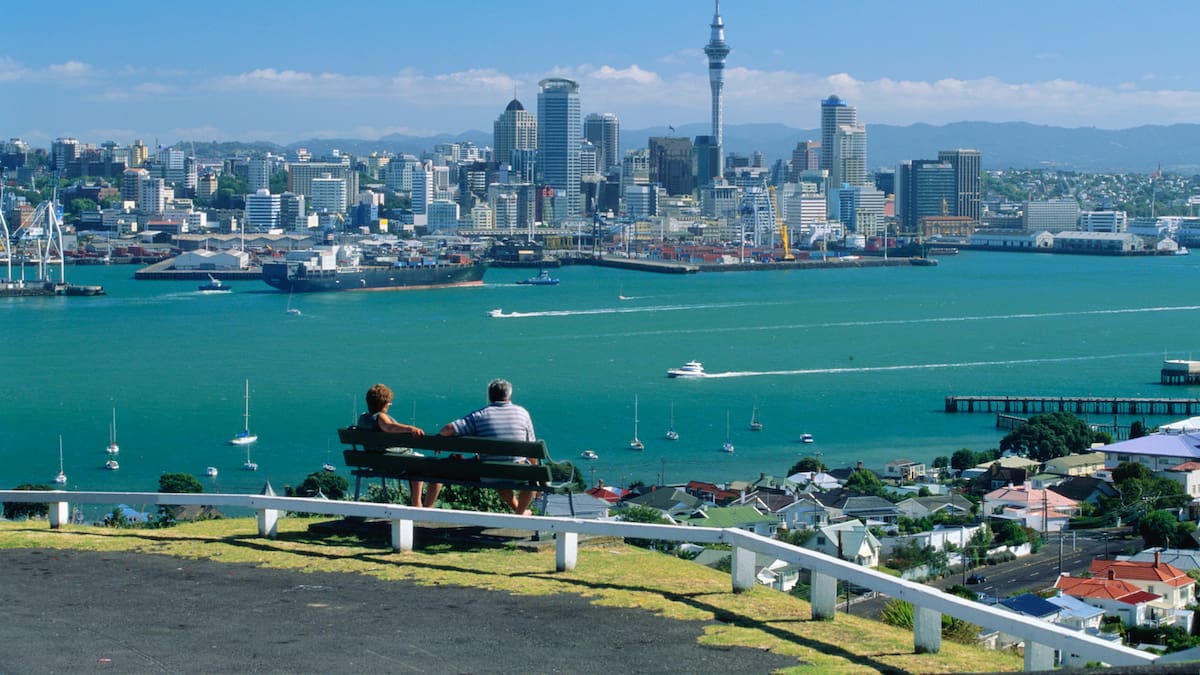
As New Zealand’s biggest city, Auckland’s commercial scope is attractive to business operators – and the same effect applies globally. Photo / Getty Images
Regardless, people all over the world are drawn to countries with stockpiles of productive capital, undeterred by the billionaires who stockpile it.
Take the land of Stars and Stripes and Golden Arches. Based on Forbes’ figures (using USD), there are 989 billionaires in the United States of America – about 2.83 billionaires per million people. This is almost 19 times the rate in Latin America, which has 0.15 billionaires per million people. Whether they’ve trudged waist-deep through bureaucratic mud or braved the hardships of migrating illegally, almost 27 million people born in Latin America have chosen the United States. Another 41 million people, the children of Latin American forebears, have chosen to stay there.
African migration to Europe tells a similar story. There are 823 billionaires in Europe, and 1.1 billionaires per million people. This is 78 times the proportion in Africa, which has 0.014 billionaires per million people. Between 11 and 13 million people born in Africa have crossed the Sahara and the Mediterranean – legally or otherwise – for a better life in Europe.
The flow of people from the Pacific Islands to New Zealand and from New Zealand to Australia is no exception. In local currencies, New Zealand has 4.9 billionaires per million people, and Australia 6.5 billionaires per million people. Not one Pacific Island has produced a billionaire.
Decades of migration has led to 213,069 Samoans and 97,824 Tongans living in New Zealand. These numbers rival the current domestic populations of Samoa and Tonga themselves. In total there are some 670,000 New Zealanders in Australia – about one for every eight people in New Zealand.
Millions of people throughout the world make life-changing – if not life-threatening – choices to migrate from countries bereft of billionaires to those where they are highly concentrated. If such billionaires ruled empires of exploitation, people would flee, not flock, to billion-dollar stockpiles of capital.
Whether leaving limited prospects in Ghana or seeking better pay as a welder or physiotherapist in Perth or Brisbane, people gravitate to capital every single day.
Far from causing poverty, the societies that produce billionaires and their billions exhibit the greatest success at attracting those hoping to escape it.
Catch up on the debates that dominated the week by signing up to our Opinion newsletter – a weekly round-up of our best commentary.