
Rogers said Roto Whare’s funder, Arena, was based in New York, and it was a difficult deal to strike, but they managed to negotiate buying 39 lots from the receiver, Calibre Partners, by mortgagee sale.
Under the deal, they bought 21 completed homes, six under construction and 12 part-finished but needing to be demolished because they had become ruined when the project was abandoned.
Work got underway to finish off the civil works, stormwater infrastructure and parks.
“It was a big job to tidy it up.”
An aerial shot of Kōhanga Rākau Housing’s rescued Koutu development, outlined in red.
Rogers said they tried to employ tradespeople left out-of-pocket from the first development.
He said the finished homes were well-designed two- and three-bedroom terrace homes that would help address the affordable housing crisis and lack of supply identified in Rotorua a few years ago.
It was great to be part of a good news story of an iwi trust that “rescued a failed development”, Rogers said.
The completed homes take Kōhanga Rākau Housing’s housing portfolio to 142 homes, including the Ōwhata and Te Puke projects.
“For Kōhanga Rākau Housing, this isn’t just about building homes. It’s about building thriving communities, with housing as an anchor for stability where safe, new and warm homes are provided.”
Ōwhata 2B and 7 Ahuwhenua Trusts chairman Jason Rogers.
Before Kōhanga Rākau Housing bought the lots from the receivers, the original developer had finished 21 homes, meaning the total housing project had 60 homes.
The first stages of completed homes were occupied, with 53 whānau already settled in – 23 adults, including elderly, and 30 children. The remaining stages would be tenanted over the coming weeks.
Rogers said their strategy was to be there for the long term, so families had security and would not face the uncertainty of landlords selling overnight.
“That focus helps whānau put their roots down and build lasting connections to the community.”
Rogers said they felt they had a duty to see the homes in Koutu finished and partnered with the Ministry of Housing and Urban Development and funder Community Finance to make it happen.
An aerial shot of Kōhanga Rākau Housing’s rescued development at Koutu.
“Last year our first cohort of families moved in, and it’s rewarding to hear how happy whānau are to be given an opportunity to come into brand new housing.”
Those living in the homes pay 80% of the market rent under the ministry’s affordable rentals scheme.
Ministry Te Tūāpapa Kura Kāinga director Jamie Forsman said these types of partnerships with iwi and Māori providers were vital for those who faced barriers to private rental tenancy and home ownership.
“Turning the tide on housing will take time and we are working hard to make a difference. We are pleased that these new homes will help improve the situation in Rotorua.”
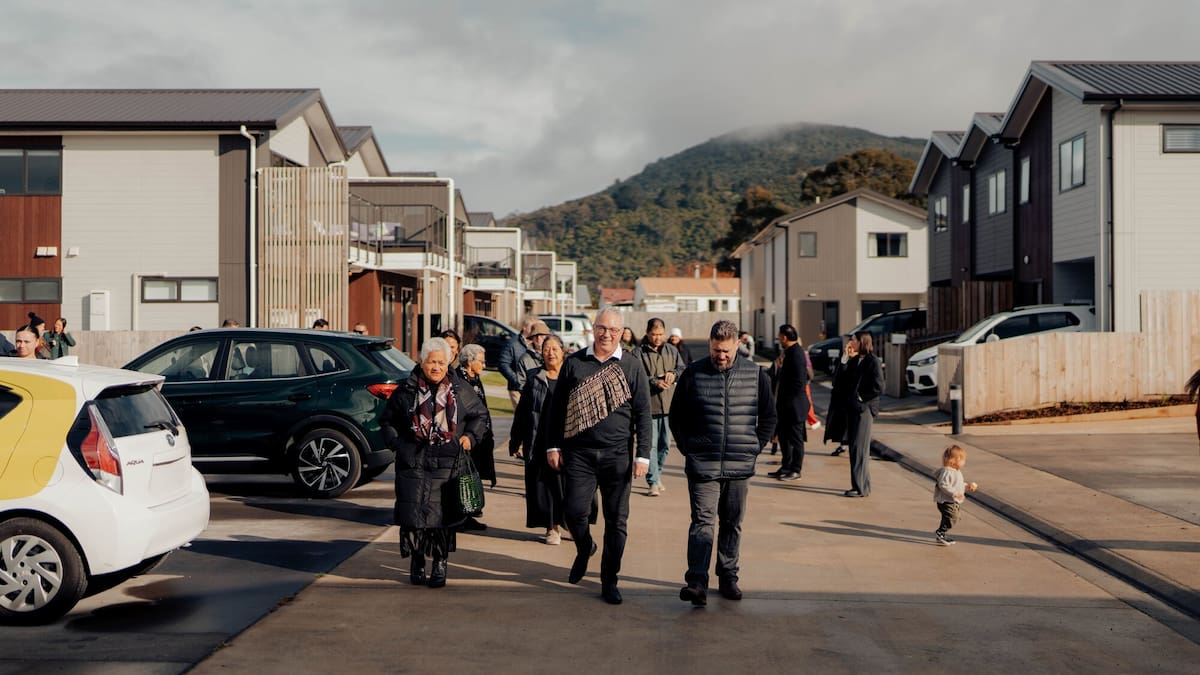
Invited guests at Kōhanga Rākau Housing’s recently completed development at Koutu.
Those involved in the project came together recently for an official launch, signage reveal and walk-through of completed homes.
The original developer for the Mountainview Green project was Aucklander Marcus Jacobson.
He also runs a company called Watchman Capital, which is building 202 houses at Ngongotahā, in partnership with the Government.
Jacobsen told the Rotorua Daily Post this week that the a “good outcome” was achieved for the Koutu development.
“Really pleased to see Mountview Green deliver housing for a community that needs it.”
He said the first homes at the Ngongotahā development would be delivered later this year.
Kelly Makiha is a senior journalist who has reported for the Rotorua Daily Post for more than 25 years, covering mainly police, court, human interest and social issues.