
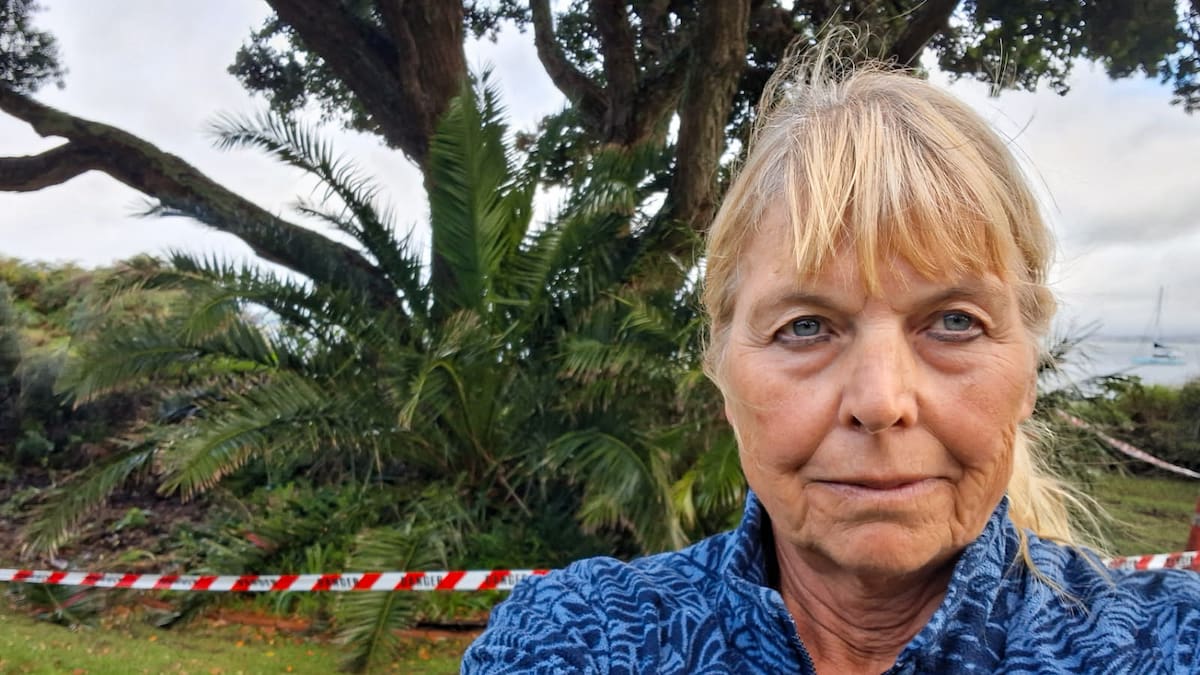
Esplanade reserves are typically strips of public land along the coast or waterways set aside to protect natural coastal processes, provide public walking access and help mitigate natural hazards such as erosion. They are usually vested in local councils and managed for conservation, recreation and public safety purposes.
The esplanade reserve at One Tree Point runs along the coastal and cliff shoreline facing Whangārei Harbour and is popular for clifftop walking tracks, scenic views and beach access.
Macartney, who owns two adjoining properties on One Tree Point Road, said she’s “heartbroken” and has lost sleep over the removal of the plantings which she claimed defied common sense.
She believes the planted areas established and maintained by residents over the past 15 to 20 years beautify the area, stabilise the land from coastal erosion and provide a sheltered public walkway.
“Before we cleared it, the reserve was full of rubbish pits, old tyres, rusted iron and overgrown monkey apple and macrocarpa. We removed the debris, mowed it and planted suitable trees to stabilise the bank and make it a place people actually wanted to walk,” Macartney said.
Long-standing residents’ plantings on the esplanade reserve at One Tree Point before removal by the Whangārei District Council. Photo / Christine Macartney
More of the residents’ plantings on the esplanade reserve. Photo / Christine Macartney
She and the WDC are at odds over the reason for the clearance – Macartney claims there’s only ever been a “very small handful” of complaints about the gardens. The council, however, said it has received ongoing feedback from numerous people over several years, concerned about access and safety.
Macartney said most residents had collectively met with the council and provided feedback from regular reserve users and an independent ecologist’s report – all recommending that the established plantings remain.
She said: “WDC’s parks department has decided to spend thousands of dollars clearing all the vegetation and destroying the trees – except the few very large ones – right up to the property owners’ boundaries, to enable a 20m wide grass strip and then maintain it.
“This will exacerbate erosion, result in water pooling after rain and destroy that lovely walking area. Some [properties] further along, where there are no trees, have only about seven to nine metres of the Esplanade Reserve [originally 20m] left,” Macartney said.
One Tree Point resident Christine Macartney says the esplanade reserve is prone to surface flooding, which will be made worse by the removal of existing vegetation, as happened when it rained this week. Photo / Christine Macartney
She said the removal also overturns what residents understood to be a workable solution recorded in an email from WDC last year – a plan that would have kept a 5m walking strip along the reserve, set 2m back from the cliff edge, while retaining most established vegetation – not the widespread clearance now underway.
In an email seen by the Northern Advocate, Bream Bay ward councillor Phil Halse told residents in May 2025 that he and fellow councillor Ken Couper – now mayor – had met council staff and “agreed a way forward”, though it was marked ‘draft’ and noted it would be confirmed the following week.
An aerial Google map of One Tree Point showing the esplanade reserve area (at left) and varying amounts of trees and planting along it.
Parks and recreation manager Sarah Snowden said the “agreed way forward” referred to a proposed operational approach still being developed at the time and was never formalised or adopted as a binding agreement.
Snowden said the council was not creating a 20m grass strip or clearing the entire reserve. The project was limited to “targeted removal” of encroachments, exotic species and dense undergrowth, with mature trees and suitable native vegetation retained.
Council said it maintained ongoing correspondence with affected residents as its approach evolved and later formally advised them once a programme of works was confirmed, including the need to remove encroachments and restore public access.
Snowden rejected Macartney’s suggestion that the work required resource consent and independent oversight, saying it did not apply to this type of work.
She said the approach aimed to balance environmental protection with public safety, access and use of the reserve. Erosion risk had been considered, and a 2m “no-mow” buffer zone would be introduced along the cliff edge to reduce disturbance and discourage people from approaching unstable areas. Hazard signage is also planned.
Sarah Curtis is a news reporter for the Northern Advocate, focusing on a wide range of issues. She has nearly 20 years’ experience in journalism, most of which she spent reporting on the courts in Gisborne and the East Coast.