
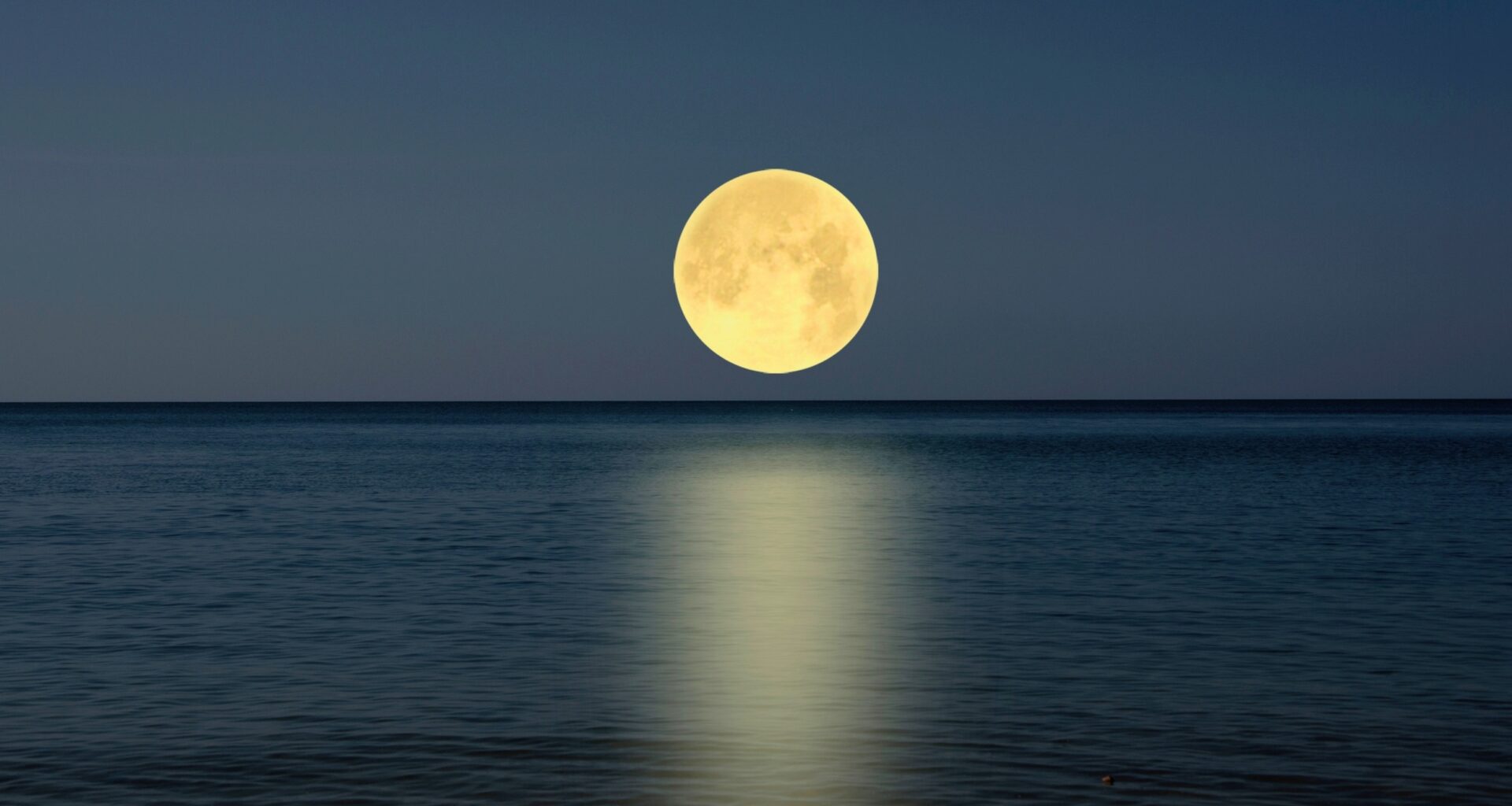
On Monday night, June 29, the Strawberry Moon takes its turn in the sky. It opens the season as the first full moon of summer.
A few things set this one apart. None of the year’s full moons will hang lower or shine fainter than this last micromoon of 2026.
When the Strawberry Moon peaks

Fullness peaks at 7:56 p.m. Eastern Time on Monday, a time pinned down by the U.S. Naval Observatory.
To the naked eye, it appears full for about a day on either side, so skywatchers will see a nearly identical full moon on Sunday night.
This is the seventh full moon of the year. The 2026 calendar squeezes in 13 of them, one past the usual 12, after May slipped in a Blue Moon.
Why it’s the Strawberry Moon
The color red has nothing to do with the name. It traces back to the Algonquian and other Native American peoples, who matched June’s full moon to the short wild strawberry harvest.
A full moon overhead in June told them the berries had ripened and were ready to pick. The sky worked as a calendar long before the paper kind existed.
The same moon gathered other names too. Some peoples knew it as the Berries Ripen Moon or the Blooming Moon; the Tlingit chose Birth Moon, for the weeks when young animals arrive.
Europe kept its own labels, such as the Honey Moon and the Mead Moon.
June itself borrows the name of Juno, the Roman goddess of marriage, and some trace the word honeymoon right back to her.
A lunar calendar in the sky
Before printed calendars, the moon kept the books for the year. Each full moon turned a page, flagging the harvest or the shift of a season.
The Anishinaabe folded all of this into a turtle. Its shell carried 13 large plates for the year’s 13 moons, while 28 smaller ones around the rim traced the days of a single cycle.
That ancient rhythm still ticks beneath our modern months. The Strawberry Moon is one familiar page from that older book of the sky.
Celebrated around the world
For millions of people, the Strawberry Moon will shine on holy ground. June 29 is Poson Poya in Sri Lanka, the day that marks Buddhism’s arrival on the island more than 2,000 years ago.
Worshippers around the world will fill the temples and give the hours over to reflection. One moon hangs over one planet, yet its meaning splits a dozen ways at once.
What makes a moon full
Behind the glow sits a simple geometry. Sun, Earth, and moon line up with Earth in the middle, which turns the moon’s lit face straight toward us.
That lineup comes back roughly once a month, since the trip from one new moon to the next runs about 29.5 days.
Fullness never lingers for long, and a day later the moon is already shrinking toward a gibbous slice.
Why this full moon rides low
From north of the equator, June’s full moon scrapes the horizon. Riding opposite the sun, it retraces the low winter arc the sun itself will climb six months from now.
The lean runs steeper this year. Only eight days separate the full moon from the June 21 solstice, the point where the noon sun stands tallest.
A moon this low picks up color as well. Its light has to push through a fat wedge of atmosphere near the horizon, which can paint it gold or a faded orange.
The last micromoon of 2026
The moon’s path around us is no tidy circle but a gentle oval. The gap between moon and Earth widens and shrinks across the month.
Catch a full moon near the far edge of that oval and you have a micromoon. Monday’s lands close to that distant point, shining about nine-tenths as bright as an average full moon.
Good luck spotting the difference by eye. With no standard full moon parked beside it for scale, most of us will just see a fine, bright moon.
December swings to the other extreme. Its full moon shows up as a supermoon, roughly 14 percent wider and 30 percent brighter than this one.
Where the Strawberry Moon appears
Monday’s moon drifts through dim Sagittarius, beside the loose stars of the Teapot. Look that way and you are staring straight at the crowded heart of the Milky Way.
A reddish point glimmers about 10 degrees up and to the right. That spark is Antares, the bright heart of Scorpius.
What else to see that night
The moon keeps company on Monday. Off to its upper left, the Summer Triangle blazes, while Venus burns low in the west just after sunset.
Jupiter tags along beneath Venus, with faint Mercury close by for anyone with a clear horizon.
Wake before dawn on June 30 and you will find Saturn and Mars low in the east, near the soft Pleiades cluster.
How to watch Monday night
Leave the telescope inside for this one. Step out about 20 minutes before sunset on Sunday or Monday and turn to face east.
Clear skies make it easy; a low, open horizon makes it easier. Watch the moon balloon as it clears the rooftops, a trick of the eye that fools just about everyone.
Whoever stands next to you, that low summer moon is the same one people have watched for thousands of years.
From here on, every full moon creeps a little closer and brighter, building toward December’s Cold Moon, the biggest of 2026.
—–
Like what you read? Subscribe to our newsletter for engaging articles, exclusive content, and the latest updates.
Check us out on EarthSnap, a free app brought to you by Eric Ralls and Earth.com.
—–