
“The community is worried about the potential impact of access charges on visitor demand. If charges reduced visitation, it would negatively impact local business and the Hahei community,” the meeting’s minutes stated.
“Revenue generated in Hahei from the access charge should be spent in the region. Some of the revenue from the access charge at Cathedral Cove should be allocated to the council to help with wider funding pressures created by international visitors.“
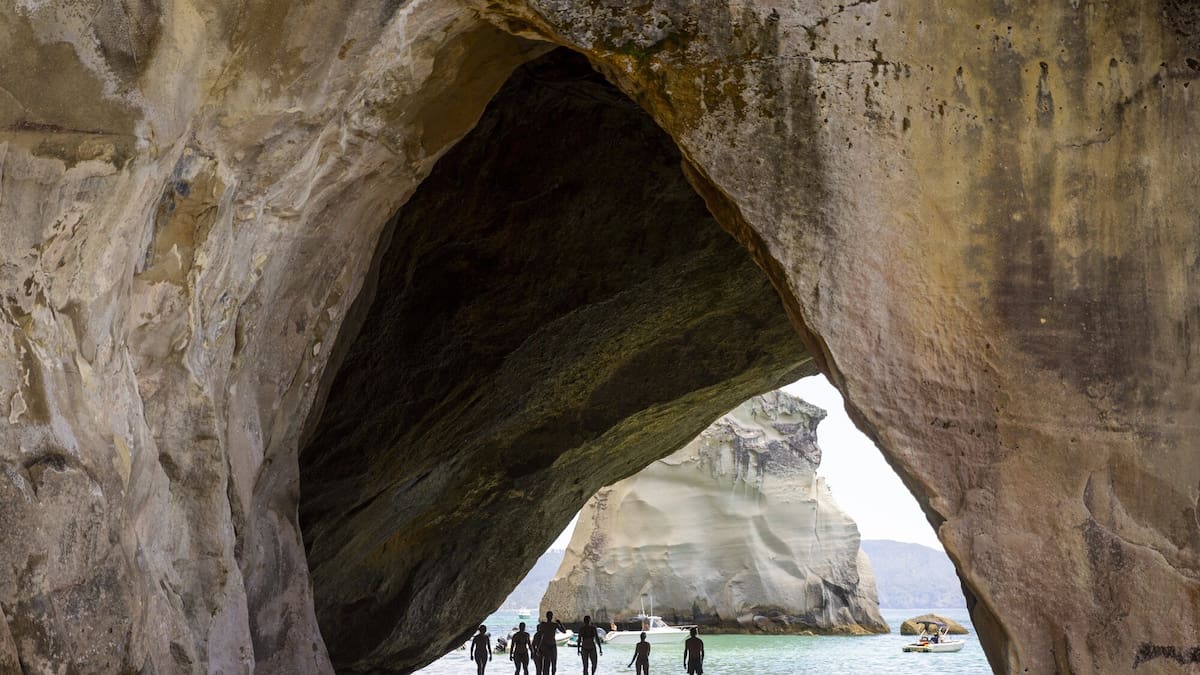
Cathedral Cove is the lifeline for townships like Hahei. Photo / Christel Yardley, Waikato Times
Those at the meeting also pushed back on using “hard gates” to collect charges, with many calling for electronic solutions to be used.
Speaking individually, Thames-Coromandel District councillor and Mercury Bay Community Board member Flemming Rasmussen said he was in favour of the charges.
He pointed to how international tourists are “shocked” they don’t have to pay already, especially given the model is rife throughout global tourist destinations.
Thames Coromandel District Councillor and Mercury Bay Community Board member Flemming Rasmussen wants the local community’s best interest put first. Photo / Supplied
Income provided should be benefiting the local community and only offsetting DoC’s expenses, not divvied out at its discretion and spread across its estate in New Zealand, he added.
“Hahei is dependent on international tourism, or tourism in general. We would be looking at a different shaded charging structure so that in the low season you would try and entice tourists to come by having a reduced fee or no fee.
“During the peak season where we haven’t got capacity, the charge … should be a maximum and then you would differentiate it over time.”
The charge was announced in May by Conservation Minister Tama Potaka, who described it as a “once in a generation change” and labelled the current system as “clunky”.
“We’re going to charge international visitors in some places, generate a bit more money, then we’ll reinvest,” he added.
Conservation minister Tama Potaka spearheaded the charges set to hit Cathedral Cove. Photo / Mark Taylor, Waikato Times
In “an ideal world”, Rasmussen said he’d like all income given back to the local council to reinvest in facilities, but added a 50% split is far more realistic.
“The important point is it needs to be a tangible, specific relative part of proportionality. It simply can’t be at DoC’s discretion.”
DoC also received 33 submissions regarding the proposed closures of the Waimata Gemstone Bay track and the Hahei Beach short walk.
Similar to Cathedral Cove, both tracks have suffered continual storm damage but hold significant importance as crucial alternative walking sites and links to historical and snorkelling sites.
Rasmussen said more than 1200 people signed the petition to keep the tracks, calling them “the lifeline of the community”.
“Without that, we would not have that vibrant local community we have now. It would simply be a tourist township that would have its ups and downs over the years.”
DoC’s formal response to the submissions on whether to keep the tracks is planned by July 6.
– LDR is local body journalism co-funded by RNZ and NZ On Air.