
On This Week: Irish moments from history (June 29th – July 5th)
Welcome to On This Week, where we delve into the standout stories from the years gone by, featuring standout news stories, major sporting events, and pop culture highlights that helped shape Irish life. Here’s your dose of Irish history from June 29th – July 5th.
This week in Irish life and news
1970: Gardaí quash Dublin squats
People have been occupying vacant buildings for decades, and on this week in 1970, several groups of squatters were forcibly removed from the houses in which they’d been living. On July 1 56 years ago, gardaí and demolition workers moved on two Dublin premises that were being occupied illegally. Ten members of the Dublin Housing Action Committee were removed from a house at 148 Pembroke Road by a large force of helmeted, shield-carrying Gardaí. The house, near the US Embassy, belonged to the Gallagher Group of Builders and had been occupied for some time.
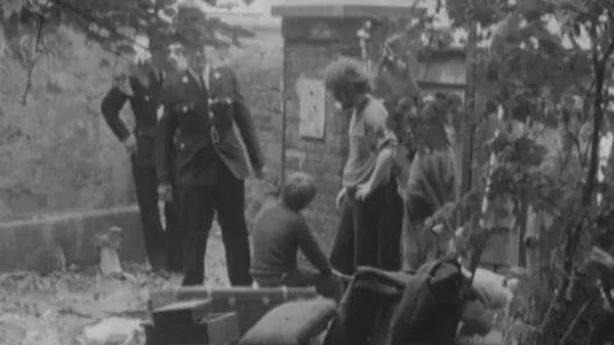
The residents of the Island Commune on Merrion Road were removed by gardaí
On Merrion Road, demolition men moved in on the Island Commune. Members of the commune had been occupying a house since March. The squatters were forced out on to the street, taking their belongings with them.
An RTÉ News report broadcast on 1 July 1970. The footage shown here is mute.
1985: Ireland’s first water slides
On this week 41 years ago Dún Laoghaire Baths in County Dublin became Rainbow Rapids, featuring two water slides, the first of their kind in Ireland. The baths were threatened with closure in 1981 and Dublin Corporation hoped the new facilities run by a private company would make them profitable again.
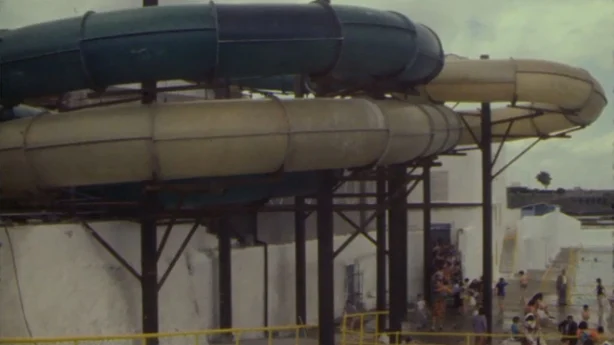
The slides of Rainbow Rapids
Both Rainbow Rapids slides were 300 feet long and those using the attraction completed a circle before dropping 40 foot into a plunge pool. The duration of each whirlwind ride was approximately 30 seconds and experts could reach up to 15 miles an hour on their descent. The slides were constructed of plastic using and 100,000 bolts.
But although the waterslides proved popular – especially during heatwaves – Rainbow Rapids didn’t last long. A decade later, the waterslides were no longer in use and the baths closed in 1997.
An RTÉ News report broadcast on 2 July 1985. The reporter is Mary Butler.
1990: Nelson Mandela becomes a freeman of Dublin
On 1 July 1990 Nelson Mandela arrived in Ireland to fulfll a promise to the people of Dublin.
Two years previously while still in a South African jail, Nelson Mandela was honoured as a freeman of the city of Dublin and vowed to come and collect that honour some day. 1 July 1990 was a busy day at Dublin Airport. Not only did the Republic of Ireland team arrive home after their success at Italia 90, but ANC Leader Nelson Mandela and his wife Winnie arrived for a two day visit. They were greeted at Dublin Airport by Minister for Foreign Affairs Gerard Collins. Speaking on his arrival Nelson Mandela had a message for the people of Ireland.
We have received wonderful support from the people of Ireland in the course of our anti-apartheid struggle. We call upon them to maintain that support.
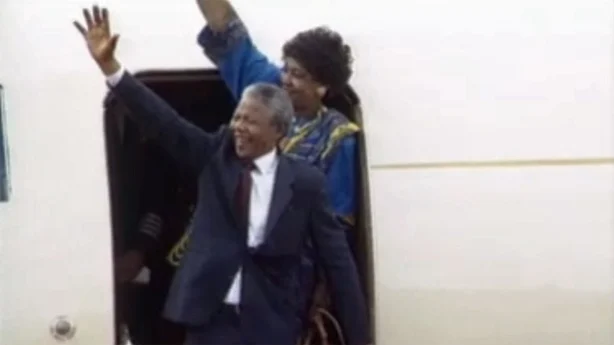
Nelson and Winnie Mandela arriving in Dublin
Later that afternoon Mr. Mandela had the opportunity to meet with some of the Dunnes Stores workers who had been on strike for three years highlighting the abuses of the apartheid regime in South Africa.
At a ceremony in the Mansion House in Dublin, Mandela received the Freedom of the City. Addressing the crowd at the Mansion House, he congratulated the wonderful Irish football team and spoke of the support that the Irish people have given to the South African cause.
You have given refuge and aid to so many South Africans. And for this, we are deeply grateful.
An RTÉ News report broadcast on 1 July 1990. The reporter is Charlie Bird.
This week in arts and entertainment
1979: Dalymount Park rocks out
Dalymount Park in Dublin was rocking on July 1 1979 as 20,000 fans enjoyed a day of music featuring The Undertones, Judas Priest, Rockpile and Status Quo. The day long musical event included performances from Dublin group The Bogey Band, singer Christy Moore, and The Undertones from Derry. From Britain, there was Rockpile and metal band Judas Priest while Status Quo topped the bill.
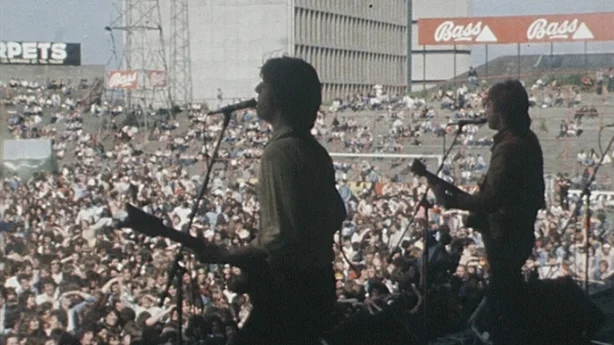
Rockpile rock Dalymount
RTÉ News caught some of the Rockpile performance, featuring Nick Lowe on bass guitar and vocals, Dave Edmunds on vocals and guitar, Billy Bremner on vocals and guitar and Terry Williams on drums.
Organised by Pat Egan, in association with London company Quarry Productions, tickets for the event cost £6 and the comperes for the festival were the legendary DJs John Peel and Dave Fanning.
An RTÉ News broadcast on 1 July 1979.
1985: U2 become the first Irish rock band to headline Croke Park
On 29 June 1985, U2 played to almost 60,000 fans in Croke Park, Dublin as part of The Unforgettable Fire Tour. The documentary ‘U2 Wide Awake in Dublin’ documented the build up to the concert and the show itself. In this excerpt from the film, U2 make their way on stage and open the show with ‘I Will Follow’.
Opening the show Bono says
The Jacks are back. And what an All-Ireland we have for you tonight.
Also on the bill were In Tua Nua, R.E.M., The Alarm, and Squeeze.
The RTÉ Guide billing for ‘U2 Wide Awake in Dublin’ described it as,
A documentary on the group’s sell out show at Croke Park last June. The camera went behind the scenes to catch the band at rehearsal and soundchecks, and also attended the Unforgettable Fire/Martin Luther King Peace Exhibition – part of the Dublin City Carnival. Then interviews with members of the band, the word from the key people in the organisation who help keep U2 one of the most popular and professional rock bands in the world.
‘Wide Awake in Dublin U2 Special’ was broadcast on 17 December 1985.
This week in sports
1979: Taking Frisbee seriously
On this week 47 years ago, two American Frisbee champions explained how throwing a plastic disc has developed as a sport. World Frisbee disc master Jim Emerson and Women’s World Champion Laura Engel were in Dublin to judge the first Irish Frisbee Championships. It was the last stop on a tour of Europe to promote Frisbee sports, which had become very popular in the United States. Frisbee has five competitive disciplines – disc golf, maximum time aloft, distance, double disc court and freestyle.
From New York, Laura Engel started playing frisbee in Central Park, and enjoyed the physical challenges of the sport as much as the non-competitive nature.
We would just play catch and have fun.
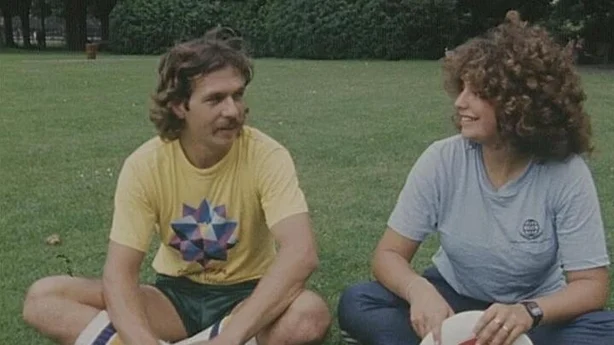
Jim Emerson and Laura Engel shared their love of frisbee
Music can also play a big part in Frisbee, said Jim Emerson:
Anything that you like, you can listen to while you play frisbee.
There was also a social aspect – people got to meet or know each other while throwing a frisbee.
This report for Summerhouse was broadcast on 4 July 1979. Summerhouse was a summer magazine series on RTÉ Television. Other presenters and reporters were Liam Nolan, Áine O’Connor and Vincent Hanly.
1990: The Boys in Green return home on Saint Jack
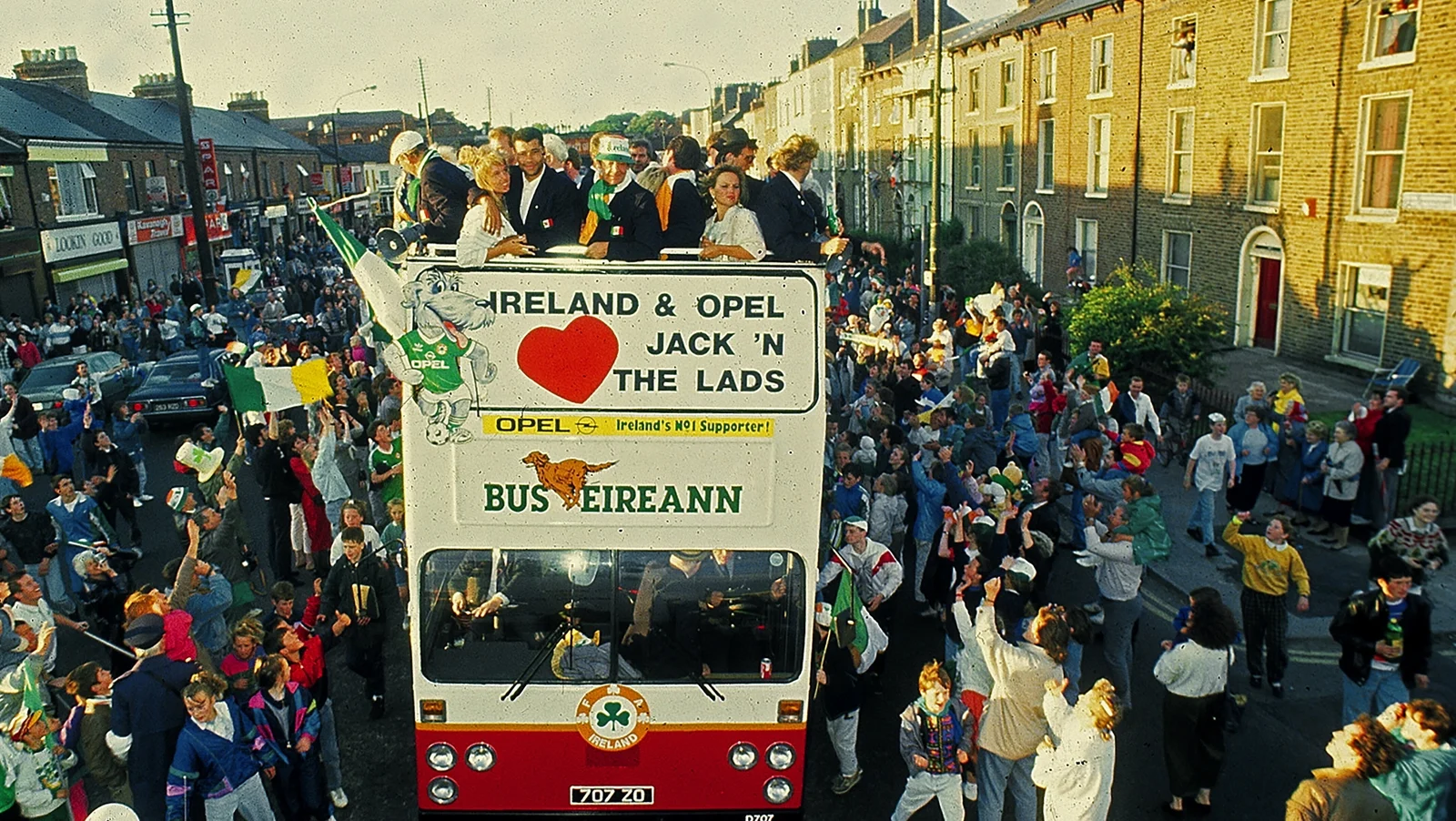
On 1 July 1990 the Republic of Ireland soccer team returned home following their success at Italia 90. An estimated 50,000 people were at Dublin Airport to welcome the Irish team home. Thousands more lined the route from the airport to College Green in Dublin’s city centre, where there was a civic reception.
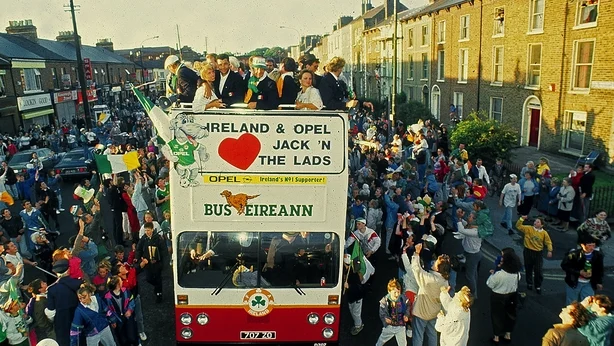
The boys in green were cheered through the streets of Dublin
The team returned from Rome on an Aer Lingus Boeing 737, which had been especially renamed the Saint Jack in honour of the team and their manager Jack Charlton. The plane made a special low level pass over the airport before touching down to the cheers of waiting supporters. On board the Saint Jack, the Aer Lingus crew led by Captain Donal Foley made a special presentation to the team at 34,000 feet. Jack Charlton, a keen fisherman, was presented with a specially made fishing rod. The Taoiseach Charles Haughey was on the tarmac at Dublin airport to greet the team and the FAI officials.
An RTÉ News report broadcast on 1 July 1990. The reporter is Donal Byrne and the report is introduced by Ken Hammond.
What was Number 1 in Ireland this week?
1985: ‘Frankie’ by Sister Sledge
Do you remember me? The song that inspired practically every small girl in Ireland to work out a dance routine in summer 1985 stayed at number one for four weeks.

Sister Sledge had a huge hit with ‘Frankie’
1991: (Everything I Do) I Do It For You by Bryan Adams
And so it begins: the song that dominated the top of the Irish and UK charts right into autumn began its reign this week 35 years ago.
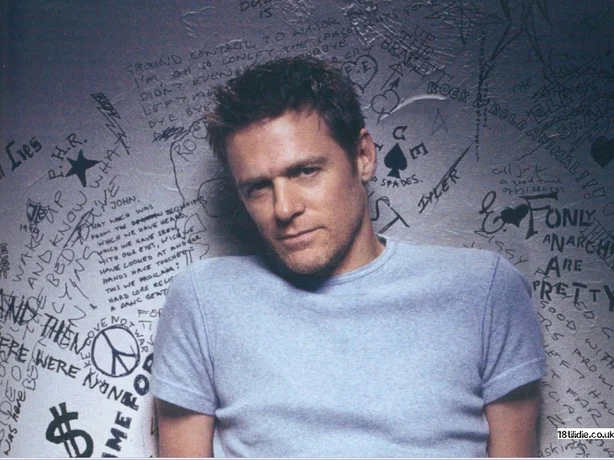
Bryan Adams dominated the charts in summer 1991
2001: ‘Lady Marmalade’ by Christina Aguilera, Lil’ Kim, Mya and Pink
Produced by none other than Missy Elliott, this version of the Patti Labelle classic recorded for the film Moulin Rouge was a massive hit 25 years ago.
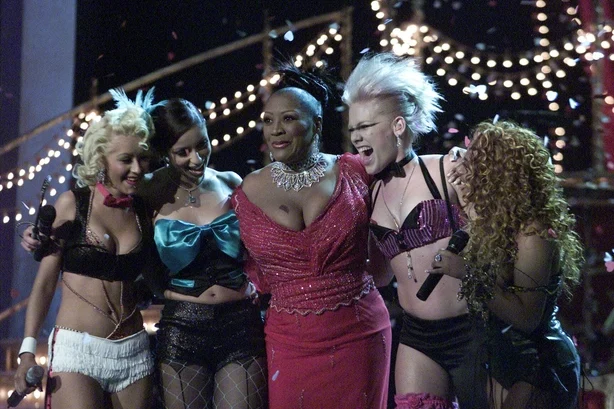
Patti Labelle performed with the new generation of ‘Lady Marmalade’ singers at the Grammys in February 2002
Famous Irish names celebrating birthdays this week
Katie Taylor
The champion boxer turns 40 on July 2nd.
Shane Lynch
The Boyzone star celebrates his fiftieth birthday on July 3rd.
John Butler
The writer-director turns 54 on July 4th.