
For Ferrari, combustion power is more than just a want. The very existence of the company could depend on pistons firing in cylinders, sometimes approaching 10,000 times in a single minute. So it’s no surprise that the company is working on a multitude of different ways to make zero-emissions or low-emissions combustion possible.
And this engine might be the wildest one yet. CarBuzz has found a patent for a new engine that has more in common with an Ohio-class ballistic-missile submarine than with anything else Ferrari has ever built. Let’s take a look.
A Very Old, Very Unusual Engine Design
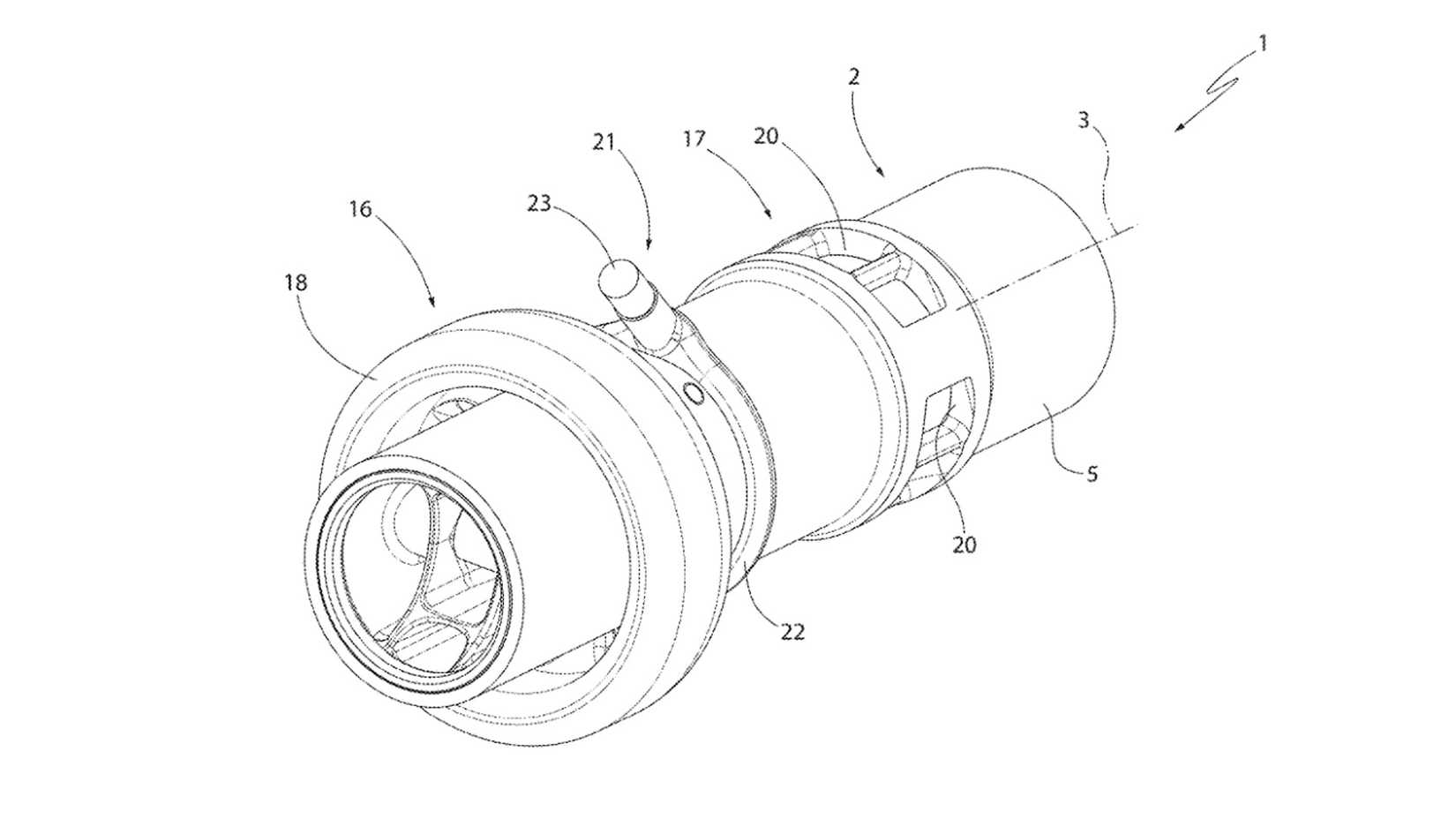
Ferrari opposed-piston engineFerrari
On the surface, the patent is for a new hydrogen combustion engine design. The inventor is looking to solve one of the major problems with other H2 engine designs: the hydrogen doesn’t mix properly with air for the best burn and results. The proposed fix is an opposed-piston engine, one where there are two crankshafts because there are two pistons in every cylinder. One goes up, one goes down.
Most of the H2 engine designs we’ve seen before work just like a traditional gas engine. Air comes in through one or two valves at the top of the cylinder, and it gets pushed out through another one or two right beside them. The spark plug is in the dome of the cylinder head, and if there is direct injection, the fuel injector is there too.
It’s fine for mixing gasoline and air, though not perfect. But it’s not quite good enough for mixing hydrogen. Ferrari’s latest idea puts the inlet and exhaust around the entire cylinder. A ring of ports running the whole way around means more flow and better mixing. The hydrogen is mixed in a larger ring outside the cylinder before being forced in, making for a better burn, lower emissions, and more power.
Related
Ferrari’s Upside-Down Hydrogen Engine Takes Another Curious Development
Turning off the oil before stopping the engine is a great idea, right?
Putting the inlet and exhaust on the cylinder wall isn’t new either. It’s how two-stroke engines work, and they’re great at making power. Just ignore the oily exhaust and horrific emissions. This invention goes beyond even that, though.
Two Pistons, One Bore
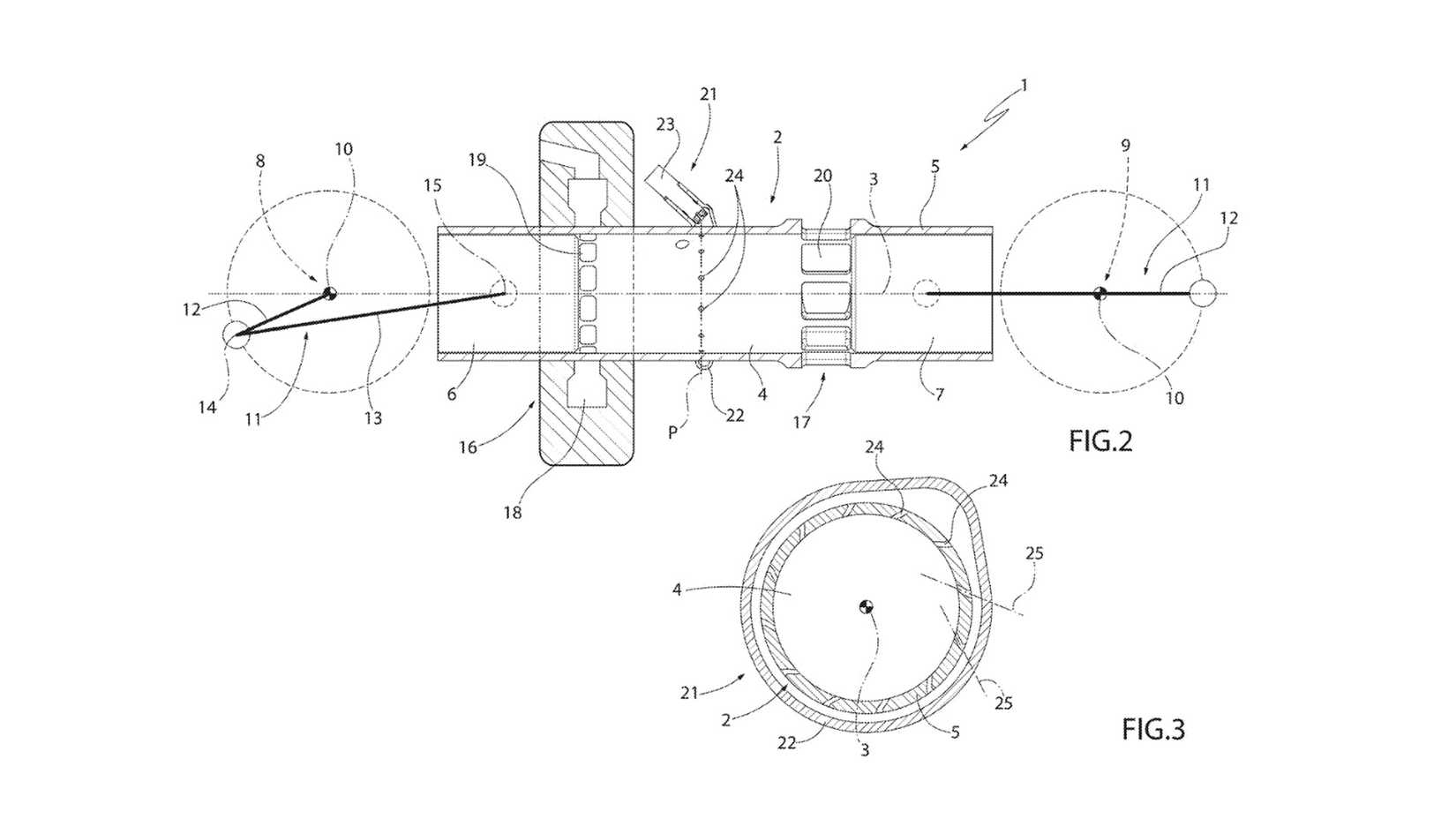
Ferrari opposed-piston engineFerrari
Instead of just one piston in the cylinder, this invention puts two in each cylinder bore. The idea there is to solve some of the issues with the traditional two-stroke and take full advantage of the large volumes of intake air and fuel. The two pistons face each other, and move together. If one is on its compression stroke, so is the other; when the mixture burns, it pushes both pistons apart on the power stroke.
It’s called an opposed-piston engine, and it’s not exactly a new idea. It’s been around since the late 1800s and has had the most success in diesel applications. One engine, the Fairbanks-Morse 38 8-1/8, has been in production since the late 1930s. You’ll find a version of the same engine in operation today, as the backup power source on US Ohio-class nuclear ballistic missile submarines.
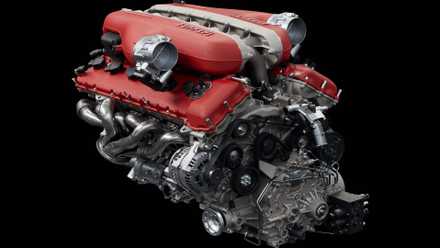
This is a strange design for a vehicle, because it takes up a lot of space. Each piston needs its own crankshaft, so there are two bulky hunks of iron swinging around in the engine bay. They need to be joined, too, which is another large mechanism.
Related
Ferrari Has Just Patented An Engine Like Nothing We’ve Ever Seen
This innovation could save the V12, and Honda has already proven that something similar can make production.
The idea makes sense on a ship because the trade-off for that bulky shape is lots of torque and no valve train. But space doesn’t matter in most ships, or in an SSBN (one of Russia’s had a swimming pool). It absolutely matters in a car, though. Especially one from Ferrari.
CarBuzz Insight – Why This Matters:
Ferrari 296 Speciale A front 1/2Ferrari
That Ferrari is looking into a design like this, and a two-stroke design at all, shows the lengths it is willing to go to keep a fuel-burning engine with the sounds that come with it. It’s a better idea than last week’s multi-cylinder electric motor, but it seems incredibly impractical for a car. If Ferrari could make it fit, though, it would sound great.
Patent filings do not guarantee the use of such technology in future vehicles and are often used exclusively as a means of protecting intellectual property. Such a filing cannot be construed as confirmation of production intent.
Source: US Patent & Trademark Office